A bored pile with a flat base carries its load on the bottom few centimetres of concrete. A pile with a belled base carries it on a much wider area. For most ground conditions that is the difference between a pile that is adequate and a pile that is comfortable.
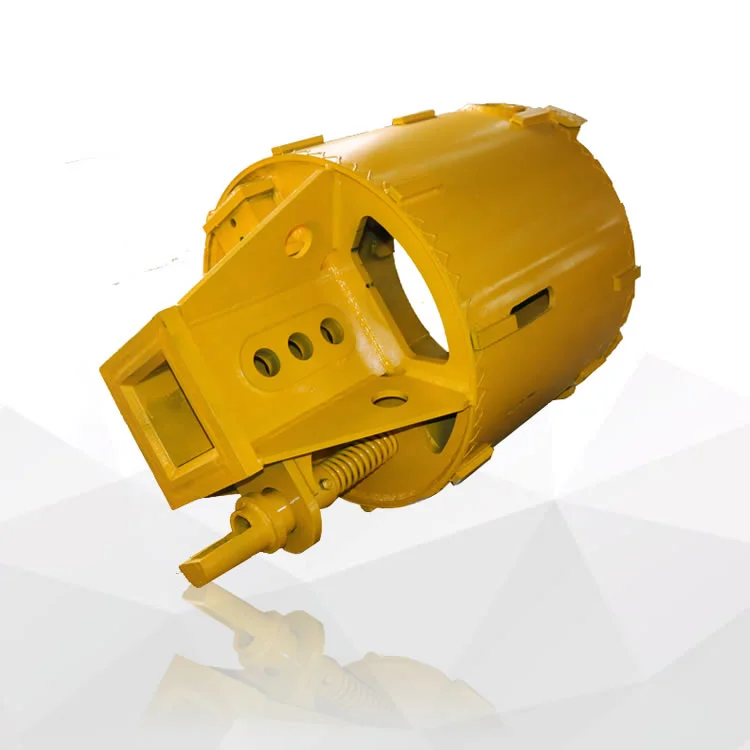
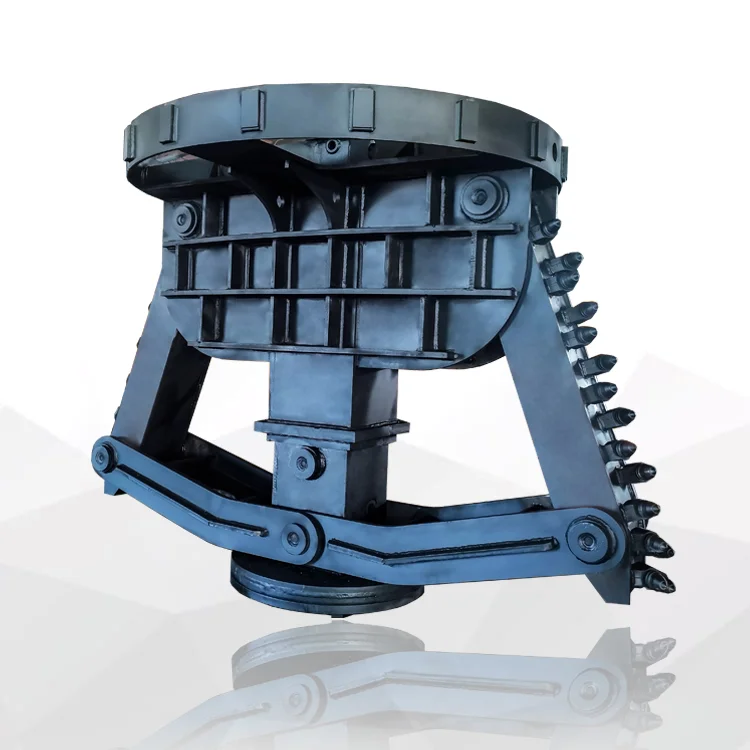
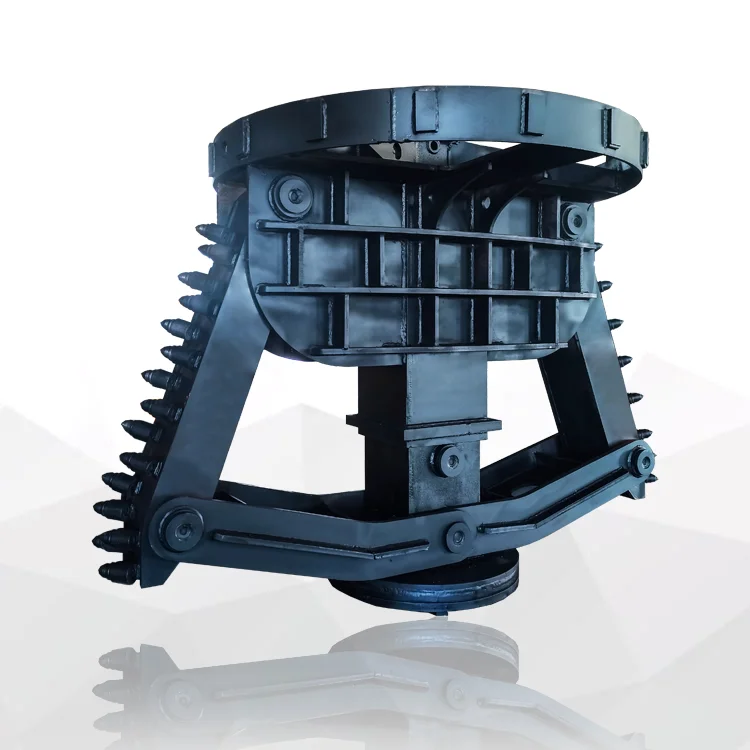
A belling bucket is a drilling tool that enlarges the bottom of a bored hole to form a bell shape, which increases the bearing area of the pile. AAETT® builds it with adjustable cutting arms that can reach different reaming diameters, from 600 mm up to 3000 mm, with a reaming ratio of 1.5 to 2.0 times the pile diameter. It is used in hard strata, frozen soil, and medium soft rock.
The belling bucket is a specialist tool. It is not on every job. But on the jobs that need it, it changes the pile design. Here is when and why. If you are new to piling tools, our drilling tools overview explains how the pieces fit together.
What Is a Belling Bucket and How Does It Work?
A belling bucket is a bucket with arms that spread out and cut sideways.
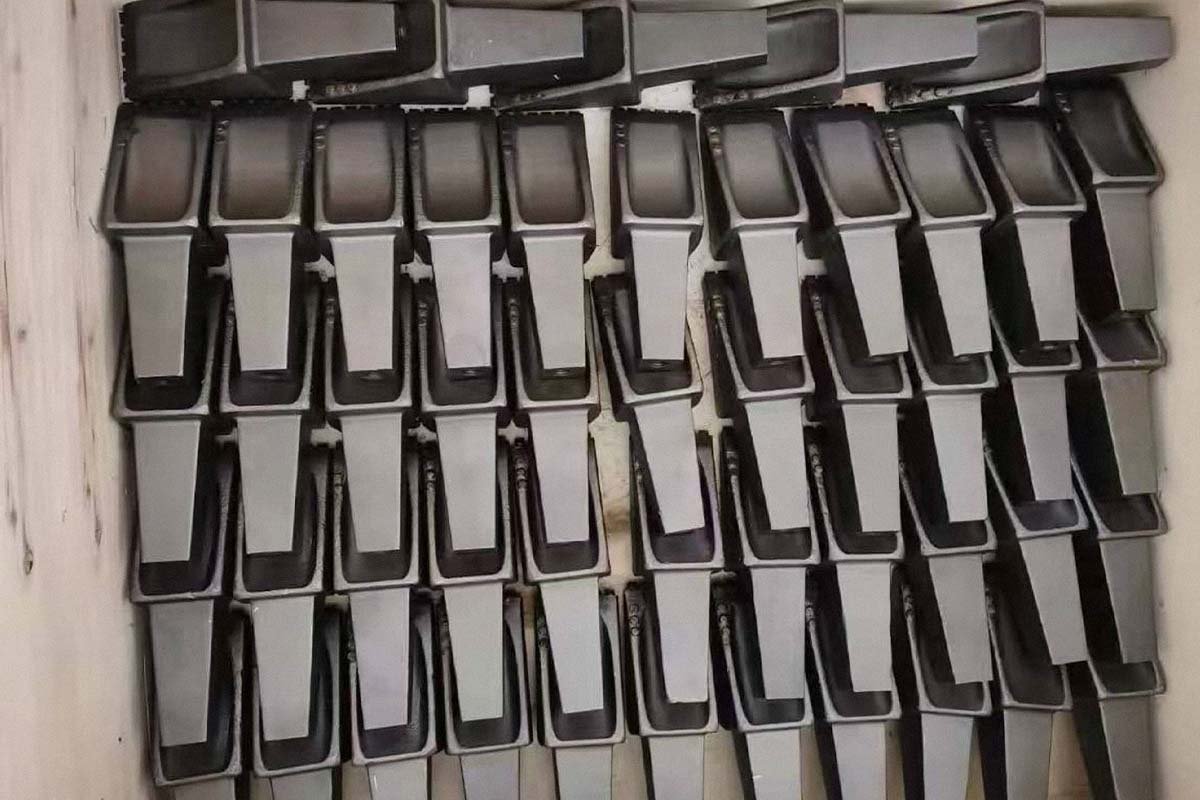
The body is a short shell that runs on the Kelly bar. At the bottom there are cutting arms on hinges. When the tool reaches the bottom of the hole, the arms are spread. As the bucket turns, the arms cut outward and downward, cutting a conical cavity below the pile shaft. When the operator is satisfied with the depth of the bell, the arms are retracted and the tool is lifted out. The spoil is then removed with a drilling bucket or a cleaning bucket.
Why Does the Bell Improve the Pile?
Bearing capacity is roughly the contact area multiplied by the allowable bearing pressure of the soil. The shaft of a 1000 mm pile gives you an area of about 0.79 square metres. A bell at 1.5 times the diameter gives you a base area of about 1.77 square metres. Same pile, more than twice the bearing area at the base. On a soft or marginal soil, that is often the difference between passing and failing the geotechnical check.
| Pile Diameter mm | Shaft Base Area m2 | Bell at 1.5x | Bell at 2.0x | Area Gain |
|---|---|---|---|---|
| 800 | 0.50 | 1.13 | 2.01 | 2.3x / 4.0x |
| 1000 | 0.79 | 1.77 | 3.14 | 2.2x / 4.0x |
| 1200 | 1.13 | 2.54 | 4.52 | 2.2x / 4.0x |
| 1500 | 1.77 | 3.98 | 7.07 | 2.3x / 4.0x |
| 2000 | 3.14 | 7.07 | 12.57 | 2.3x / 4.0x |
The bell also increases the shaft friction over a short length, because the soil above the bell is disturbed and grips harder. In a friction pile this adds to the benefit.
When Do You Need a Belling Bucket?
The ground decides, and the design confirms.
A belling bucket is applicable in hard strata, frozen soil, and medium soft rock. The common situation is a soil with a soft surface layer over a firmer stratum. The shaft is drilled through the soft layer to reach the firmer material, and the bell is formed in that firmer material to get the bearing area where it is worth something.
| Ground Condition | Is a Bell Useful | Reason |
|---|---|---|
| Soft clay all the way down | Usually not | The shaft already has plenty of bearing area in soft clay |
| Firm sand or dense sand | Yes | Increases bearing area in a soil with a decent allowable pressure |
| Soft layer over firm stratum | Yes, key case | Moves the bearing point to the firm material |
| Frozen soil | Yes | The frozen layer is the bearing stratum, the bell sits in it |
| Medium soft rock | Yes | A flat base on rock has low bearing capacity without a bell |
| Hard rock | Rarely | Rock sockets take the load directly, no bell needed |
| Gravel | Rarely | The socket friction in gravel already does the work |
Why Is a Bell Not Used on Every Pile?
Because it is not always needed. A 1500 mm pile in stiff clay has more than enough base area, and the bell would add cost, time, and a risk of under-reaming. The geotechnical design has to call for it. Putting a bell in a pile that does not need one is money spent for nothing, and it lengthens the pile cycle for no benefit.
What Is the Friction Benefit?
A belled pile is still a friction pile along its shaft. The bell increases the base bearing, and it also improves the shaft friction over the bell zone because the soil there is disturbed and compacted against the shaft. In a layered profile this often matters as much as the base area.
What Belling Bucket Models Are Available?
Seven models, each covering a diameter range.
Each model covers a range of pile diameters with a fixed tool hit length. The φ600 to 1200 model has a 3050 mm tool hit and 28 limit holes with 1.5 to 2.0 reaming multiples, weighing 1190 kg. The φ1500 to 3000 model has a 4000 mm tool hit, 32 limit holes, and weighs 3600 kg. The weight and the hit length both scale with the diameter.
| Model | Tool HIT mm | Swing No. | Limit Hole No. | Teeth No. | Reaming Multiples | Weight kg |
|---|---|---|---|---|---|---|
| φ600–1200 | 3050 | 2 | 28 | — | 1.5–2.0 | 1190 |
| φ800–1600 | 3100 | 2 | 3 | 28 | 1.5–2.0 | 1310 |
| φ900–1800 | 3050 | 2 | 3 | 28 | 1.5–2.0 | 1500 |
| φ1000–2000 | 3050 | 2 | 3 | 30 | 1.5–2.0 | 1650 |
| φ1100–2200 | 3050 | 2 | 4 | 30 | 1.5–2.0 | 1880 |
| φ1200–2400 | 3050 | 2 | 4 | 30 | 1.5–2.0 | 2350 |
| φ1500–3000 | 4000 | 2 | 4 | 32 | 1.5–2.0 | 3600 |
What Do the Limit Holes Mean?
The limit holes are the positions the arms can be pinned into. Each hole gives a different reaming diameter. More limit holes means more diameters available from one tool. The φ600 to 1200 model has 28 limit holes, which covers a wide range of small diameters, while the larger models use three or four positions that give a step change between diameters. This is why the custom option to add more limit holes exists: to satisfy a demand for different reaming diameters on the same tool.
What Is the Reaming Ratio?
The reaming multiple is the ratio of the bell diameter to the pile shaft diameter. A 1.5 multiple on a 1000 mm pile gives a 1500 mm bell. A 2.0 multiple gives a 2000 mm bell. The pile design specifies the required bell diameter, and the ratio tells you which arm position to use.
What Is the Tool Hit Length?
The tool hit length is the overall length of the tool from the top connection down to the cutting arms. It has to be deep enough to reach the bottom of the hole and still have the arms fully inside the shaft when they open. On a deep hole this matters. Get it wrong and the arms hit the casing or the shaft above.
What Design Features Make the Belling Bucket Work?
Five features, and the adjustable arms are the key one.
The adjustable cutting arms can meet the specific requirements of different reaming diameters. After reaming the bore hole, the spoil is conveyed with a drilling bucket or a cleaning bucket. The cutting arms are easy to spread and retract. The box-type structure is easy to maintain. And the tool is available in a wide range of diameter coverage.
Why Do the Arms Need to Adjust?
Because the pile design is not always known when the tool is ordered. A job may start with 1000 mm piles and end up with 1200 mm after a geotechnical review. With adjustable arms and a good set of limit holes, one tool covers the range. This is a real cost saving on a job with mixed pile sizes.
Why Does the Box-Type Structure Matter?
The box structure gives the arms a solid mount and keeps the load path short and stiff. It also means the pins and the arm pivots are accessible from outside the tool, so a worn pin or a damaged arm can be changed on site rather than in the workshop. On a job in a remote location, that is worth a lot.
How Is the Spoil Removed After Reaming?
The belling bucket cuts the bell, but it does not remove the spoil. That is done with a drilling bucket or a cleaning bucket afterwards. The sequence matters. If the spoil is left in the bell, it will sit under the concrete and create exactly the soft layer you spent the belling to avoid. Clean it properly and the bell does its job.
How Do You Operate a Belling Bucket Safely?
The operating sequence has to be controlled, because the arms are under load when they open. Lower the tool to the bottom of the hole with the arms retracted. Confirm the tool is sitting on the floor and not hanging on the side of the hole. Apply low downforce while rotating slowly to bring the arms out. Once the arms are clear of the shaft, increase the rotation and the downforce to cut the bell.
Watch the torque. If the rig is working hard while the arms are spreading, something is wrong. Usually it means the arms are catching on the shaft or on a lump of spoil that was not removed. Stop, lift the tool, and clean the hole before trying again. Forcing it risks bending an arm, and a bent arm will not retract properly, which means the tool cannot come out of the hole without a specialist lift.
The same care applies at the end. Retract the arms fully before lifting. If the arms are still spread when you start to lift, they will catch on the shaft and can be pulled out of shape. This is the second most common way these tools get damaged, and it is entirely avoidable.
What Can Be Customised on a Belling Bucket?
Five options, and the swing number is the interesting one.
The model diameter can be designed to demand, for example 950 mm or 1050 mm. The key components can be reinforced to extend the life cycle. The swing number can be a double swing or a triple swing design as required. The Kelly box can be custom sized to the Kelly bar, such as 130 x 130, 150 x 150, or 200 x 200. And more limit holes can be added to satisfy different reaming diameter demands.
| Custom Item | Options | Why It Matters |
|---|---|---|
| Model diameter | Any size, e.g. 950 mm, 1050 mm | Match the pile design on site |
| Key component reinforcement | Reinforced arms and pivots | Extends life in abrasive ground |
| Swing number | Double swing or triple swing | More arms spread the load, faster reaming |
| Kelly box | 130×130, 150×150, 200×200 | Must match the Kelly bar on the rig |
| Limit holes | Add more positions | More reaming diameters from one tool |
When Do You Need a Triple Swing?
A double swing uses two arms working against each other. A triple swing adds a third arm, which spreads the cutting load over a wider area and reams faster. It also means the tool is more stable, because the forces balance better. On a large diameter or a hard stratum, the extra arm usually pays for itself in cycle time.
How Do You Reinforce for Abrasive Ground?
In gravel or gravelly material, the arm tips and the pivots take the worst of the wear. Reinforcing these key components with harder material or thicker plate extends the life cycle. When the ground report shows gravel, tell us, because the standard build is not the right build for that ground.
Conclusion
A belling bucket enlarges the base of a bored pile to increase its bearing area, at a reaming ratio of 1.5 to 2.0 times the shaft diameter. Use it in hard strata, frozen soil, and medium soft rock when the geotechnical design calls for a bell. Specify the swing number, the Kelly box, and the reinforcement level for the ground, and always clean the bell out afterwards.