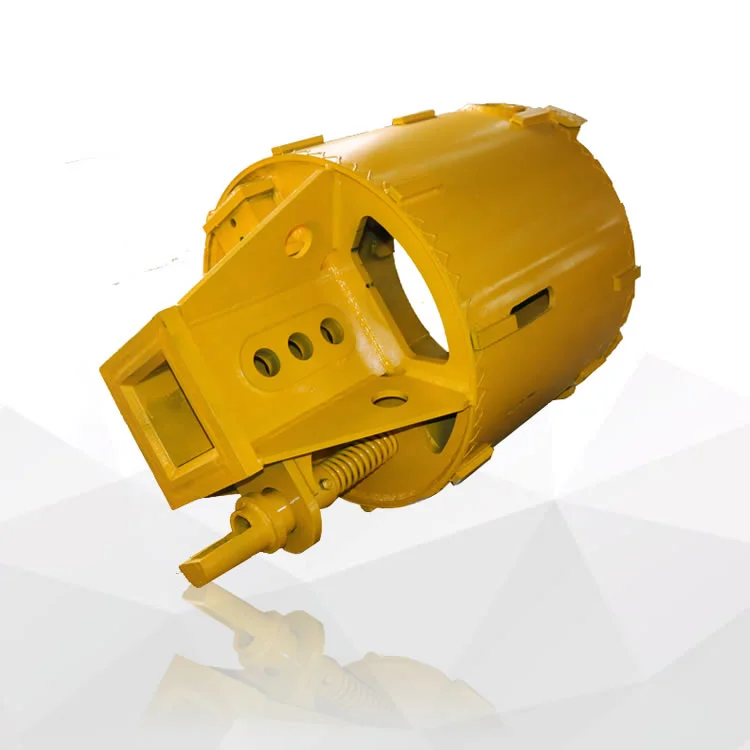
A drilling bucket in soft ground runs on flat teeth. Change the ground to gravel or gravelly sand, and those same flat teeth start to look soft. The borehole gets bigger, the bucket drifts, and the pile does not look like the drawing.
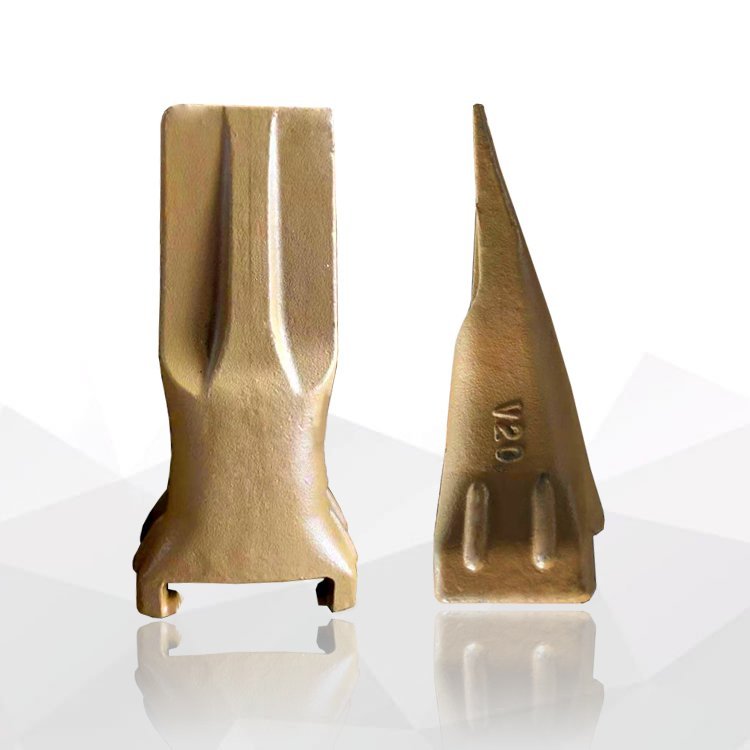
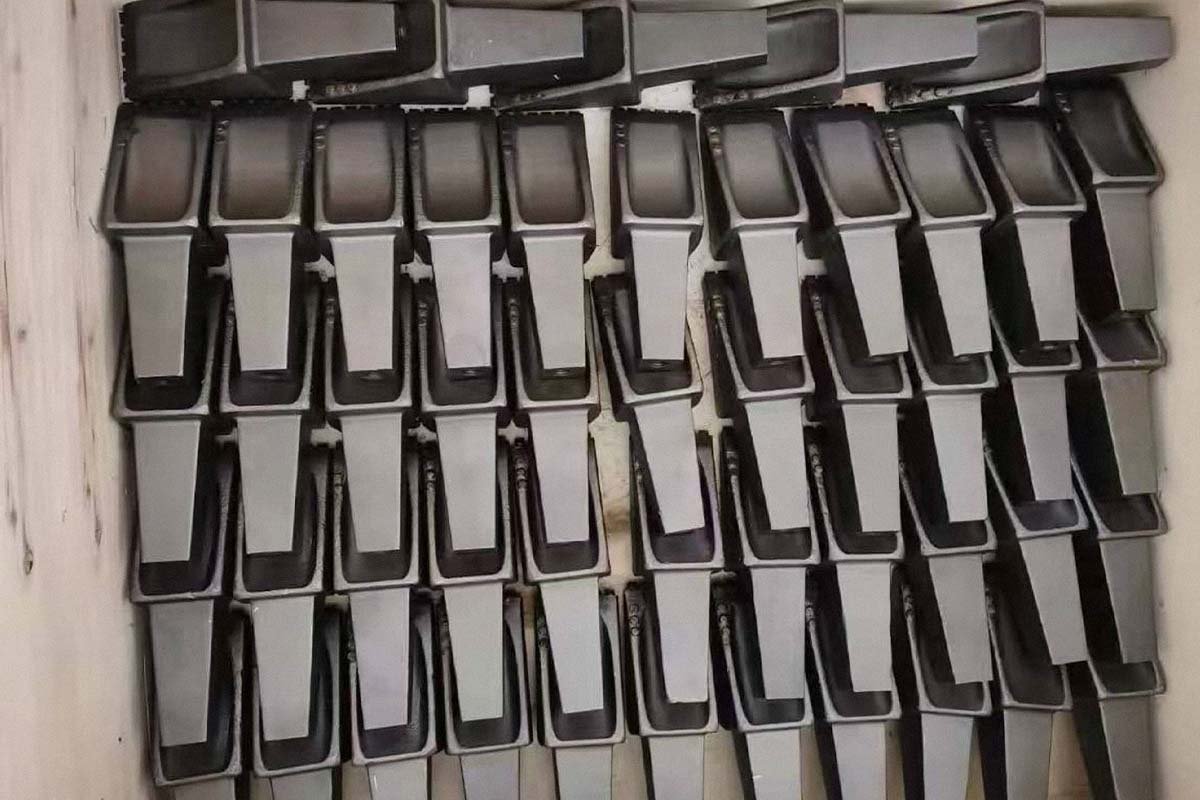
Flat teeth are wide, blunt cutting teeth with a carbide tip, used on the cutting edge of a drilling bucket in soft and medium ground. AAETT® builds the FZ series in four sizes, BFZ162/100/70, BFZ72, BFZ79, and BFZ80, each matched to an FZH holder. The carbide tip uses a low-cobalt material with a larger carbide size, which gives strong abrasion resistance and a longer service life.
Flat teeth look simple. The difference between a cheap one and a good one shows up in the borings, in the wear pattern on the tooth face, and in how long the edge keeps its shape. Here is what decides that.
What Are Flat Teeth and How Do They Work?
A flat tooth is a wide, shallow-cutting tooth with a carbide insert.
A flat tooth has a flat or slightly curved back, a broad carbide tip, and a mounting section that fits into a holder. The tooth is welded or pinned to the bucket edge through the holder. Because the tooth is wide, it presents a large area to the ground. That gives a smooth scraping cut rather than a point impact cut. This is why flat teeth excel in clay and sand and why they are a poor choice in gravel.
What Is the Difference Between Flat Teeth and Bullet Teeth?
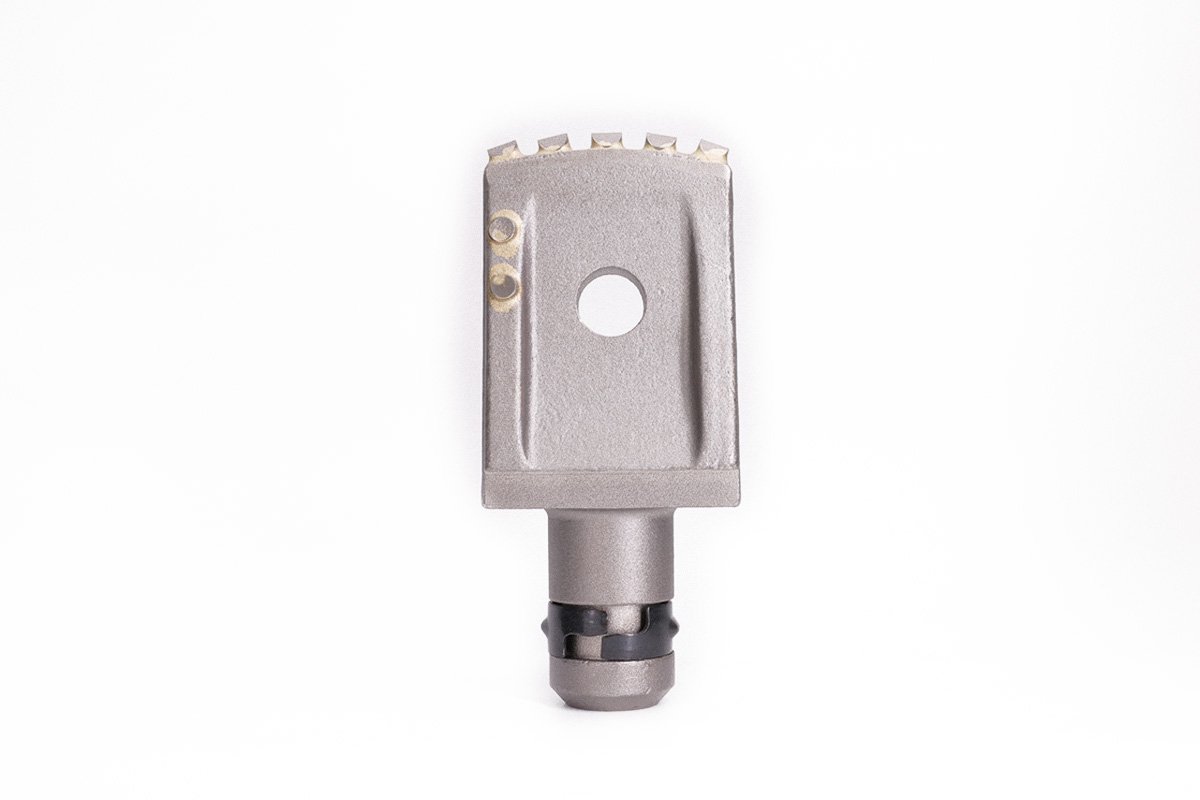
Both are carbide-tipped teeth for a drilling bucket. They cut in a different way, and they suit different ground.
| Factor | Flat Teeth | Bullet Teeth |
|---|---|---|
| Cutting style | Wide scraping cut | Concentrated point impact cut |
| Best ground | Clay, silt, sand, loose soil | Rock, gravel, weathered and hard rock |
| Carbide shape | Wide tip, blunt edge | Round or conical tip |
| Tooth body | Forged alloy or high carbon steel | Forged alloy steel with conical body |
| Ground rating | Soft to medium | Rock below 60 MPa and above |
| Typical use | Soil bucket, soil teeth bucket | Rock bucket, core barrel |
The rule of thumb is simple. If you can drive a bucket through the ground with the weight of the machine, use flat teeth. If the ground pushes back, use bullet teeth. Running flat teeth in gravel is the most common mistake I see, and it wears the tooth body out long before the carbide is gone.
What Are the FZ Series Flat Teeth and What Is Available?
Four tooth sizes and four matching holders.
The FZ series covers a wide range of bucket sizes. Each tooth has a matching holder, and the tooth and the holder are always a set. BFZ162/100/70 is the smallest at 2.75 kg. BFZ72 is also 2.75 kg. BFZ79 is 2.9 kg and BFZ80 is the heaviest at 3.0 kg. The holders run from 1.1 kg for the FZH70 and FZH72 up to 2.3 kg for the FZH80. Every holder has a pin and lock part, which is what stops the tooth working loose during drilling.
| Part No. | Description | Unit Weight kg |
|---|---|---|
| BFZ162/100/70 | Flat Teeth | 2.75 |
| FZH70 | Holder | 1.1 |
| BFZ72 | Flat Teeth | 2.75 |
| FZH72 | Holder | 1.1 |
| BFZ79 | Flat Teeth | 2.9 |
| FZH79 | Holder | 2.1 |
| BFZ80 | Flat Teeth | 3.0 |
| FZH80 | Holder | 2.3 |
How Do You Choose Between BFZ72, BFZ79, and BFZ80?
The tooth number does not map one-to-one onto the bucket diameter. It maps onto the cutting edge and the thickness of the steel behind it. A thicker edge with a bigger tooth takes more load before it deflects. The FZ80 is the one to specify on a heavy bucket in dense sand. The BFZ72 suits a standard bucket in soft clay. The BFZ162/100/70 is for narrower cutting edges and smaller buckets.
| Working Condition | Recommended Tooth | Reason |
|---|---|---|
| Soft clay and silt | BFZ72 / FZH72 | Light tooth, low ground resistance |
| Loose sand | BFZ72 / FZH72 | Scraping cut does the work |
| Medium dense sand | BFZ79 / FZH79 | More carbide area for abrasive soil |
| Dense sand and gravelly sand | BFZ80 / FZH80 | Largest carbide size resists abrasion |
| Small bucket, thin edge | BFZ162/100/70 / FZH70 | Fits a narrow cutting edge |
Why Does the Carbide Tip Make Such a Difference?
The tip does most of the cutting work, so the tip decides the life.
Our carbide tips are manufactured using low-cobalt material with a larger carbide size. The micro-particles are distributed uniformly through the tip. This gives higher force intensity during drilling and reduces the risk of the tooth breaking or cracking. A low-cobalt binder also means less cobalt in the mix, which is the expensive part of a carbide tip.
What Does Uniform Micro-Particle Distribution Do?
When the particles are evenly spread, the load carries across the whole tip face instead of concentrating at one corner. That reduces the chance of a corner spalling off. In soft ground this matters less. In dense sand and gravel, a spalled tip edge is what turns a flat tooth into a rounded stub, and a rounded stub means the bucket stops holding diameter.
Why Is a Bigger Carbide Size Better?
More carbide means more material to wear away before the tip is finished. In abrasive sand, wear rate matters more than impact strength. This is why the FZ80 carries the biggest tip in the series, and why it is the right pick for a bucket working in dense sand all shift.
What Do the Advanced Processing Steps Add?
Consistency is the real benefit. Advanced processing technology ensures consistent quality and reliable performance of every carbide tip. When you order 40 teeth for a bucket, you want 40 tips that behave the same. A batch with inconsistent tips will wear unevenly, and the bucket will run tilted on the edge.
What Design Features Make Flat Teeth Cut Better?
Three features, all visible on the finished tooth.
The body surface is smooth, which gives less resistance and faster drilling efficiency. The carbide teeth have a multi-step shape, which gives a low probability of partial friction. And the big carbide size makes the tooth smarter in the ground and the drilling faster.
Why Does a Smooth Body Matter?
A smooth tooth body slides through the spoil instead of dragging it. The difference shows up in the power the rig draws. Less power means less heat in the drive and less wear on the Kelly bar. On a project drilling hundreds of holes, that compounds.
What Does the Multi-Step Carbide Shape Do?
A multi-step tip cuts in stages rather than all at once. The lower step breaks the ground and the upper step finishes the cut. Because the load is shared across steps, partial friction is less likely, which means less heat and less chipping at the tip edge.
Why Is the Tooth and Holder Always a Set?
The holder does more than hold the tooth. It transfers the impact into the bucket edge, and it takes the wear from the ground so the tooth body does not. A tooth in the wrong holder will not seat properly, and it will work loose. When you order replacement teeth for a drilling bucket, order the holders at the same time.
How Do Flat Teeth Work With the Rest of a Drilling Bucket?
The teeth are one part of a system that has to match.
A flat tooth does nothing on its own. It needs a bucket edge thick enough to hold the holder, a holder matched to the tooth, and a pin and lock to hold the assembly. It also needs the right bucket for the ground. Our bucket teeth range covers the same holder logic with tooth shapes suited to a wider spread of soil and clay work.
| Component | Role | What Happens If It Is Wrong |
|---|---|---|
| Bucket edge | Carries the holder | Edge deflects, tooth breaks off |
| FZH holder | Transfers load, takes wear | Tooth loosens, holder wears out |
| Pin and lock | Keeps the tooth in place | Tooth works loose mid-hole |
| Carbide tip | Does the cutting | Rounded tip, lost diameter |
| Bucket type | Matches the ground | Wrong tool, slow drilling |
When Should You Switch to Bullet Teeth?
Move up to bullet teeth when the ground contains gravel, cemented soil, or rock. The B47K series covers rock below 60 MPa, and there is a dedicated series for hard rock above that. Switch to a core barrel when the formation is hard rock and you need the core sample.
What Happens When Flat Teeth Are Used in the Wrong Ground?
This is the most common failure I get asked about, so it is worth describing clearly. Take a bucket full of flat teeth into dense gravel or gravelly sand. The teeth do not concentrate their load on a point, so the gravel has nowhere to go. The tooth has to push the whole stone aside. The result is a slow, heavy cut with a lot of drag on the rig.
The visible damage follows a pattern. The carbide tip wears flat across its whole width instead of rounding on one side. The tooth body develops a wear flat along the back. And the borehole comes out larger than the bucket diameter, because the edge is no longer holding its shape. The crews usually notice the oversize hole first, then the tooth failure.
The fix is not a harder tooth. There is no flat tooth that will hold a point cut through gravel. The fix is the right tooth type. Use bullet teeth for gravel and rock, because the conical tip concentrates the load on a single point and breaks the stone instead of pushing it. A mixed ground profile needs both types on the machine, with a changeover at the layer boundary.
How Do You Maintain Flat Teeth on Site?
Flat teeth are easy to inspect, which makes them easy to maintain. At every tool change, look at the tips. A tip that has lost its flat face is finished, no matter how much carbide is left on the sides. Look at the holders for wear on the seating face. And check the pins and locks, because a pin that has worked loose lets the tooth shift, and a shifted tooth cuts a step in the borehole wall.
Do not try to save a worn tooth by grinding it back. A ground tooth changes its geometry, and the bucket will no longer hold diameter. Replace it. This is why the spare set matters more for flat teeth than for most other consumables: they are cheap, they are quick to change, and a worn one silently costs you accuracy on every hole.
What Should You Check Before Ordering Flat Teeth?
A short list that prevents most problems.
Check the ground condition first, then the tooth size against the cutting edge, then the holder match, then the quantity. Order the pins and locks with the teeth. And order spares, because a bucket working in dense sand will go through a set of teeth between changeovers.
- Ground condition: clay, silt, sand, or gravel
- Bucket cutting edge thickness and diameter
- Tooth model matched to the holder model
- Pin and lock parts for every tooth
- Spare teeth and holders for the shift
- Whether the bucket also needs rock teeth for a lower layer
What Is the Total Cost of Flat Teeth?
The purchase price is only part of it. The real cost is the cost per drilled meter, which includes the teeth, the holders, the replacement time, the machine downtime, and the labour. A tooth that costs a little more but keeps the bucket in gauge for a full shift is usually the cheaper option. On a project with 40 buckets on site, the difference adds up fast.
Conclusion
Flat teeth use a wide carbide tip to scrape through soil and sand. Choose BFZ72 for soft ground, BFZ79 for medium dense sand, and BFZ80 for dense or gravelly sand. Always order the matching FZH holder, the pin and lock, and a set of spares with the first batch.