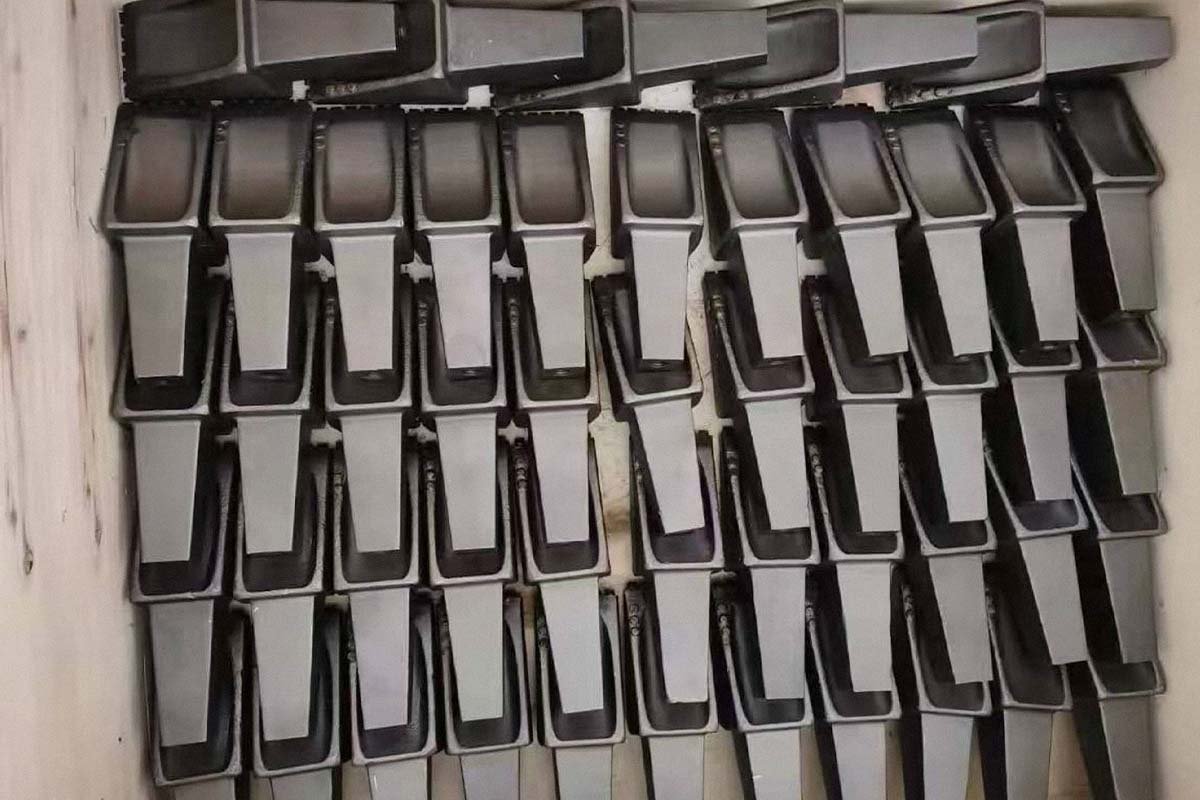

Bucket teeth are the part of the bucket everybody looks at least once, and the part most buyers order without thinking about. They order by number, the numbers do not match the ground, and the teeth fail in the first week.
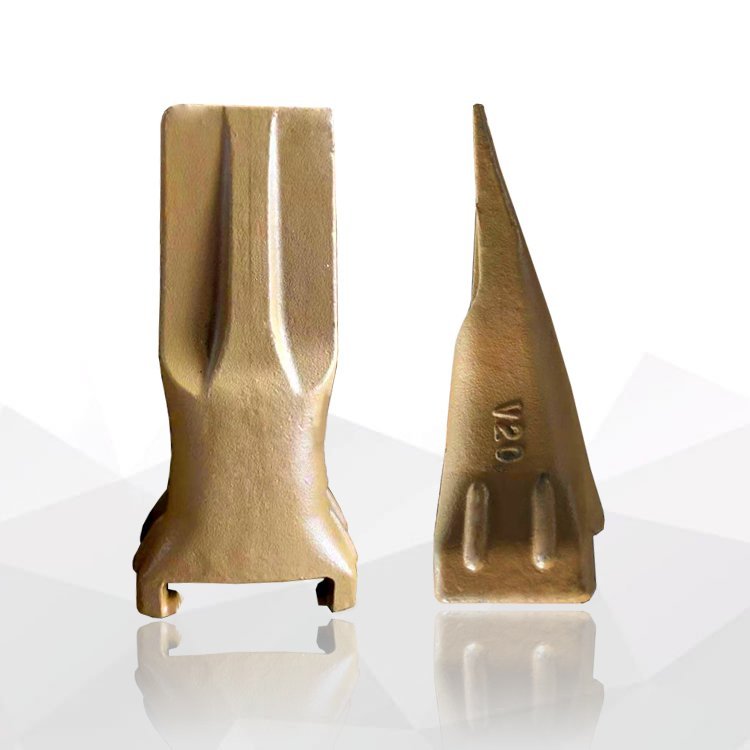
Bucket teeth are soil-cutting teeth for the bucket edge, made of high carbon steel and alloy steel using water glass investment casting. AAETT® builds five main models: 18TL, 25T, V19, V20, and 22S. Each one has a matching holder and a pin and lock. They are made for soil, clay, and sand, and they are not the right tool for rock.
Choosing well is not difficult. It comes down to the ground, the bucket edge, and how the tooth is attached. Let us work through each one.
What Are Bucket Teeth and How Are They Different From Flat Teeth?
Bucket teeth are the soil-cutting teeth that sit on the bucket edge.
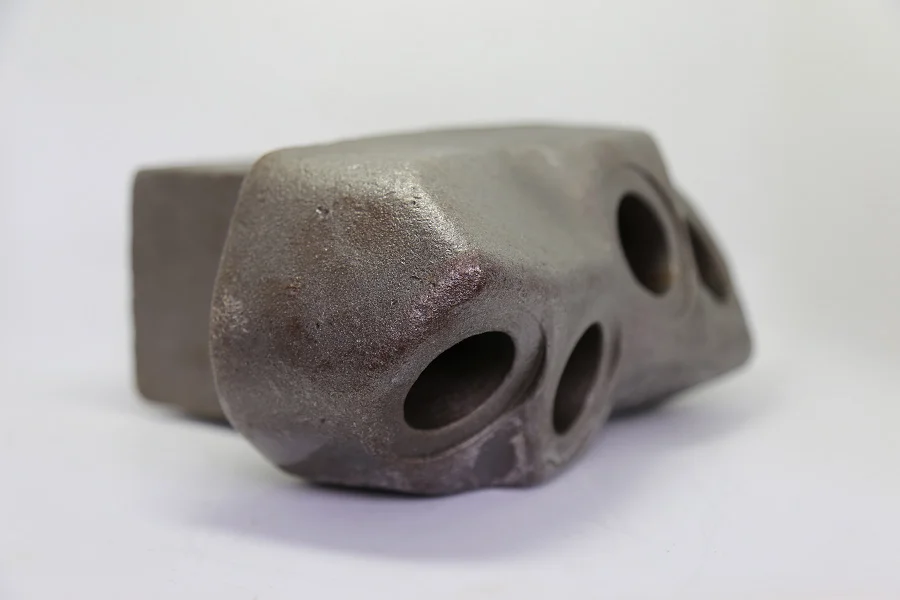
A bucket tooth has a tooth body, a carbide tip, and a mounting section. The body is made of high carbon steel and alloy steel, cast by the water glass investment casting process. The carbide tip does the cutting. The mounting section fits into a holder, and a pin and lock keep it in place. Our flat teeth range uses the same holder logic with a wider, blunter tooth for a scraping cut.

Bucket Teeth vs Flat Teeth vs Bullet Teeth
Three tooth families, three cutting behaviours. Getting the right one is the whole game.
| Factor | Bucket Teeth | Flat Teeth | Bullet Teeth |
|---|---|---|---|
| Designed for | Soil, clay, sand | Soft soil, silt, sand | Rock, gravel, hard ground |
| Cutting style | Multi-step point cut | Wide scraping cut | Concentrated impact cut |
| Body material | High carbon + alloy steel, investment cast | Forged alloy or high carbon steel | Forged alloy steel |
| Typical models | 18TL, 25T, V19, V20, 22S | BFZ72, BFZ79, BFZ80 | B47K17.5H, B47K19H, B47K22H |
| Main bucket | Soil bucket | Soil bucket | Rock bucket, core barrel |
The rule I give every buyer is the same. Bucket teeth and flat teeth are for soil. Bullet teeth are for rock. If the ground has gravel in it, move up to bullet teeth rather than trying to find a better soil tooth.
What Are the Available Bucket Teeth Models and Their Weights?
Five tooth models, five holders, and the pin and lock for each.
The 18TL is the lightest set at 0.89 kg for the tooth with a 1.66 kg holder. The 25T is the heaviest at 2.28 kg with a 3.3 kg holder. The V19 tooth is 2.1 kg and its holder is 3.0 kg. The V20 tooth is 2.5 kg with a 3.0 kg holder. The 22S is 1.25 kg with a 2.5 kg holder. Every model takes a 0.2 kg pin and lock.
| Part No. | Description | Unit Weight kg |
|---|---|---|
| 18TL Teeth | Soil Teeth | 0.89 |
| 18TL Holder | Holder | 1.66 |
| 18PN/LK | Pin/Lock | 0.2 |
| 25T Teeth | Soil Teeth | 2.28 |
| 25T Holder | Holder | 3.3 |
| 25T PN/LK | Pin/Lock | 0.2 |
| V19 Teeth | Soil Teeth | 2.1 |
| V19 Holder | Holder | 3.0 |
| V20 Teeth | Soil Teeth | 2.5 |
| V20 Holder | Holder | 3.0 |
| 22S Teeth | Soil Teeth | 1.25 |
| 22S Holder | Holder | 2.5 |
Which Model Should You Choose?
Choose by the ground and by the bucket edge. A small bucket in soft clay takes the 18TL. A large bucket in normal clay takes the 25T or the V20. A bucket working in dense sand or gravelly sand takes the heavier V series because there is more load on the tooth.
| Working Condition | Recommended Set | Reason |
|---|---|---|
| Soft clay, small bucket | 18TL Teeth + 18TL Holder | Lightest set, low ground resistance |
| Normal clay and silt | 25T Teeth + 25T Holder | Good balance of strength and weight |
| Dense sand | V19 Teeth + V19 Holder | Heavier body for abrasive soil |
| Very dense sand, gravelly sand | V20 Teeth + V20 Holder | Heaviest tooth for the highest load |
| Hard clay, compact soil | 22S Teeth + 22S Holder | Compact tooth body for tough soil |
| Rock or gravel | Switch to bullet teeth | Soil teeth cannot take point impact |
One note on the 22S. It is the lightest of the V and 2-series sets at 1.25 kg, but it is also the most compact. It is a good fit where the cutting edge has limited room and the ground is hard clay rather than sand. If you are unsure, send us the bucket diameter and the ground report and we will specify the tooth.
Why Does the Casting Method Matter?
How the body is made decides how long it lasts.
These teeth are made of high carbon steel and alloy steel, cast by the water glass investment casting process. This gives high strength and impact performance, and it keeps the cost low while the wear resistance and durability stay high. The investment casting process produces a dense body with a consistent structure, which means the tooth behaves the same way whether it is the first one on the bucket or the last one installed.
What Does High Carbon Steel Add?
Carbon is what gives steel its hardness. High carbon steel holds an edge and resists abrasion. The alloy addition is what gives the tooth its toughness, so that it does not snap when it hits a stone buried in the soil. You need both. A hard tooth that snaps is worse than a slightly softer tooth that keeps working.
Why Does the Investment Casting Process Help?
Investment casting produces a fine, uniform structure with no sand inclusions and no porosity. That matters for two reasons. First, the carbide tip sits on a clean seat, so the brazed bond holds. Second, the tooth body has no weak spots, so the wear is even across the whole tip rather than concentrated in one area.
What Advantages Do Bucket Teeth Give on the Job?
Four practical benefits on site.
The body surface is smooth, which means less resistance and faster drilling efficiency. The teeth have high strength and impact performance, so they survive stones in the soil. They have a long life and strong bearing capacity, so they hold the bucket edge. And the quality is high with a reasonable cost, which saves money over the life of the project.
What Does a Smooth Teeth Body Achieve?
A smooth tooth body does not drag the spoil. It pushes it. The bucket fills faster, the rig draws less power, and the drive and the Kelly bar wear slower. On a soft-ground job with a high hole count, this is the difference between a comfortable shift and a tiring one.
What Does Impact Performance Mean in Practice?
Every borehole has stones in it. An impact-resistant tooth hits a stone and stays on the bucket. A brittle tooth chips and comes off. When a tooth comes off in the hole, it is not just a lost tooth. It is a piece of steel sitting at the bottom of the pile that has to be dealt with before the concrete goes in.
Why Does Bearing Capacity Matter?
The teeth carry the load from the bucket edge into the bucket body. Strong bearing capacity means the tooth does not twist in its holder under drilling torque. A tooth that twists wears unevenly and then fails. This is why the tooth and the holder are always sold and specified as a set.
How Do Bucket Teeth Perform in Clay Compared to Sand?
The same tooth does very different work in clay and in sand, and this is worth understanding before you order. In clay the material is cohesive. It breaks away in lumps and the tooth gets clean cuts. The main load on the tooth is the resistance of the clay itself, and the tip wears slowly. A bucket in clay can run for a shift and the teeth will still look close to new.
In sand the material is loose and abrasive. There is nothing to break, so every grain rubs against the tip and the tooth body as the bucket rotates. The wear rate goes up sharply. This is why the V19 and V20 exist. They carry more material in the tip and a heavier body, which is what keeps the profile through a full shift in sand.
There is a third case that catches people out: gravelly sand. This is sand with enough gravel in it to behave like gravel for wear purposes, and it will chew through soil teeth. If the ground report mentions gravel below 5 MPa, or if the spoil coming out of the hole looks like coarse sand with stones in it, specify bullet teeth instead.
How Do You Replace Bucket Teeth and What Should You Keep on Site?
The changeover should take minutes, not an hour.
The tooth goes into the holder, and the pin and lock hold it. When a tooth is worn, you remove the pin and lock, knock the tooth out, and fit the new one. There is no welding on site and no special tooling. On a soft-ground project this means the bucket can be re-teethed at the machine between holes.
| Item to Stock | Why | Suggested Quantity |
|---|---|---|
| Complete tooth and holder sets | So you can swap a whole set, not just a tooth | One full set per bucket |
| Pin and lock spares | These are the first thing to lose | 25 to 50 percent extra |
| One matched holder per tooth on site | A tooth with a damaged holder is scrap | Two to three spares |
| A set of rock teeth | For the lower layer when the profile changes | One full set |
Why Should You Order Spare Holders?
A tooth with a worn or damaged holder will not seat correctly. The load goes through the wrong part of the tooth, and it breaks early. Because the holder is the more expensive of the two items in most cases, and because it is the part that takes the ground wear, keep spares of both. The cost of a spare holder set is small next to a rig standing idle.
When Should You Replace the Whole Set?
Replace the whole set when the teeth are worn to roughly half their original profile, not when one tooth fails. A bucket running on a mix of old and new teeth cuts a line that is not straight, because the new teeth bite deeper than the old ones. The bucket then drifts off the design diameter and the borehole comes out irregular. Set a replacement rule and stick to it.
How Do Bucket Teeth Work With the Rest of the Bucket?
The teeth, the holders, and the edge have to agree with each other.
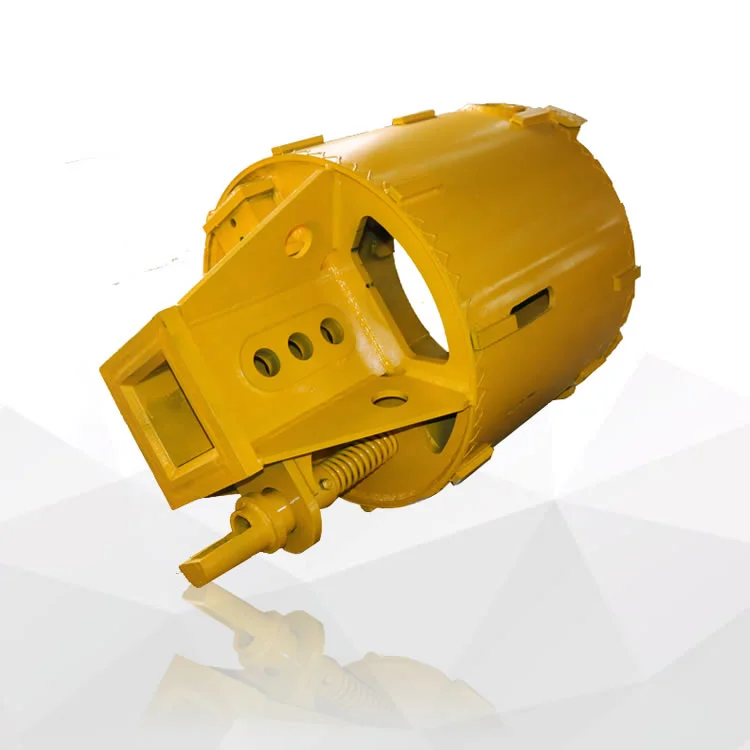
Bucket teeth are the cutting element on a drilling bucket. The bucket edge has to be thick enough to carry the holder and to resist the load. The bucket body has to be strong enough to take the reaction. And for mixed profiles, you may need both soil teeth and bullet teeth on site, with a changeover at the layer boundary.
| Component | Role | What Goes Wrong If It Is Wrong |
|---|---|---|
| Bucket edge | Holds the holder and takes the load | Edge deflects, teeth break off |
| Holder | Transfers impact, takes ground wear | Tooth loosens, wears unevenly |
| Pin and lock | Keeps the tooth seated | Tooth shifts, borehole goes out of round |
| Tooth model | Matches the ground | Wrong cut, fast wear |
| Tooth count | Set by the edge circumference | Gapped edge, bucket skips |
Conclusion
Bucket teeth are cast high carbon and alloy steel soil teeth in five models. Use the 18TL for small buckets in soft clay, the 25T for normal clay, the V19 and V20 for dense sand, and the 22S for hard clay. Always order the matching holder, the pin and lock, and a spare set for every bucket on site.