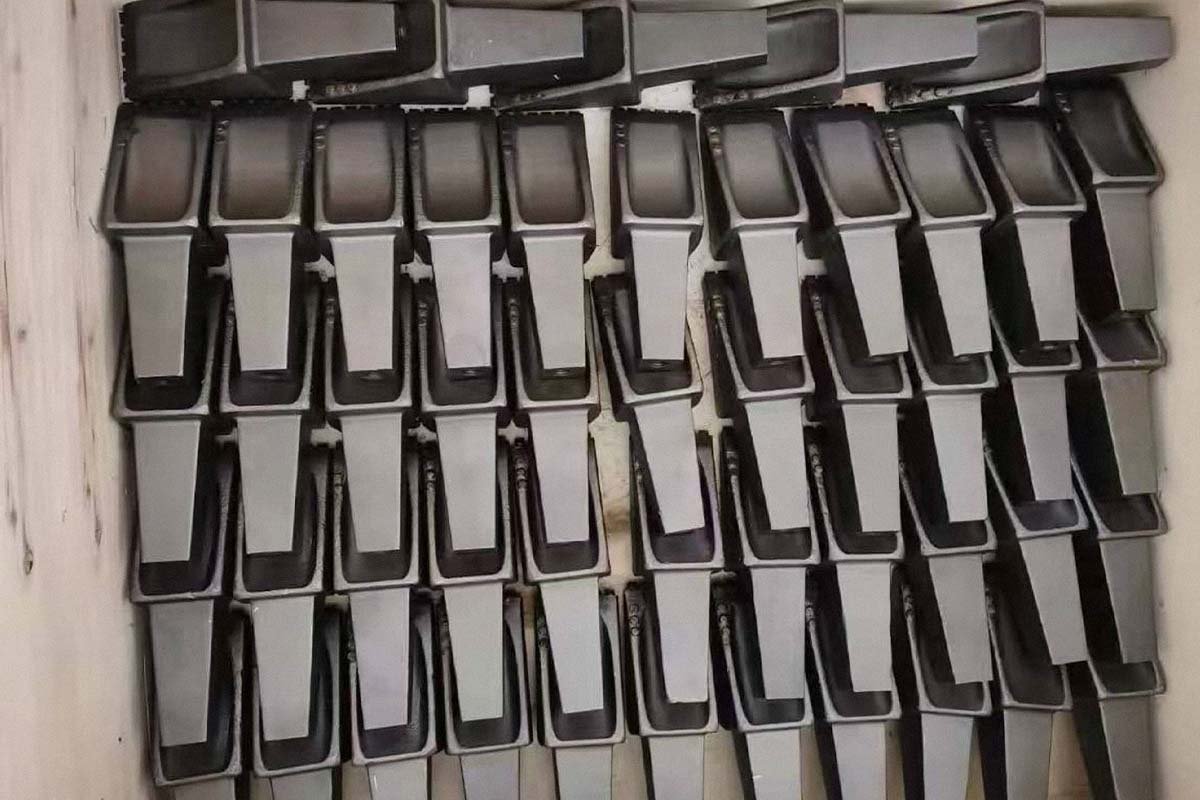
The pile is drilled. The hole is at depth. The reinforcement cage is ready to go in. And then somebody looks down the hole and sees a metre of loose muck at the bottom.
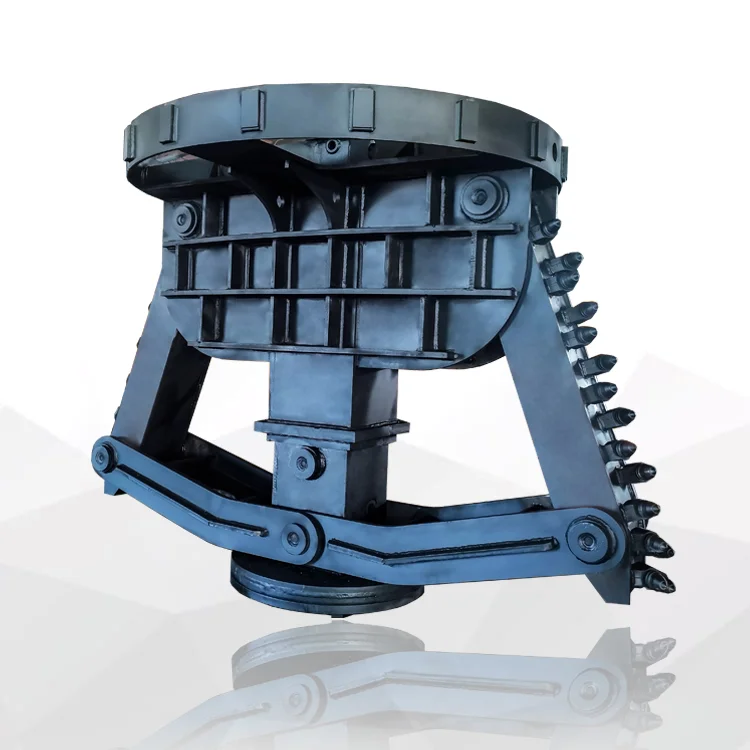
A cleaning bucket is a drilling tool with a rotating bottom that sweeps the loose spoil off the bottom of the borehole before concrete is poured. AAETT® offers conical and straight shells, with a straight guide plate or no guide plate, in diameters from 600 mm to 3000 mm. The point is simple: a clean hole is the difference between a pile that takes its load and a pile with soft material trapped under the base.
Every pile needs one. Most sites only use one when something goes wrong. Here is why it should be planned in from the start. It is the last tool of the sequence, and it is the one that decides what the base of the pile actually sits on.
What Is a Cleaning Bucket and How Does It Work?
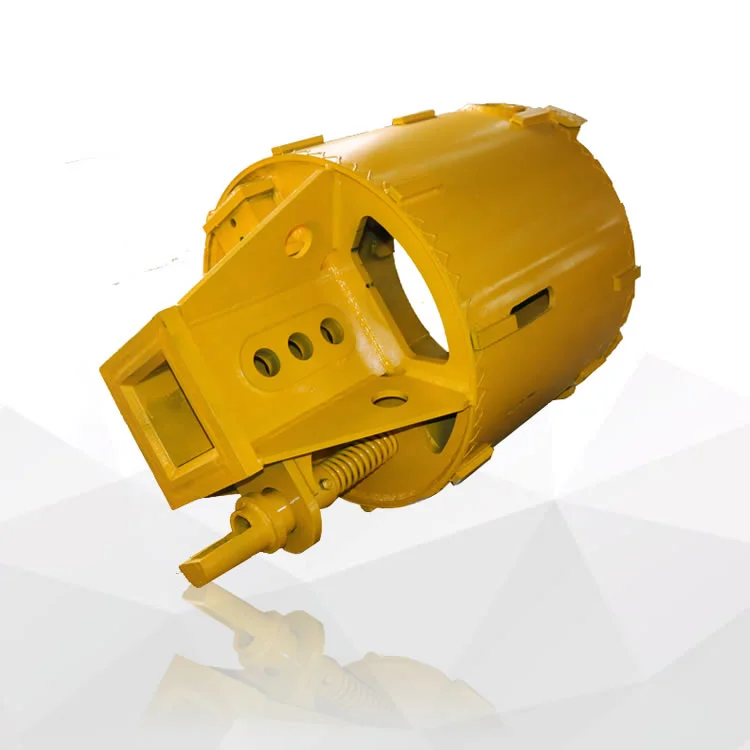
A cleaning bucket is a bucket with a bottom that opens and rotates.
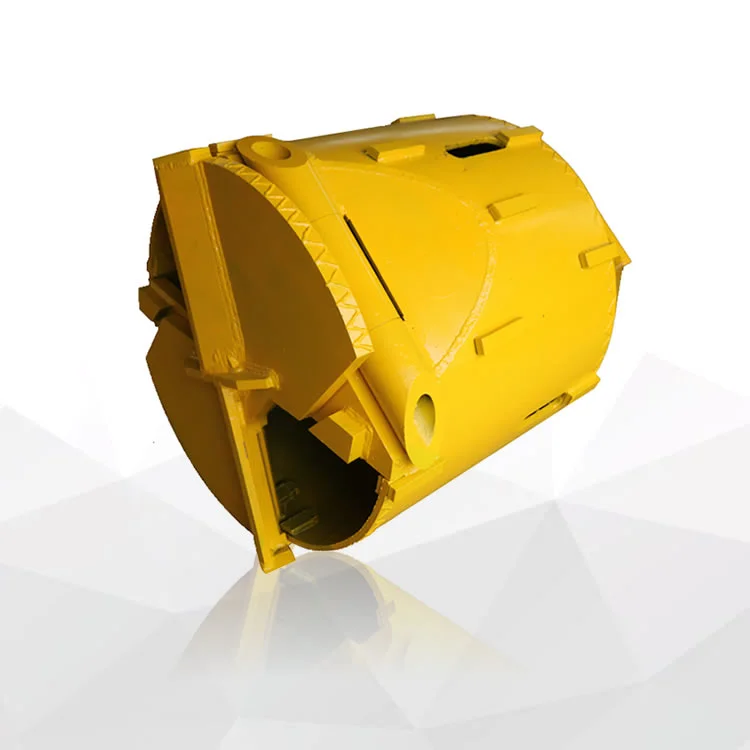
The body of a cleaning bucket is much like a drilling bucket. The difference is the bottom. The bottom is either a fixed plate or a rotating plate, and the rotating plate is opened by the operator once the bucket reaches the bottom of the hole. As the tool turns, the open bottom scrapes the borehole floor and the spoil is forced up into the body. The operator closes the bottom, lifts the tool out, and the spoil is discharged at the surface.
Why Does the Bottom Rotate?
A rotating bottom turns the spoil loose while it sweeps. This is what allows the bucket to clean a hole that a fixed-bottom bucket would just fill again. The rotation also spreads the wear over the whole bottom edge instead of concentrating it in one place, which extends the life of the bottom plate.
What Are the Two Opening Options?
You can specify a half-automatic bottom open system or a manual bottom open system. The half-automatic version opens as the bucket reaches the bottom, which is faster and reduces the chance of the operator forgetting. The manual version gives the operator full control over when the bottom opens, which is useful on long holes where you want to control the plunge rate.
How Do You Choose Between a Conical and a Straight Cleaning Bucket?
It depends on the hole shape and the spoil.
A conical cleaning bucket is chosen for a deeper hole and for a borehole that has a conical shape, which is common when the pile is drilled as a series of overlapping holes. A straight cleaning bucket suits a straight cylindrical hole and gives a flat bottom, which is what you want under a pile base. Choose the guide plate or no guide plate according to the working condition, in particular whether the hole is cased.
| Condition | Recommended Configuration | Reason |
|---|---|---|
| Straight cylindrical hole | Straight bucket | Flat bottom under the pile base |
| Overlapping or conical hole | Conical bucket | Follows the existing hole profile |
| Cased hole | With straight guide plate | The plate keeps the bucket on the casing wall |
| Uncased hole | No guide plate | Nothing to guide against, simpler build |
| Long hole, controlled plunge | Manual bottom open | Operator controls the opening moment |
| High production, fast cycle | Half-automatic bottom open | Opens on contact, less operator work |
What Sizes Are Available and What Are the Dimensions?
From 600 mm to 3000 mm, in thirteen diameters.
The shell hit length, the shell outside diameter, the shell thickness, the fixed bottom thickness, the rotating bottom thickness, and the weight are all specified. The shell hit length decreases as the diameter grows, which keeps the tool weight under control on the larger sizes. A 600 mm bucket weighs 500 kg with an 800 mm shell hit. A 2500 mm bucket weighs 4680 kg with a 600 mm shell hit.
| Cleaning Dia. mm | Shell HIT mm | Shell OD mm | Shell THK mm | Fixed Bottom THK mm | Rotate Bottom THK mm | Weight kg |
|---|---|---|---|---|---|---|
| 600 | 800 | 500 | 16 | 40 | — | 500 |
| 800 | 800 | 700 | 16 | 40 | — | 780 |
| 900 | 800 | — | 16 | 40 | — | 860 |
| 1000 | 800 | 900 | 16 | 40 | 50 | 980 |
| 1200 | 800 | 1100 | 16 | 40 | 50 | 1270 |
| 1500 | 600 | 1400 | 16 | 40 | 50 | 1570 |
| 1600 | 600 | 1500 | 16 | 40 | 50 | 1900 |
| 1800 | 600 | 1700 | 16 | 50 | — | 2480 |
| 2000 | 600 | 1900 | 20 | 50 | — | 3000 |
| 2200 | 600 | 2100 | 20 | 50 | — | 3570 |
| 2500 | 600 | 2400 | 20 | 50 | — | 4680 |
| 2800 | 600 | 2700 | 20 | 50 | — | 5330 |
| 3000 | 600 | 2900 | 20 | 50 | — | 6125 |
The table shows the rotating bottom thickness separately from the fixed bottom thickness. On the mid sizes both are listed at 50 mm. On the largest sizes the bottom is fixed, which is a simpler and heavier build that suits a large hole where the spoil volume is high.
Why Does a Clean Hole Bottom Matter So Much?
This is the part that decides whether the pile is worth what you paid for it.
Loose spoil left at the bottom of a borehole does not become part of the foundation. It is a soft layer that sits between the concrete and the ground. The pile then settles into it. The design assumes the pile bears on the ground at the base, and the soft layer breaks that assumption. The settlement shows up months later, in a structure the client has already taken over.
| Problem At The Bottom | Consequence | Where It Shows Up |
|---|---|---|
| Loose spoil under the base | Pile settles into soft material | Differential settlement across the site |
| Soil trapped in the reinforcement cage | Concrete does not fully encase the cage | Reduced structural capacity |
| Slurry or fines washed to the bottom | Weak layer with no consolidation | Load not transferred to the soil |
| Off-centre base contact | Uneven load on the pile | Tilting and cracking in the structure |
| Debris blocking the cage | Cage cannot be lowered to the bottom | Delay while the hole is re-cleaned |
What Is the Impact on the Concrete?
Concrete is placed by tremie pipe into a bored pile. The concrete has to displace the fluid and the loose material at the bottom, and it has to do this evenly. If there is a metre of muck down there, the first concrete pumped goes into the muck instead of forming the base of the pile. The result is a pile with a soft layer at the bottom, which is exactly the defect the cleaning bucket exists to prevent.
What Does It Cost to Skip the Cleaning Step?
The cleaning bucket itself is a relatively small cost compared with the drilling already done. The cost of not cleaning is a pile that may not perform as designed, and a remediation strategy later that costs far more than the drilling. On any bored pile project, the cleaning step is one of the cheapest quality controls you can buy.
What Can Be Customised on a Cleaning Bucket?
Five things, and two of them matter a lot.
The cutting diameter can be designed to any demand, for example 950 mm or 1050 mm when the pile design uses an unusual size. The shell hit length can be prolonged or shortened to increase efficiency by drilling more. The bottom can be a single or double bottom design. The Kelly box can be custom sized to match the Kelly bar, such as 130 x 130, 150 x 150, or 200 x 200. And the bottom open mechanism can be half-automatic or manual.
| Custom Item | Options | Why It Matters |
|---|---|---|
| Cutting diameter | Any size, e.g. 950 mm, 1050 mm | Must match the pile design |
| Shell hit length | Longer or shorter | More drilling per stroke, or better handling |
| Bottom design | Single bottom or double bottom | Double bottom suits heavier spoil loads |
| Kelly box | 130×130, 150×150, 200×200 | Must match the Kelly bar on the rig |
| Bottom open mechanic | Half-automatic or manual | Control over the opening moment |
Why Does the Kelly Box Size Matter So Much?
The Kelly box is the square drive that connects the tool to the rig. A mismatch means the tool does not transmit torque properly, the drive parts wear quickly, and the operator fights the rig all shift. This is the single most common ordering mistake I see on cleaning buckets. When you order, confirm the Kelly box size against the rig, not against the last order.
When Do You Need a Double Bottom?
A double bottom design is worth specifying on large diameters with heavy spoil, and on jobs where the spoil is wet clay that packs down. The single bottom is lighter and simpler, and on the smaller diameters it is entirely adequate.
Where Does the Cleaning Bucket Fit in the Drilling Sequence?
It is a separate tool, used at a specific moment.
The cleaning bucket is not the tool that makes the hole. It is the tool that prepares the hole for concrete. The sequence is: drill with the drilling bucket or the auger, run the core barrel if rock is present, clean the bottom with the cleaning bucket, then lower the cage and place the concrete.
| Step | Tool | Purpose |
|---|---|---|
| 1. Drilling | Drilling bucket or auger | Remove the bulk of the spoil |
| 2. Rock section | Core barrel or roller bit | Cut hard layers and recover the core |
| 3. Bottom cleaning | Cleaning bucket | Sweep the loose spoil off the borehole floor |
| 4. Inspection | Camera or manual check | Confirm the bottom is clean |
| 5. Concrete | Tremie pipe | Place the concrete to the bottom of the hole |
How Is the Tool Used in Practice?
The operator lowers the bucket to the bottom of the hole, opens the bottom, and applies enough downforce to keep it cutting while the rotation sweeps the floor. The spoil is forced into the body. The operator closes the bottom before lifting. The tool comes out full, and the spoil is discharged at the surface. In soft ground this is fast. In a deep hole the cycle time is dominated by the lift, so plan the crane capacity for the loaded weight.
What About Deep Holes and Cased Holes?
In a deep hole the tool needs to travel further, and the hole may need to be cased. A straight guide plate lets the bucket run against the casing wall, which keeps it on line and prevents the bottom from catching on the casing edge. This is the main reason to specify the guide plate.
Conclusion
A cleaning bucket sweeps the loose spoil off the bottom of a bored pile before the concrete goes in. Choose conical or straight for the hole shape, a guide plate for a cased hole, and a half automatic or manual bottom open system for the operating style. Sizes run from 600 mm to 3000 mm and every one of them can be built to the Kelly box on your rig.