The strongest rope in the world is useless if the end of it lets go. Every crane load, every hoist, every suspended platform depends on one small piece of metal that most people never look at.
A swaged wire rope termination is a mechanical end fitting attached by compressing the rope into a shaped socket or drum using a hydraulic press. The compression deforms the wires and the socket together, so the load transfers from the rope into the fitting through friction and mechanical interlock rather than through a chemical bond or a wedge alone. This is the standard termination method for permanent and high-load installations.
There are several ways to end a wire rope, and the choice matters. Here is how they compare, and what actually determines whether a termination holds.
What Is a Swaged Wire Rope Termination?
A swaged termination is a socket pressed onto the rope.
The rope is cut to length and the end is prepared. The wires are untwisted or dressed back depending on the socket design, the rope is inserted into the socket, and a hydraulic press compresses the assembly. The socket material deforms around the rope, gripping it both mechanically and by friction. The result is a termination with a strength that can match the rope itself when it is done correctly.
How Does the Load Get Transferred?
This is the key to understanding why a swaged termination works. The load does not rely on one wedge pulling against one surface. It is carried by the entire circumference of the socket, through friction between the deformed socket surface and the deformed rope wires, and through the mechanical interlock created as the socket material flows into the gaps between the wires.
The result is that the failure load of the termination is not limited by a single contact point. This is why swaged terminations are used on crane ropes, hoist ropes, and any application where the consequence of a failure is severe.
What Are the Different Types of Wire Rope Termination?
Four methods, and the differences are real.
A swaged or socketed termination is pressed on. A wedge socket uses a tapered wedge driven into the socket to grip the rope. A cone socket relies on the rope being tapered and wedged into a conical socket. And a mechanical termination using a wedge and a drum uses the wedge between the rope and the drum wall, allowing the rope to be adjusted for length.
| Method | How It Grips | Adjustable | Strength vs Rope | Typical Use |
|---|---|---|---|---|
| Swaged socket | Compression, friction, interlock | No | Can match the rope | Permanent, high load installations |
| Wedge socket | Tapered wedge in socket | No | Typically 75 to 90 percent of rope MBL | Cranes, hoists |
| Cone socket | Tapered rope wedged into socket | No | Varies with wedge angle | General lifting |
| Wedge and drum | Wedge between rope and drum | Yes | Typically 75 to 90 percent of rope MBL | Adjustable-length applications |
What Is the Difference Between a Swaged Socket and a Wedge Socket?
A wedge socket grips the rope with a wedge driven into a tapered socket. The grip depends on the wedge staying in place, and the pull-in effect of the wedge is what holds the rope. The termination strength is normally in the region of 75 to 90 percent of the rope’s minimum breaking load, and it depends on the wedge being correctly seated and the socket being undamaged.
A swaged socket has no moving part. The strength comes from the compression itself, so it does not loosen in service and it does not depend on a wedge remaining seated. A correctly made swaged termination can match the rope’s breaking load. This is the reason to choose it on a permanent installation.
When Is a Wedge and Drum the Better Answer?
When the length has to be adjusted. A wedge and drum termination lets you take up slack without cutting the rope, which is useful on a luffing jib, a crane boom extension, or any application where the rope length changes with the working radius. The trade-off is the lower strength rating and the fact that the wedge can work loose, so it needs inspection.
What Is the Difference Between a Cone Socket and a Wedge Socket?
In a cone socket, the rope itself is tapered before it is inserted, and the taper is driven into the socket. In a wedge socket, the rope is left at full diameter and a separate wedge does the gripping. The cone socket is simpler to make and has fewer parts, but the strength depends entirely on how well the taper was formed and how tightly it was seated.
How Is a Swaged Termination Made Correctly?
The process has a sequence, and skipping a step shows up later.
The rope is cut to the correct length with a proper cutter, not a grinder, because a grinder burns the wires and the heat damage shows up as a failure months later. The end is then prepared according to the socket design. The rope is inserted and the press applies the specified compression. Finally the termination is inspected and the dimension is checked against the socket specification.
| Step | What to Do | Common Mistake |
|---|---|---|
| 1. Cut | Use a sharp rope cutter at a right angle | Using a grinder, which burns the wires |
| 2. Prepare the end | Dress and untwist per the socket drawing | Leaving the strands twisted |
| 3. Insert | Push the rope fully to the socket base | Not inserting it fully, reducing the grip |
| 4. Press | Apply the specified compression for that socket | Under-pressing, which is the top failure cause |
| 5. Inspect | Check the diameter and length against spec | Skipping the check |
Why Does Under-Pressing Cause Failures?
This is the number one cause of swaged termination failure. If the press does not apply enough compression, the socket material does not fully deform around the wire. The friction surface is not fully developed, and the interlock between the socket and the rope wires is incomplete. The termination looks perfectly normal. The wires can even be visible in the socket. And it will fail below the rope’s rated strength.
The press has to be the right one for the socket, and the operator has to use the specified settings. A press that is too small will never reach the required compression no matter how many times you run it. This is why swaged terminations are made on site with proper equipment or in a workshop with a calibrated press, and not by hand.
Does the Rope Construction Matter for Swaging?
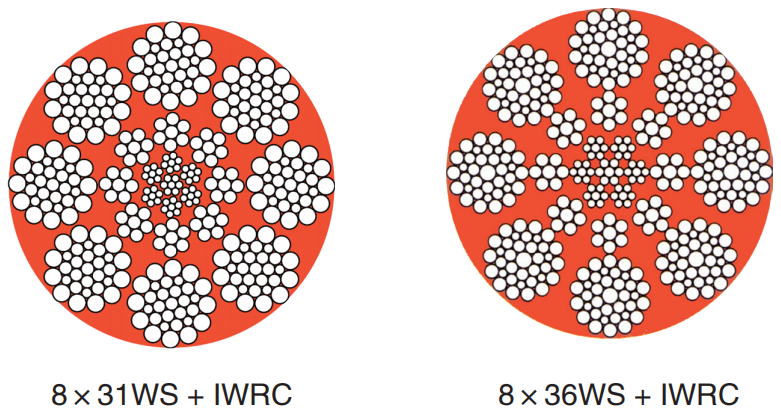
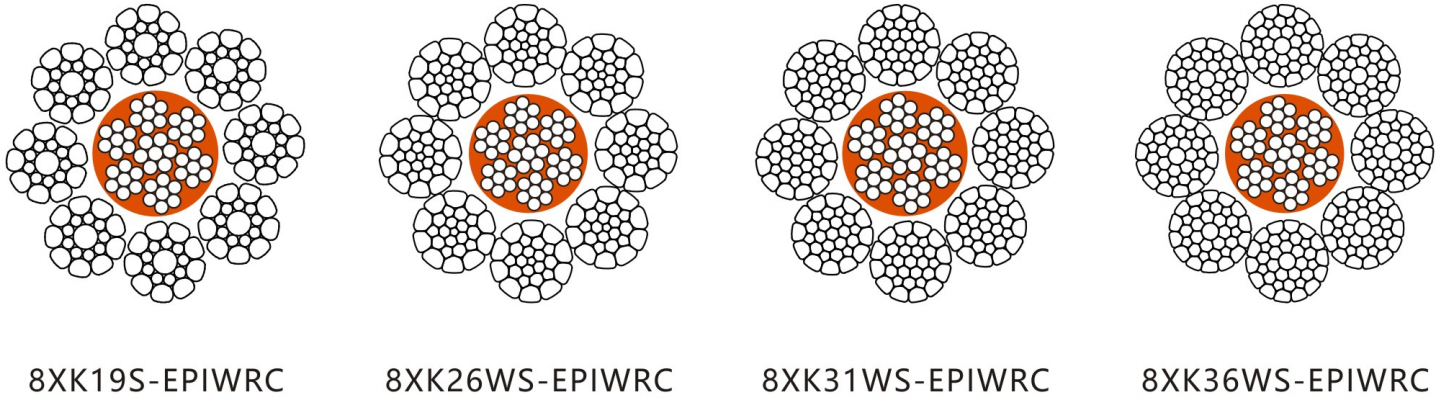
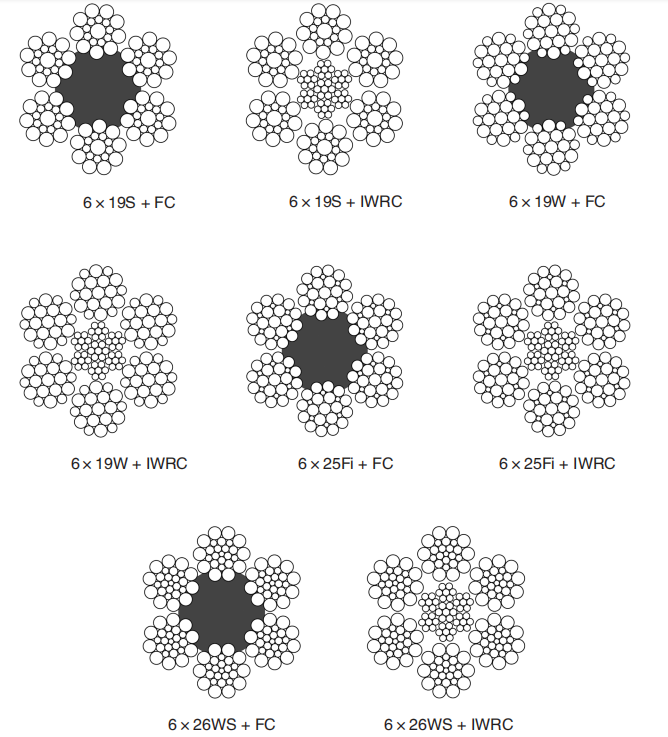
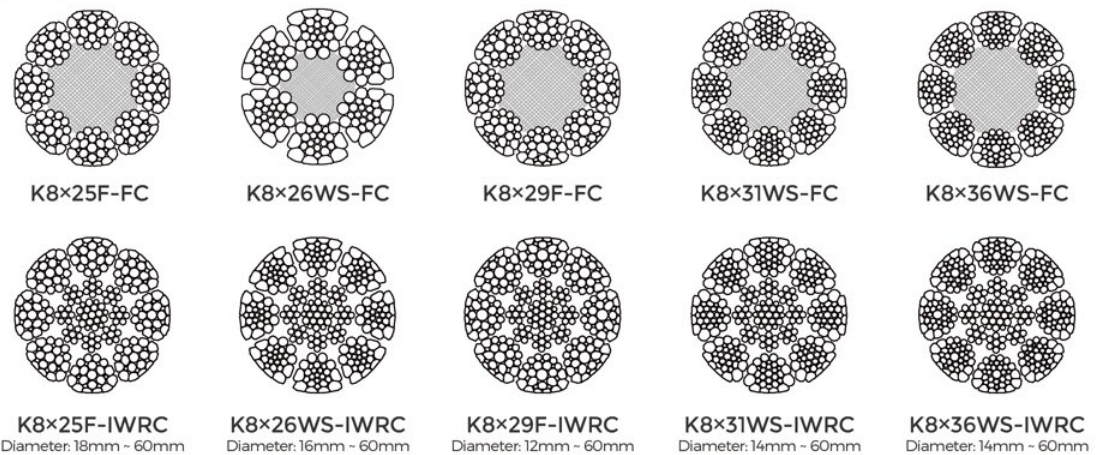
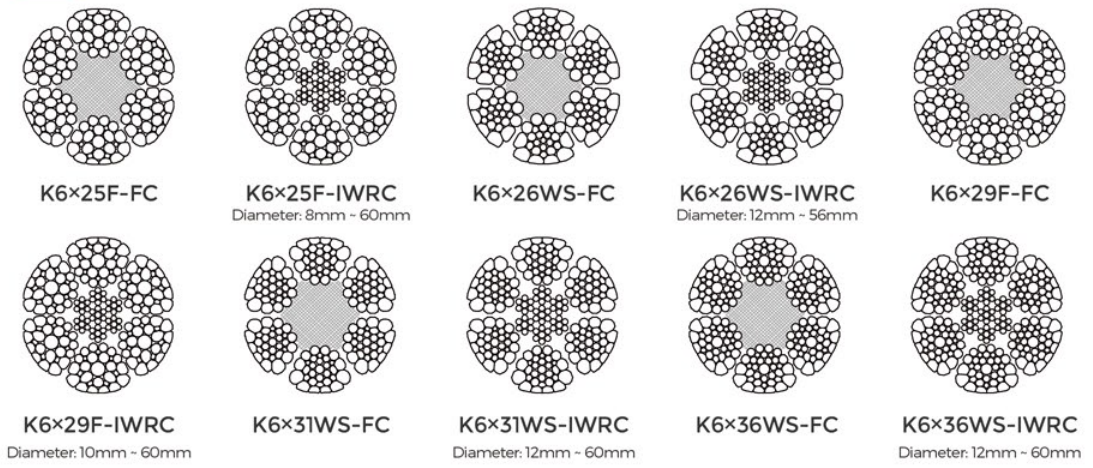
Yes. Compacted and shaped strand ropes need different preparation than conventional round strand ropes. Our compacted strand rope and shaped strand rope have flattened wires and shaped strands, which means they do not conform to a socket in the same way a round strand rope does. The socket design and the preparation procedure have to match the rope construction. This is one of the reasons to order the termination together with the rope rather than sourcing it separately.
What About Galvanized and Coated Ropes?
A galvanized rope can be swaged, and it is done regularly. The coating has to be stripped back from the length that will sit inside the socket, because the jacket must not be trapped between the socket and the steel. If the jacket is left in the socket, the termination strength drops below the rope strength. On a plastic coated rope, the stripping length has to be specified as part of the order.
How Do You Choose the Right Termination?
Five questions.
What is the load and the required safety factor. Is the length fixed or does it need to be adjustable. What is the rope construction, since this decides the preparation. What is the environment, which decides whether galvanizing or a coating is needed. And how much space is there at the termination, because a swaged socket has a larger diameter than the rope and needs clearance.
- Working load and safety factor required by the applicable standard
- Whether the length is fixed or needs to be adjustable
- Rope construction: round, compacted, or shaped strand
- Environment and any corrosion or coating requirement
- Available space for the socket and the press at installation
- Standard compliance for the termination, such as EN 13411 or ASME B30
Which Standards Apply?
Wire rope terminations are covered by specific standards, and the standard tells you the permitted loss of strength at the termination. EN 13411 covers wire rope terminations and their safety factor requirements. ASME B30 covers the mechanical properties of rope and the terminations used with it. EN 12385 covers the rope itself. When you specify a termination, state the standard, because the permitted strength loss is defined by it.
How Much Strength Do You Lose at the Termination?
This is the question every engineer asks, and the answer depends on the method. A wedge socket typically retains 75 to 90 percent of the rope’s minimum breaking load. A correctly made swaged socket can match the rope. The difference is significant, and on a crane or an overhead hoist it is often the difference between a compliant installation and one that is over-stressed.
The practical implication is that the termination, not the rope, sets the weakest link in most systems. When you calculate the working load, calculate it against the termination strength, not the rope strength. This is where a lot of installation problems come from.
How Do You Inspect a Rope Termination?
Inspection is where most terminations are neglected.
Check the termination for any movement, any rotation relative to the rope, and any sign of sliding. Look for cracking or distortion in the socket. Check that the wedge is still seated if it is a wedge type. Verify that the rope has not slipped out of the socket and that the tail length is still correct. And record the inspection, because the history is what proves the termination was sound when the load was applied.
| What to Check | What It Means | Action |
|---|---|---|
| Movement or rotation of the fitting | The termination is slipping under load | Replace immediately |
| Cracking or distortion in the socket | The fitting is damaged or was under-pressed | Replace immediately |
| Rope pulled further out of the socket | The grip is failing | Replace immediately |
| Wedge not fully seated | The grip is reduced | Re-seat or replace |
| Corrosion at the socket | The fitting is being attacked | Assess and replace |
| Tail length changed | The rope has moved in the socket | Replace immediately |
Should Terminations Be Inspected on Every Shift?
For a fixed termination on a crane or hoist, the answer is yes, and it takes seconds. Look at it. The most common termination failure on a rope is not a fatigue crack in the socket. It is a rope that has crept out of the socket by a small amount, which is visible if you look. A five-second look on every shift catches this weeks before it becomes a failure.
Can a Termination Be Re-Made?
A wedge socket can be re-wedged if the wedge has worked loose. A swaged socket cannot. Once the compression is done, it is permanent. If a swaged termination has to be removed, the rope has to be cut and a new termination made, and the rope length has to be re-checked. This is another reason to specify the termination type carefully at the start, and to keep a record of the original dimensions.
Conclusion
A swaged termination grips the rope by compression, friction, and mechanical interlock, and it can match the rope’s breaking load when it is pressed correctly. Choose it for permanent high load installations, use a wedge socket where the length has to be adjusted, and always specify the standard. The termination, not the rope, is usually the weakest link in the system.