

A rope on a mine hoist gets replaced because of a failure that started years earlier. The wires inside the strand were rubbing against each other the whole time. Each rotation of the drum wore them a little more, until there was nothing left to hold.
A shaped strand wire rope is a rope in which the strands themselves are flattened or shaped, rather than being perfectly round. This gives better packing and increased contact surface between strands. AAETT® builds shaped strand ropes for mining and heavy lifting, hoist ropes, draglines, marine and offshore work, tower cranes, and industrial machinery. The result is higher strength, less internal friction, better fatigue resistance, and a longer service life.
The difference between a shaped strand rope and a compacted rope is worth understanding, because the two are often confused. Compaction flattens the wires inside the strand. Shaping flattens the strand itself. They solve different problems.
What Is Shaped Strand Wire Rope?
A shaped strand rope has flattened strands instead of round ones.
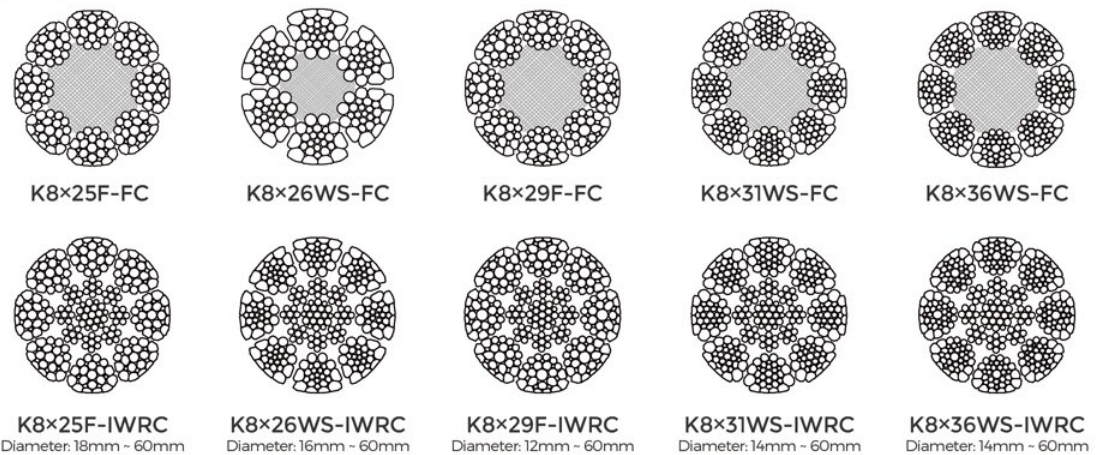
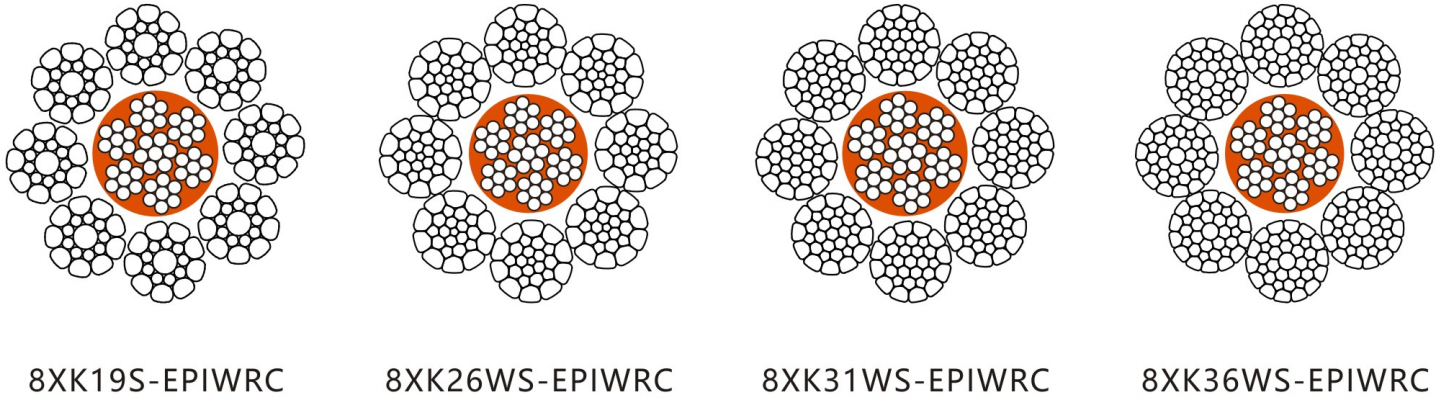
In a conventional rope the strands are round in cross-section, so they touch each other along a narrow line. In a shaped strand rope, the strands are pressed into a flattened or grooved profile during manufacture. Because they are shaped, they pack together and make contact over a much wider area. The rope becomes denser, the internal rubbing drops, and the load path through the rope is smoother.
How Does Shaping Differ From Compaction?
Both techniques change the geometry of a rope to make it perform better. They work at a different level, and they can be combined.
| Factor | Shaped Strand | Compacted Strand |
|---|---|---|
| What is deformed | The strand itself | The individual wires inside the strand |
| Main benefit | More contact between strands, less internal friction | More metal at the same diameter |
| Internal friction | Reduced | Reduced to a lesser degree |
| Contact area between strands | Increased | Unchanged |
| Void reduction | Moderate | Significant |
| Fatigue resistance | Excellent | Excellent |
| Spooling behaviour | Holds profile, less birdcaging | Good |
| Can be combined | Yes | Yes |
The practical difference: shaping works on the outside of the strand, where the rubbing happens. Compaction works inside the strand, where the metal density is short. If your failure mode is internal wire-to-wire wear, compaction addresses it more directly. If your failure mode is strand-to-strand rubbing on the rope surface, shaping is the more direct answer.
What Are the Five Key Benefits of Shaped Strand?
Five benefits, and they reinforce each other.
Enhanced strength and load capacity. Reduced internal friction. Better fatigue resistance. Improved spooling and handling. And a long service life.
How Does Shaping Increase Strength?
Shaped strands provide more contact points and reduce gaps between wires, which increases the rope’s overall breaking strength and load-bearing capability. The flattened profile packs the metal more efficiently into the same diameter. There is simply more steel carrying the load.
Why Does Reduced Internal Friction Matter Most?
This is the one that decides the life of the rope. When a round strand rope runs over a sheave, the strands rub against each other continuously. That rubbing is metal wearing away from metal, and it is the same mechanism that destroys ropes in mine hoists, where the rope lays against itself on the drum.
By shaping the strands, internal wire-to-wire friction is minimized, reducing wear and extending the rope’s service life, even under continuous heavy loading. The rope does not just break at the same load as a conventional rope. It survives far more cycles before it gets there.
How Does Shaping Improve Fatigue Resistance?
The distribution of stress across shaped strands lowers the risk of broken wires, making these ropes more fatigue-resistant than standard round strand ropes. Because the contact area is wider, the bending stress is spread rather than concentrated at a point. A rope that bends back and forth over a sheave for years will not develop the same fatigue cracks.
What Does Improved Spooling Mean in Practice?
Shaped strands maintain their profile under pressure, allowing the rope to spool more neatly on drums and sheaves without birdcaging or uneven layering. This is not a cosmetic issue. Birdcaging means the rope loops out of its lay on the drum, and the rope then rubs against itself in a way it was never designed for. It is one of the most common reasons a good rope fails early on a mine hoist.
How Does This Translate to a Longer Service Life?
The combination of high strength, low friction, and excellent wear resistance ensures a longer operational lifespan, reducing maintenance and replacement costs. Put a number on it and the argument is simple. If a shaped strand rope lasts three times as long as the conventional rope it replaces, the cost per year is a third, whatever the unit price.
Where Are Shaped Strand Ropes Used?
Four industries, and the reason is the same in all of them.
Mining and heavy lifting use them for hoist ropes, draglines, and dragline excavators. Marine and offshore use them for mooring lines, winches, and cranes. Construction uses them for tower cranes, elevators, and large-scale lifting equipment. Industrial machinery uses them for conveyors, heavy-duty machinery, and equipment requiring precise rope movement.
| Industry | Typical Application | Why Shaped Strand |
|---|---|---|
| Mining | Hoist ropes, dragline ropes | Highest cycle count and constant rubbing |
| Draglines | Hoist and digging ropes | Continuous high load with severe abrasion |
| Marine and offshore | Mooring lines, winch ropes | Corrosion plus long service requirement |
| Construction | Tower cranes, elevators | Long life and consistent performance |
| Industrial machinery | Conveyors, heavy equipment | Precise rope movement, low friction |
Why Are They the Standard in Mining?
Mining is the hardest rope application there is. The rope runs under high tension, works over a long service life, and is exposed to water, grit, and constant abrasion. A rope that is going to be in a mine shaft needs every advantage it can get. Internal friction reduction alone can double the life compared with a conventional rope of the same diameter.
This is also why the compacted strand wire rope and shaped strand approaches meet in mining. Many modern mine ropes are made with both techniques, because the two address different failure modes.
What Materials Are Available and How Do You Choose?
Material choice is about the environment, nothing else.
Galvanized or stainless steel are the options for corrosive environments. Galvanized steel gives good corrosion resistance for outdoor and marine work at a reasonable cost. Stainless steel is used in highly corrosive environments where the life of the rope matters more than the price. For standard indoor lifting, carbon steel remains the most economical choice.
| Material | Corrosion Resistance | Best For | Trade-off |
|---|---|---|---|
| Carbon steel | Low | Indoor lifting, general industry | Must be kept dry or lubricated |
| Galvanized steel | Good | Outdoor, marine, damp conditions | Higher initial cost |
| Stainless steel | Excellent | Highly corrosive and chemical exposure | Highest cost |
Does the Core Type Still Matter for Shaped Strand?
Yes. The shaped strand improves the strand geometry and the strand-to-strand contact. The core still decides the rope’s crush resistance and its stiffness. If you are specifying a shaped strand rope for a deep hoist where the rope is crushed against the drum, the core should be an independent wire rope core. If the rope runs over small sheaves and flexibility matters more, a fiber core is the better answer.
What About Lay Direction and Rotation?
A conventional rope with all strands laid in the same direction will rotate under load. If the application cannot tolerate rotation, specify a non-rotating wire rope construction instead, where the strands are arranged to balance the torque. Shaped strand does not solve the rotation problem on its own.
How Do Shaped Strand Ropes Compare With Full Locked Cables?
Both techniques reduce the exposure of the rope to the environment, but they work at different levels. A shaped strand rope improves the geometry of the rope itself. A full locked cable goes further: the outer layers are interlocking Z-shaped wires spun around a spiral strand core, which forms a closed outer shell that keeps external agents from reaching the inner strands.
The choice comes down to the environment and the life required. A shaped strand rope is the right answer for most heavy lifting and hoisting, and it is far more economical. A full locked cable is the answer when the rope has to sit in a corrosive or marine environment for a very long time and the extra cost of the closed construction is justified. You can read the full details on our full locked cables page.
One practical point that gets missed. A shaped strand rope is still an open construction. Water and grit can get inside it. If the rope works in a wet or dirty environment, the core and the internal wires need protection too, which usually means a sealed core or a plastic treatment such as plastic impregnation.
How Does the Rope Handle Abrasion?
Shaped strand ropes handle abrasion well, but not by accident. The wide contact area between the shaped strands spreads the load, so there is no single point where the strand gets pinched and worn through. On a dragline, where the rope drags over rock and spoil for years, this makes the difference between a rope that survives the mine life and one that does not.
If abrasion is the dominant wear mechanism rather than fatigue, the material choice matters more than the strand shape. Galvanized or stainless steel will outlast carbon steel in a wet abrasive environment. And when the ropes are running over rough rock, the drum and sheave surface condition is worth as much attention as the rope itself.
How Do You Specify a Shaped Strand Rope?
Specify the shape, not just the size.
The order specification has to say shaped strand explicitly. Give the diameter, the construction, the material, the core, and the minimum breaking load. If you only give the diameter and a construction code, the supplier can supply a conventional round strand rope and the certificate will be correct for what was supplied but not what you designed for. This is the single most common error in rope orders and it is expensive.
- Diameter and construction, with the words shaped strand stated
- Material: carbon, galvanized, or stainless steel
- Core type: fiber core or IWRC
- Minimum breaking load, and the safety factor it is based on
- Number of bending cycles in service
- Working environment and any corrosion requirement
- Drum and sheave dimensions, to confirm the minimum sheave diameter
What Are the Consequences of Getting the Specification Wrong?
You receive a rope that meets the order but not the duty. The certificate looks fine. The rope goes on the drum. And six months later the rope is on the floor because the internal friction was never addressed. The specification is the only place where this can be caught, so it is worth ten minutes of care.
Conclusion
A shaped strand wire rope has flattened strands that pack tightly and make contact over a wide area. This gives higher strength, less internal friction, better fatigue resistance, neater spooling, and a longer life. It is the standard choice for mine hoists, draglines, marine work, and tower cranes. Always specify the shaped construction by name in the order.