Two tools sit at the top of the foundation drilling market. The drilling bucket is the better known one. The auger is the more efficient one in the right ground, and most contractors do not know it.
An auger is a rotating drilling tool with a helical flight that lifts spoil out of the borehole as it turns. AAETT® makes rock and soil augers in three types: conical rock auger, flat rock auger, and flat soil auger. Each has a diameter range from 600 mm to 1800 mm, and each is built as a single cut or double cut version.
I get the same question from every new buyer: why would I use an auger when I already own buckets? The answer takes about five minutes to explain, and it saves a lot of money on the right project.
What Is an Auger and How Does It Work?
An auger is a screw-shaped drilling tool. It works by lifting, not by scooping.
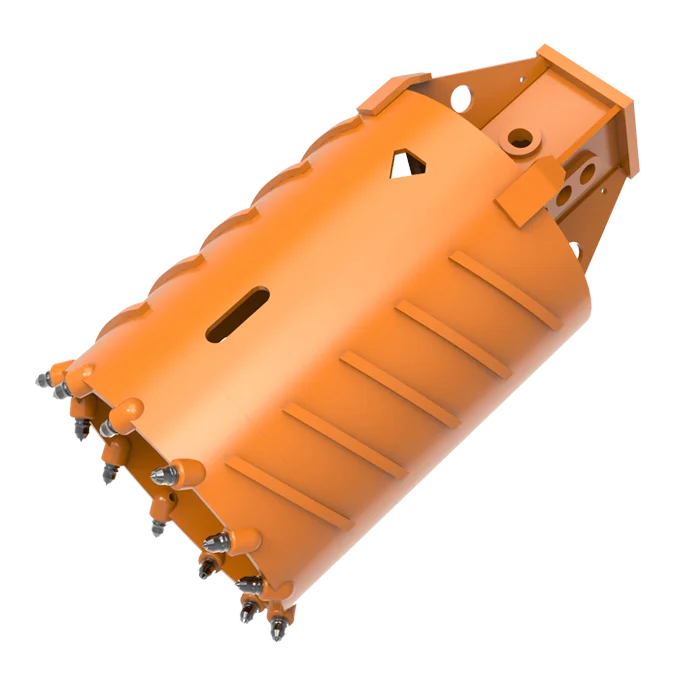
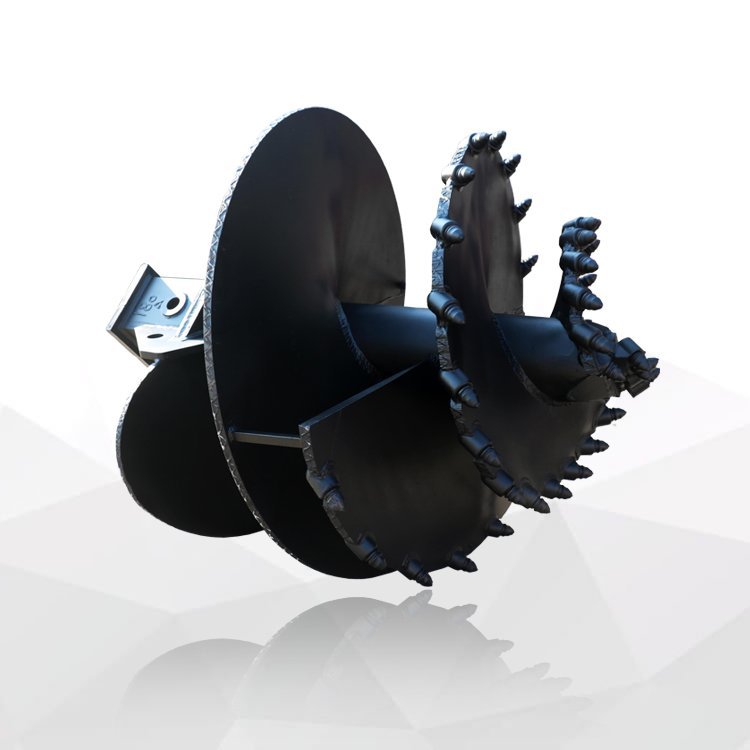
An auger has a central pilot, a helical flight, and a cutting head. The pilot anchors the tool and keeps the hole on line. The flight is a welded steel helix that rotates with the Kelly bar. As the tool turns, the flight carries the cut spoil upward and out of the borehole. The material is removed continuously while the tool drills down.
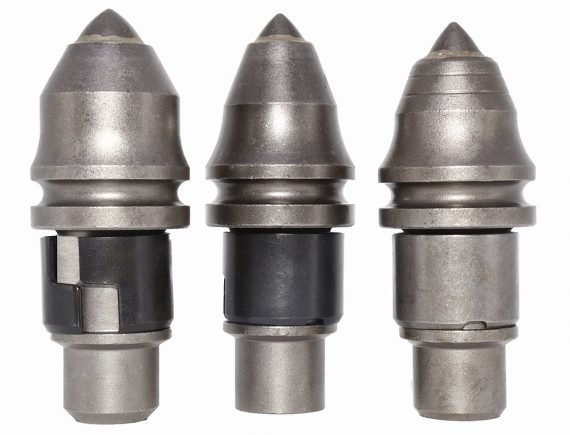
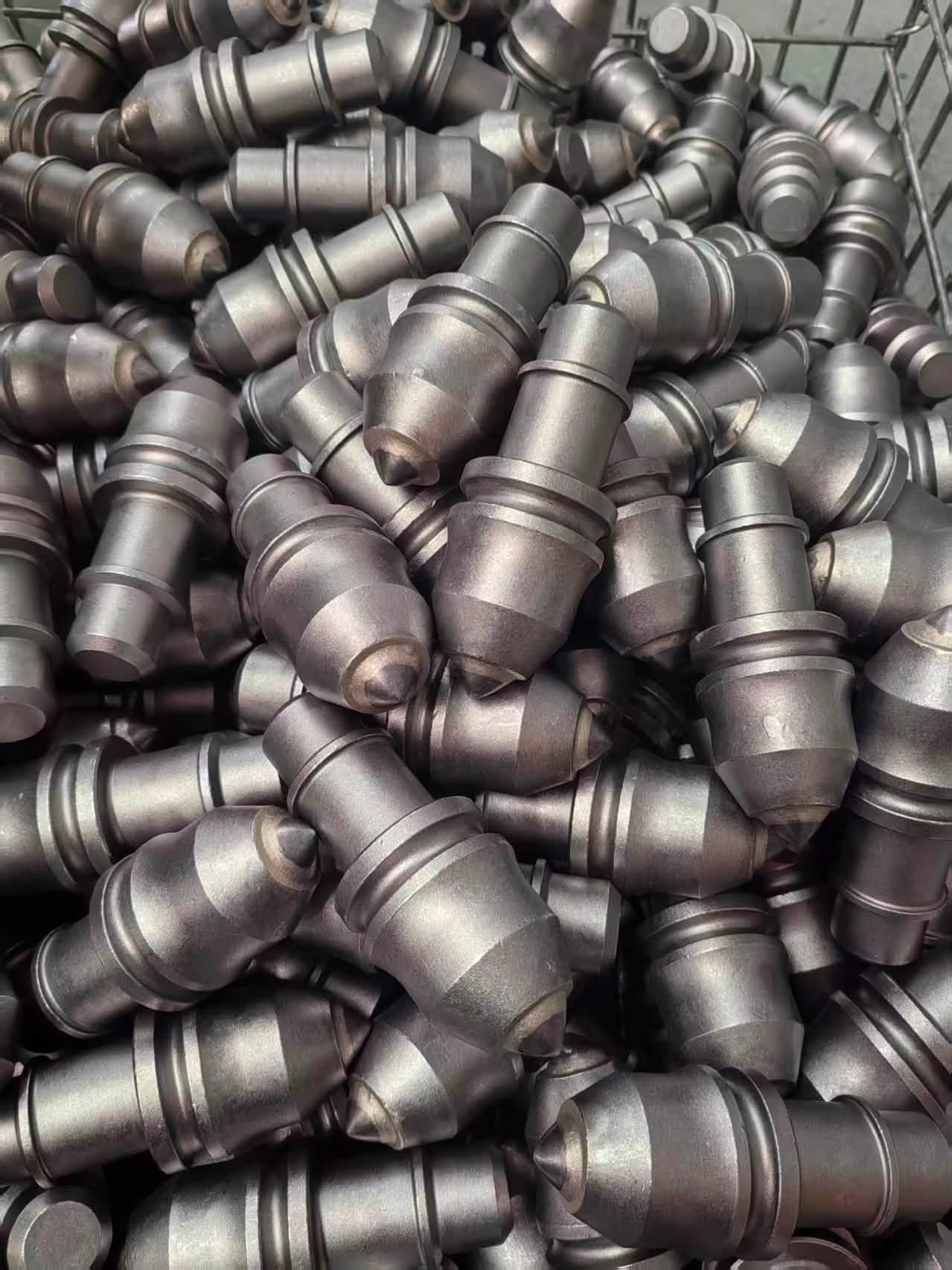
The auger takes a different set of teeth from the rest of our range. For rock work we fit chisels or bullet teeth on the cutting head. For soil work the cutting edge is different, and the pilot does more of the work.
How Does an Auger Remove Spoil?
This is the core difference between the auger and the bucket.
| Stage | Auger | Drilling Bucket |
|---|---|---|
| Cutting | Cutting head breaks the ground | Teeth on the bucket lip break the ground |
| Transport | Flight lifts spoil up the helix | Spoil stays in the bucket body |
| Discharge | Spoil pushed out at the surface | Bucket lifted, swung, and emptied |
| Cycle | Continuous, no lifting cycle | Stop, lift, swing, empty, return |
| Best ground | Loose to medium dense, and weak rock | Soft to stiff soil, clay, sand |
The auger has no empty cycle. It keeps turning and keeps lifting. On a long pile run in soft ground, that difference decides the schedule.
What Are the Three Types of Augers and Where Should Each One Be Used?
The type depends on the strength of the ground and on whether the hole is cased.
The conical rock auger works in medium to strong rock from 15 MPa to 60 MPa. The flat rock auger works in very dense sand and gravel and in weak rock below 5 MPa. The flat soil auger works in soft to stiff silt and clay, and in loose to medium dense sand and gravel. All three are available with Kelly box sizes of 130 mm, 150 mm, and 200 mm.
| Auger Type | Ground Condition | Pilot and Build |
|---|---|---|
| Conical Rock Auger | Medium to strong rock, 15–60 MPa | Forging steel pilot, chisels or teeth on the head |
| Flat Rock Auger | Very dense sand, gravel, weak rock below 5 MPa | Forging steel pilot, hard-facing strips on flights |
| Flat Soil Auger | Soft to stiff silt and clay, loose to dense sand and gravel | Fish-tail pilot, hard-facing strips on flights |
Conical Rock Auger
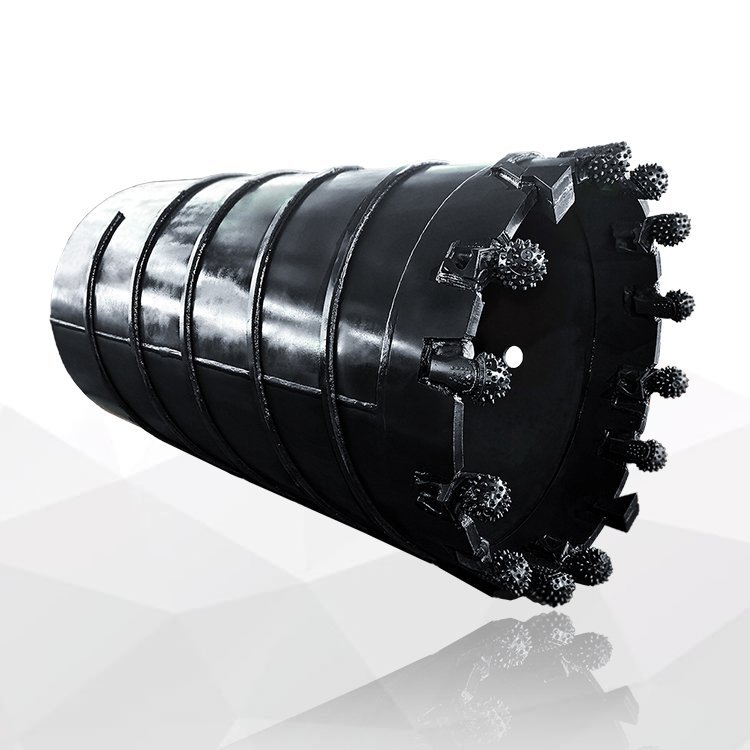
This is the strongest of the three. It has a sturdy, wearable forged steel pilot for accurate positioning, and hard-facing strips on the flights for wear protection. The cutting head carries high-strength teeth or chisels, and it handles penetration into hard rock well. On projects with a rock layer in the middle of the depth, this is usually the tool that gets through it.
Flat Rock Auger
The flat rock auger has the same sturdy forged steel pilot and the same hard-facing strips on the flights. Its ground is different. It suits very dense sand and gravel, and weak rock below 5 MPa. This type is a common choice for secant pile walls, where a large number of overlapping holes are drilled in a row.
Flat Soil Auger
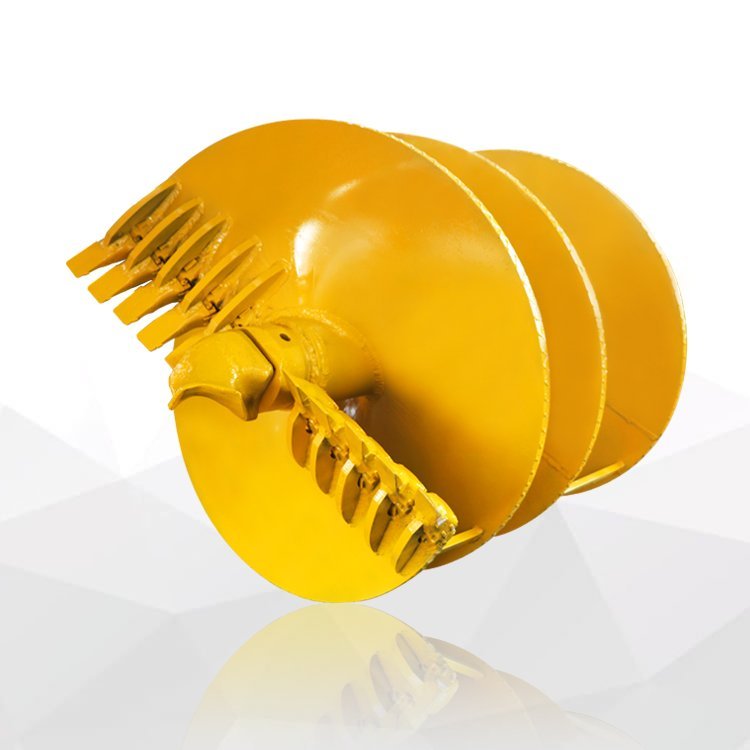
The flat soil auger uses a fish-tail pilot for accurate positioning, with hard-facing strips on the flights for wear protection. It is built for soft to stiff silt and clay, and for loose to medium dense sand and gravel. This is the fastest tool in soft ground, because the flight lifts the material out continuously.
What Is the Difference Between a Single Cut and a Double Cut Auger?
This choice affects how the tool behaves in the hole.
A single cut auger has one flight. A double cut auger has two flights set at a smaller pitch. The double cut version is recommended for uncased or unclosed bores, for larger diameters, and for secant pile walls. The single cut version is lighter and usually enough for cased holes in normal ground.
| Factor | Single Cut | Double Cut |
|---|---|---|
| Flight count | One | Two, at reduced pitch |
| Weight | Lighter | Heavier |
| Recommended ground | Cased holes in normal ground | Unclosed bores, large diameters |
| Secant pile walls | Limited | Recommended |
| Material removed per turn | Standard | Higher, due to the second flight |
Look at the weight table below. A 1800 mm conical rock auger weighs 1081 kg as a single cut and 1766 kg as a double cut. That is a real difference for the crane and the rig, so the decision should be made with the machine in mind.
Conical Rock Auger — Standard Dimensions
| Drilling Dia. mm | Flight Dia. mm | Pitch mm | Flight Length mm | Teeth Qty | Single Cut kg | Double Cut kg |
|---|---|---|---|---|---|---|
| 600 | 550 | 600 | 1200 | 22 | 438 | 537 |
| 800 | 750 | 600 | 1200 | 24 | 512 | 708 |
| 1000 | 950 | 600 | 1200 | 28 | 633 | 871 |
| 1200 | 1150 | 600 | 1200 | 32 | 718 | 1047 |
| 1500 | 1450 | 600 | 1200 | 36 | 875 | 1367 |
| 1800 | 1750 | 600 | 1200 | 40 | 1081 | 1766 |
Flat Rock Auger and Flat Soil Auger — Standard Dimensions
The flat versions use the same diameter and pitch range. The tooth counts are much lower, because the cutting head of a flat auger is wider and the material is softer.
| Drilling Dia. mm | Flight Dia. mm | Teeth Qty | Flat Rock Single kg | Flat Rock Double kg | Flat Soil Single kg | Flat Soil Double kg |
|---|---|---|---|---|---|---|
| 600 | 550 | 4–6 | 481 | 559 | 478 | 561 |
| 1000 | 950 | 5–12 | 675 | 910 | 668 | 904 |
| 1500 | 1450 | 14–18 | 973 | 1447 | 879 | 1279 |
| 1800 | 1750 | 18–22 | 1364 | 2155 | 1351 | 2132 |
Other sizes can be manufactured as per customer demand. This matters on projects where the pile diameter is unusual, or where the geology changes and a different diameter is needed for part of the depth.
Should You Choose an Auger or a Drilling Bucket?
The answer depends on the ground and on the production rate you need.
Choose an auger when the ground is soft to medium dense, when the spoil is loose enough to lift up the flight, and when you want continuous production without a lifting cycle. Choose a drilling bucket when the ground contains gravel, cemented soil, boulder layers, mixed strata, or when the borehole must be cased.
| Project Condition | Better Choice | Reason |
|---|---|---|
| Soft clay and silt | Flat Soil Auger | Continuous lifting, no empty cycle |
| Loose to medium dense sand | Flat Soil Auger | Material lifts easily up the flight |
| Very dense sand and gravel | Flat Rock Auger | Forging pilot and hard-facing strips |
| Weak rock below 5 MPa | Flat Rock Auger | Built for weak rock conditions |
| Medium to strong rock, 15–60 MPa | Conical Rock Auger | Strong pilot, hard cutting head |
| Gravel and cemented layers | Drilling Bucket | Bucket lip handles the load better |
| Boulder layers and mixed strata | Drilling Bucket | More tolerance for irregular material |
| Secant pile walls | Double Cut Flat Rock Auger | Recommended for uncased and large holes |
| Hard rock above 60 MPa | Core Barrel | Roller bits for very strong formations |
One important note. An auger is not a replacement for a bucket in every case. If the site has gravel or mixed strata, the auger flight will wear fast and the pilot can drift. In those conditions a drilling bucket is the cheaper answer even if it is slower. If the rock is harder than 60 MPa, move up to the core barrel instead.
What Makes a Good Auger Last Longer?
The build quality shows up in the wear parts.
A long-lasting auger uses high quality raw materials with high steel strength, has high hardness, has good roundness of the cylinder, and gives high wear resistance. It also has hard-facing strips on the flights and a sturdy, wearable pilot. These features give high drilling efficiency and long using life, and they keep the operation simple.
Hard-Facing Strips on the Flights
The flights do the lifting, so they also take the abrasion. Hard-facing strips protect the flight surface. On soft ground this is not visible. On gravel and in rock, the strips are the difference between one job and three jobs.
The Pilot Keeps the Hole Straight
The pilot positions the tool at the start of the hole and keeps it on line as it drills. A sturdy forging steel pilot for rock augers and a fish-tail pilot for soil augers are used for accurate positioning. Poor pilot geometry shows up as a wandering hole and a crooked pile.
Check the Weight Against Your Rig
Weight is the parameter buyers most often miss. A double cut 1800 mm flat rock auger weighs 2155 kg. Add the Kelly bar, the swivel, and the rig crane, and you need a real lifting plan on site.
How Do You Maintain an Auger on Site?
Maintenance is simple and it is worth doing on schedule. The flight is the part that wears first, because it carries the whole spoil load and rubs against the borehole wall. Check the hard-facing strips at every tool change and replace them as a set. A worn strip lets the flight edge cut into the helix, and the auger then binds.
The pilot is the second part to watch. A rounded pilot loses its bite and the hole starts to wander. Check the pilot for a worn front face and for a bent condition after any hard pull. If the pilot is damaged, the tool will drill a hole that is off line, and that hole cannot be corrected later.
The teeth on the cutting head are the third item. Count them at every inspection. A missing tooth changes the balance of the head, and the adjacent teeth then take an uneven load and break early. On rock augers, carry spare chisels and a spare set of hard-facing strips. On soil augers, carry spare teeth for the fish-tail pilot, because the pilot cuts continuously.
Finally, keep the flight clean. Do not let the spoil pack into the helix and harden there. A packed flight turns the auger into a solid column, and the rig torque spikes every time the tool is pulled out. A quick clean at the collar on every cycle prevents most of the torque problems I see on soil augers.
Why Does Auger Quality Affect Total Project Cost?
The unit price of the auger is a small part of the cost. The real cost sits in the schedule. An auger that wears out in one project is not a problem. An auger that wears out in week three of a six week pile run stops the rig, delays the concrete, and pushes the whole sequence. This is why I would rather look at the material grade and the flight build than at the price list.
High quality raw materials, high steel strength, high hardness, and good roundness of the cylinder are what separate a long-lasting auger from a short-lived one. Good roundness keeps the flight running true against the borehole wall. High hardness on the flight and the hard-facing strips keeps the pitch stable. A stable pitch means the tool lifts the same volume of material on every rotation, and that is what makes the penetration rate predictable.
Conclusion
An auger lifts spoil out of the borehole while it drills, so it works without a lifting cycle. Use the flat soil auger in soft ground, the flat rock auger in dense sand, gravel, and weak rock, and the conical rock auger in rock from 15 to 60 MPa. Choose double cut for uncased bores, large diameters, and secant pile walls.