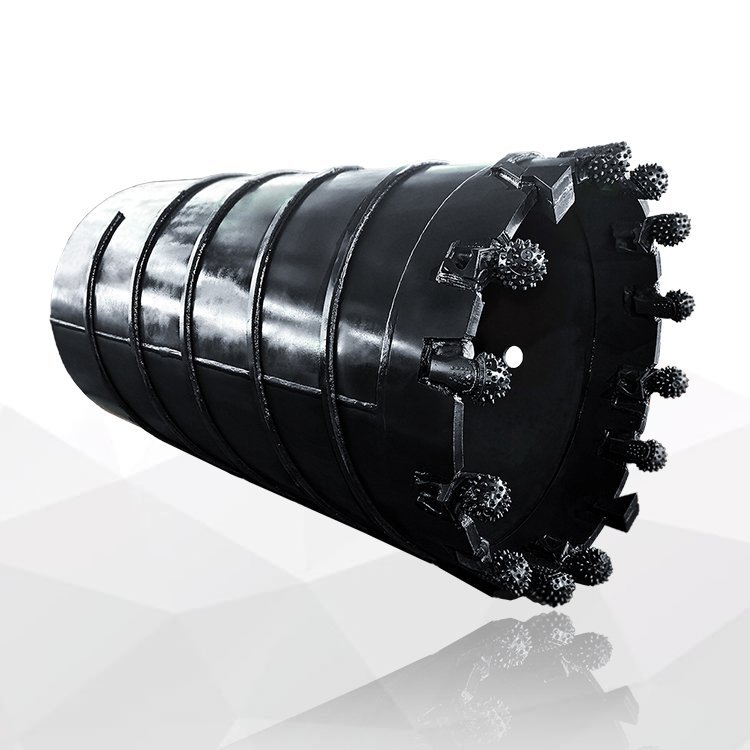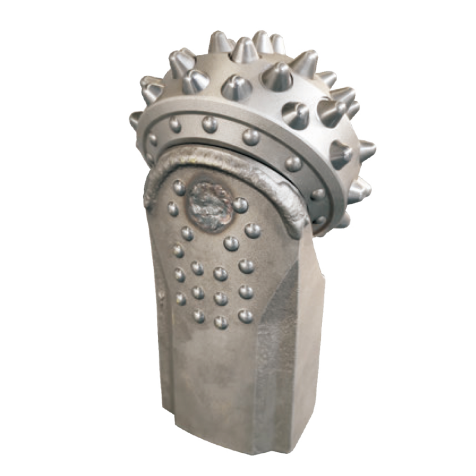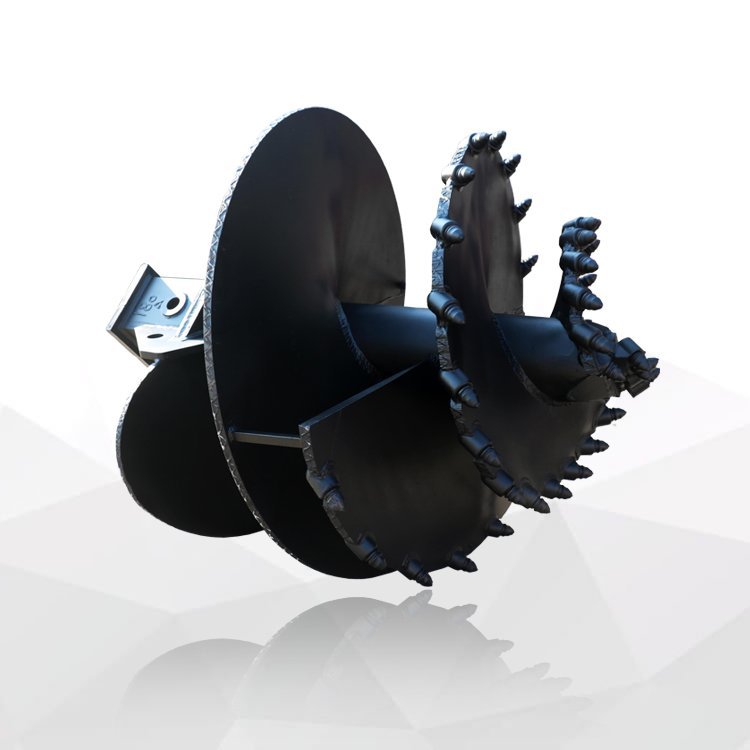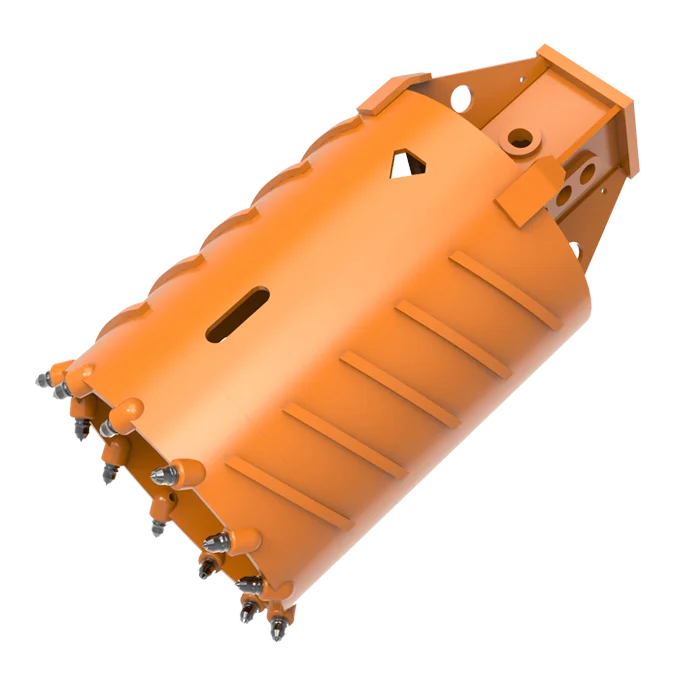
The bucket is the biggest tool on the rig. The teeth are the smallest. And the teeth are what actually touches the ground, so they decide how fast the job moves and how much it costs.
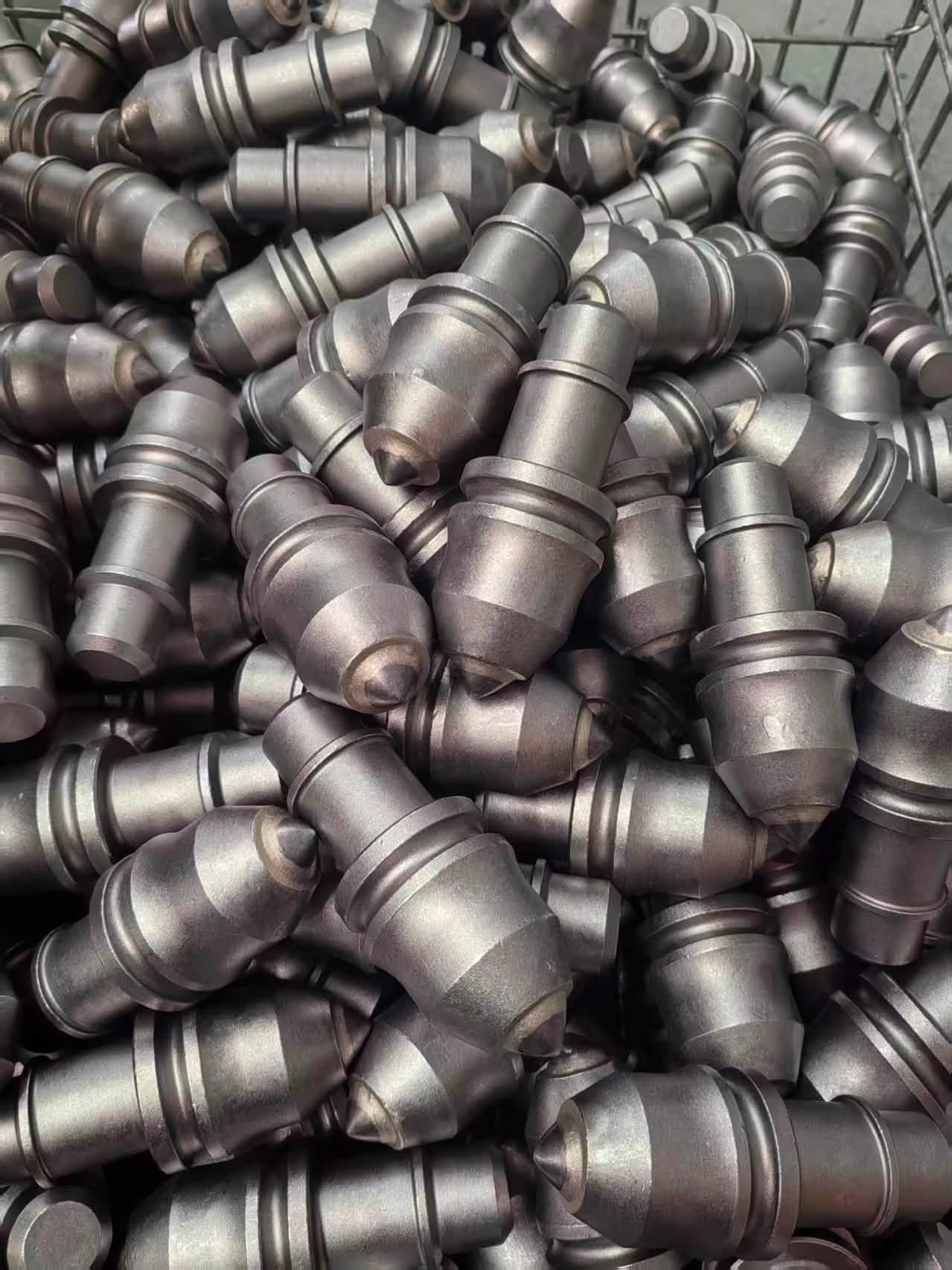
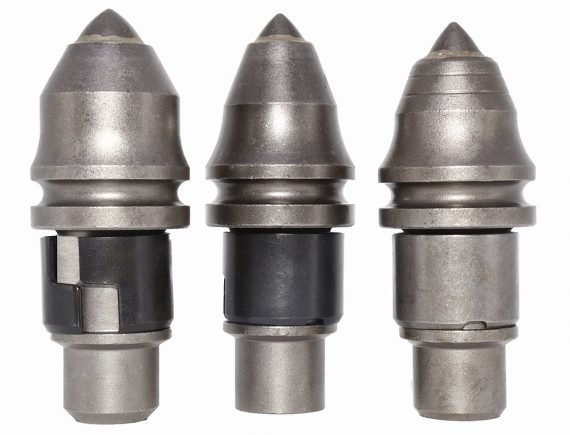
Bullet teeth are conical steel teeth with a tungsten carbide tip, fitted into a holder that is welded to the bucket. AAETT® builds the B47K series in three sizes, B47K17.5H, B47K19H, and B47K22H, plus the C31HD for soil and gravel. Holders come as round types such as B85/2 and square types such as B43H.
The tooth and the holder are a matched pair, and they are often bought separately. Getting the combination right takes a few minutes of reading a table. Here is the table.
What Are Bullet Teeth and Why Do They Matter?
A bullet tooth is a small conical tool with a carbide tip.
A bullet tooth has three parts. The body is forged alloy steel. The tip is tungsten carbide, brazed to the body. The bottom part is the threaded or welded section that goes into the holder. The teeth cut by impact. The bucket rotates, the teeth hit the ground, and the material breaks away. The quality of the carbide tip and the quality of the steel body decide how long this lasts.
How Does a Bullet Tooth Fail?
There are only three failure modes, and each one points to a different cause.
| Failure Type | What You See | Root Cause |
|---|---|---|
| Abrasive wear | The carbide tip wears flat and rounds off | Hard rock with quartz or high silica content |
| Impact breakage | The tip cracks and the head breaks off | Fractured rock, high drop energy, brittle carbide |
| Body fracture | The steel body snaps at the shoulder | Low-quality steel, poor heat treatment, wrong grade |
Impact breakage is the one that catches people out. A tooth can survive abrasive wear for a long time, then fail in one shift when the crew increases the drop energy. Heat treatment and the right carbide grade are what prevent this.
What Do the Model Numbers B47K19H and B47K22H Mean?
The model number tells you the size and the intended rock.
The B47K series is built for rock below 60 MPa. This covers all kinds of unstable shale, dense marl, relatively strong sandstone, sandy shale, shale sandstone, and weathering rock. The C31HD is different. It is used for drilling most soil and gravel or shale, and for spiral, small aperture, less abrasive rock, and permafrost.
| Model | Type | Unit Weight kg | Suitable Ground |
|---|---|---|---|
| B47K17.5H | Bullet Teeth | 1.1 | Rock below 60 MPa: unstable shale, dense marl, sandstone, weathering rock |
| B47K19H | Bullet Teeth | 1.2 | Rock below 60 MPa: unstable shale, dense marl, sandstone, weathering rock |
| B47K22H | Bullet Teeth | 1.25 | Rock below 60 MPa: unstable shale, dense marl, sandstone, weathering rock |
| C31HD | Bullet Teeth | 0.5 | Most soil and gravel or shale, spiral, small aperture, less abrasive rock, permafrost |
The weight difference is not trivial. The B47K22H weighs 1.25 kg against 0.5 kg for the C31HD. On a bucket with 27 teeth, that is a difference of more than 20 kg at the cutting head. On a 2000 mm bucket it changes the balance of the tool and the load on the rig.
Which Model Should You Choose?
Choose the B47K series for anything that behaves like rock. Choose the C31HD for soil and gravel. Between the three B47K sizes, pick according to the bucket diameter and the thickness of the cutting edge. A larger tooth is stronger, but it needs more room and more mass on the edge.
| Ground Condition | Recommended Tooth | Reason |
|---|---|---|
| Weathered rock, dense marl | B47K17.5H / B47K19H | Medium strength, standard build |
| Relatively strong sandstone | B47K19H / B47K22H | Higher hardness and impact resistance |
| Shale, sandy shale | B47K17.5H | Abrasive but not very hard |
| Clay and soft soil | C31HD | Light tooth, no carbide waste |
| Gravel and cobble | C31HD | Designed for gravel and less abrasive rock |
| Permafrost | C31HD | Suitable for frozen ground |
What Is a Tooth Holder and Why Does the Type Matter?
The holder is the part most buyers do not think about.
A tooth holder is the socket that sits on the bucket edge or the bucket lip. It holds the tooth, it transfers the impact into the bucket, and it takes the wear from the ground. Our holders are heat treated, which gives them strong stability and improves the welding strength. Heat treatment also improves the rotary performance of the tool head.
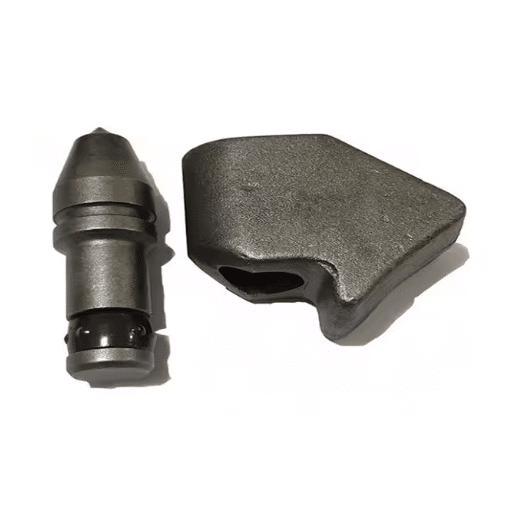
This is the same principle behind our bucket teeth range, where the tooth and the holder are also sold as a matched set.
Round Holder vs Square Holder
The shape of the holder decides how it is installed and how it is replaced. A round holder is installed with a threaded connection or a press fit. A square holder is usually welded to the bucket lip and the tooth is inserted into the square socket. Square holders are common on bucket teeth because the weld gives a strong, rigid base and the tooth can still be changed on site.
| Holder | Type | Unit Weight kg | Installation |
|---|---|---|---|
| B85/2 | Round Holder | 2.45 | Threaded or pressed into the bucket lip |
| B43H | Square Holder | 1.75 | Welded to the bucket lip, tooth inserted in the socket |
| C30 | Square Holder | 1.25 | Welded to the bucket lip, tooth inserted in the socket |
| C30 | Round Holder | 0.8 | Threaded or pressed into the bucket lip |
Compatibility With Bauer Drilling Systems
If your rig runs Bauer equipment, the tooth system is not optional. Bauer teeth such as the BFZ72 and BFZ70 are used with a matching holder. We supply both the Bauer teeth and the holder for Bauer teeth, so you can order the complete working set from one source. This matters because a mismatched holder will not seat properly, and a tooth that is not seated properly fails early. We also build drilling buckets fitted with Bauer teeth for contractors who want the complete tool ready to work.
| System | Teeth | Holder | Note |
|---|---|---|---|
| B47K series | B47K17.5H, B47K19H, B47K22H | B85/2 round, B43H square | Standard WESCOZ range, below 60 MPa rock |
| C31 series | C31HD | C30 round or square | Soil, gravel, shale, permafrost |
| Bauer | BFZ72, BFZ70 | Holder for Bauer teeth | For contractors using Bauer equipment |
What Other Drilling Teeth Are Available Beyond the Bullet Series?
The bullet series is only one part of the range.
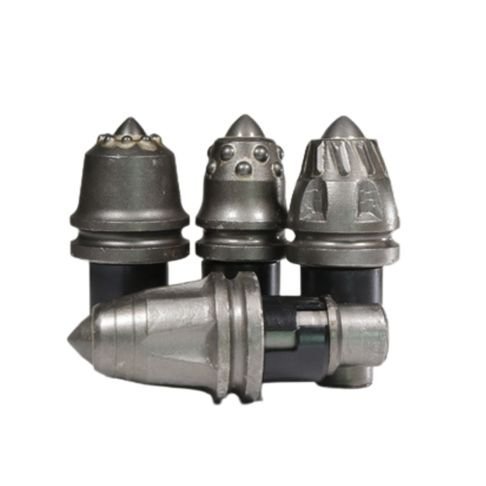
For rock above 60 MPa, we offer integrated type teeth and the S series. For very hard rock and for formations where the teeth wear out too fast, we offer the Langya series and the article alloy teeth. For gravel and cobble formations, we have the pebble series. Each family covers a different range of ground conditions.
| Series | Models | Suitable Ground |
|---|---|---|
| Integrated type | 55-22T, 60-26T, 60-28T, 60-30T | Moderately weathered rock, 30 MPa to 120 MPa |
| S series hard rock | 55-22S, 60-24S, 60-28S, 60-31S | Hard rock, 30 MPa to 120 MPa, 60-31S for extremely hard rock |
| Langya series | 55-10K22, 60-10K26, 60-12K28, 55-12K22, 60-12K24, 60-14K28 | Medium hard rock where teeth wear out too fast |
| Article alloy | 55-9T | Medium hard rock, 20 to 50 MPa, where teeth wear out too fast |
| Hard rock impact | 60-26 | Hard rock with high impact toughness requirement, 30 to 100 MPa |
| Pebble series | 60F-10K20, 60F-22T | Pebble strata, crushed stone, gravelly cobble formation |
| Hard rock attacking | 60-24 | Hard rock requiring high alloy impact toughness, 30 to 80 MPa |
The rule is simple. Match the tooth to the compressive strength of the formation, and pick the series that was designed for the failure mode you are seeing. Teeth that wear out too fast in medium hard rock call for the Langya series or the article alloy, not for a bigger tooth in the same family.
How Do You Choose the Right Bullet Teeth for Your Bucket?
Follow the order below and you will get it right the first time.
First read the ground report and get the compressive strength for the deepest formation. Second pick the series from that number. Third choose the model size from the bucket diameter and the cutting edge thickness. Fourth pick the holder from the bucket lip and the installation method. Fifth order spares with the first batch, because you will need them on site.
Step 1 — Get the Real Rock Strength
The B47K series is rated for rock below 60 MPa. If your report shows 80 MPa at depth, the B47K series is the wrong choice and the teeth will fail in a way that looks like a quality problem. It is not. It is a selection problem.
Step 2 — Pick the Series
Bullet series for rock below 60 MPa. S series for hard rock from 30 to 120 MPa. Langya series and article alloy where the teeth wear out too fast in medium hard rock. Impact type where the formation is hard and shocky. Pebble series for gravel and cobble.
Step 3 — Match the Tooth to the Bucket
Tooth count and tooth size are a pair. On our own 2500 mm soil bucket we fit 27 teeth, and on a 2500 mm cross cutter we fit 108. The count is set by the circumference of the cutting edge and the size is set by the space available on each tooth seat. Too many teeth on a small edge means the teeth fight each other. Too few means the edge is gapped and the bucket skips.
Step 4 — Match the Holder to the Bucket
The holder must fit the lip geometry and the welding position. For Bauer rigs, use the Bauer holder for Bauer teeth. For a standard bucket lip, use the B85/2 round holder or the B43H square holder. Buy the holders as spares too, because a damaged holder takes the tooth with it. For the soil side of the range, our flat teeth and bucket teeth follow the same holder logic.
Step 5 — Order Spares on the First Batch
This is where experienced contractors save money. A 27-tooth bucket with a rock formation will go through teeth. If the spares are on site, the changeover takes minutes. If they are not, the rig waits for a delivery. Budget the spares into the first order, not the second.
| Step | Decision | Information Needed |
|---|---|---|
| 1 | Confirm the formation strength | Geotechnical report, maximum compressive strength |
| 2 | Choose the tooth series | Rock below 60 MPa, hard rock, wear-fast, or pebble |
| 3 | Choose the model size | Bucket diameter and cutting edge thickness |
| 4 | Choose the holder type | Bucket lip shape, welding position, rig system |
| 5 | Order spares | Expected tooth consumption on the formation |
What Should You Look for in Bullet Teeth Quality?
You cannot see most of what matters. So ask.
Good bullet teeth use premium alloy steel, high-grade tungsten carbide, precision brazing, and proper heat treatment. The forging process matters too. Forging creates a stronger internal structure, which improves fatigue resistance, toughness, durability, and structural consistency. The carbide tip performs most of the cutting work, so its grade sets the wear limit.
Ask About the Carbide Grade
Ask which carbide grade is used, what the heat treatment process is, and whether the teeth are forged. Then ask what rock conditions the teeth are recommended for. A supplier who answers these questions clearly is a supplier who has done the work.
Check the Consistency of a Batch
The difference between a good tooth and a bad one often shows up in a batch. Check the weight against the model specification. A B47K19H that comes in at 1.2 kg on average but varies widely between pieces tells you the process is not controlled. Consistent weight is a simple proxy for consistent forging and consistent carbide.
Think in Cost per Drilled Meter
The cheapest tooth is rarely the cheapest operation. Compare the cost per drilled meter, the replacement time, the machine downtime, and the labour cost. A tooth that costs more but survives two shifts instead of one usually wins, and on a hard formation it is not close.
Conclusion
Bullet teeth are the part of the bucket that touches the ground, so the tooth and the holder must match the formation and the rig. Use the B47K series for rock below 60 MPa and the C31HD for soil and gravel. Choose the holder from the bucket lip and the rig system, including Bauer, and order your spares with the first batch.