Foundation drilling stops when the ground turns to rock. The bucket stops cutting, the crew waits, and the project runs late. Most contractors hit this wall without knowing a better tool exists.
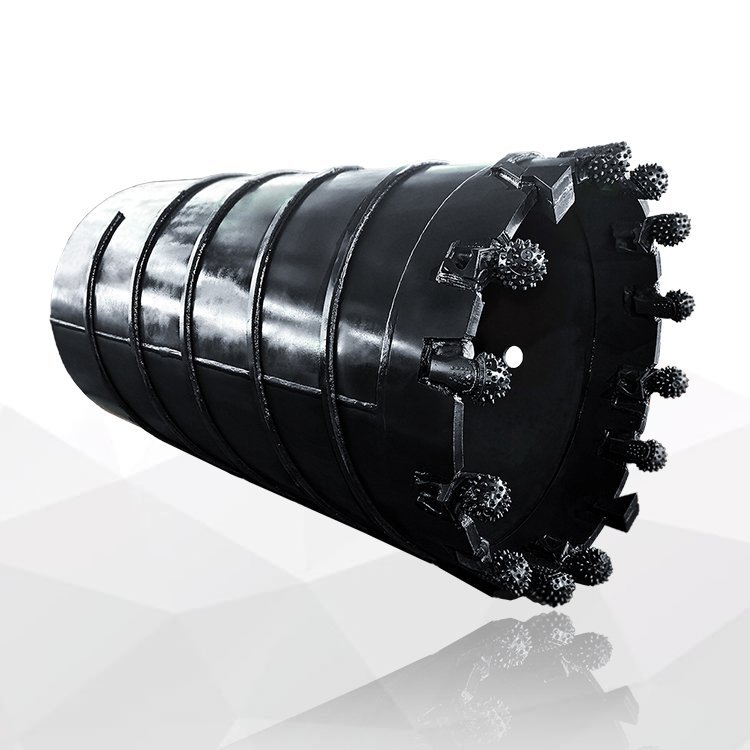
A core barrel is a drilling tool that cuts an annular ring in rock or concrete and keeps the cut core inside the barrel. It lets you drill hard formations, take rock samples, and open a clean borehole at the same time. AAETT® builds three versions: with bullet teeth, with roller bits, and with a cross cutter.
I have seen crews spend days fighting a formation that a core barrel would have opened in a few hours. The difference comes down to one choice, and it is made early. Here is how that choice works.
What Is a Core Barrel and How Does It Work?
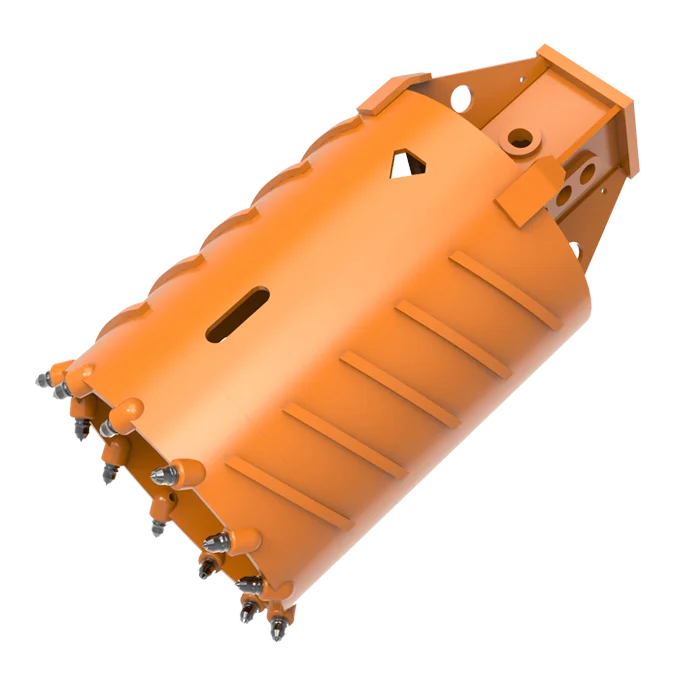
A core barrel is a hollow steel cylinder with a cutting head on the bottom end.
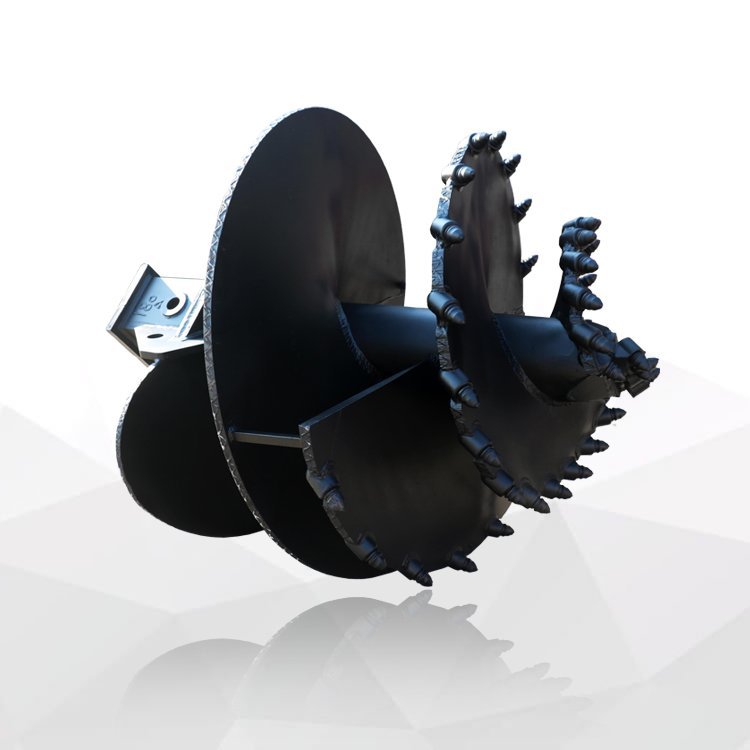
A core barrel is a steel shell with a cutting head at the bottom. The head cuts a ring-shaped groove into the ground. The barrel body holds the cut core inside. When the barrel is full, the operator lifts it out and empties the core. This is different from a drilling bucket, which removes all the material it cuts.

What Is the Difference Between a Core Barrel and a Drilling Bucket?
Both tools rotate in the borehole. They remove material in a different way, and they suit different jobs.
| Factor | Drilling Bucket | Core Barrel |
|---|---|---|
| Material removed | All excavated soil and rock | A ring of core, kept in the barrel |
| Typical ground | Soil, clay, sand, gravel | Hard rock, weathered rock, concrete |
| Core sample | No | Yes, core stays in the barrel |
| Borehole result | Full of spoil to clean out | Clean hole with rock core collected |
| Best use | Bulk excavation | Hard drilling and sampling |
I ask my customers one question before anything else: do you need the rock sample? If the answer is yes, a core barrel is the only sensible choice. If the answer is no and the ground is soft, a bucket will be faster and cheaper.
How Does a Core Barrel Perform in the Ground?
The working principle is simple. The result is not.
| Step | Action | Result |
|---|---|---|
| Cutting | Chisels or bits cut a ring | An annular groove forms |
| Collecting | Core stays in the barrel | Rock is kept for inspection |
| Advancing | Drilling torque pushes the tool down | The hole deepens |
| Lifting | The tool is raised and emptied | Core is recovered on surface |
The borehole stays cleaner than with a bucket. There is less loose spoil to clean before concrete is poured. In many foundation contracts that alone pays for the difference in tool cost.
What Are the Three Types of Core Barrels and When Should You Use Each One?
The type of cutting head decides what ground the tool can handle.
AAETT® offers three core barrel configurations. Core barrel with bullet teeth cuts an annular ring in rock or concrete, including reinforced concrete. Core barrel with roller bits works in very strong rock formations with compressive strength above 100 MPa. The cross cutter core barrel breaks rock cores that stay in the borehole and also penetrates layers with boulders.
| Configuration | Best For | Key Feature |
|---|---|---|
| With bullet teeth | Rock and concrete, including reinforced concrete | Round-shank chisels in a staggered ring |
| With roller bits | Very strong rock above 100 MPa | Roller cones for maximum penetration |
| With cross cutter | Breaking stuck cores, jointed rock, boulder layers | High tooth count for aggressive cutting |
Core Barrel with Bullet Teeth
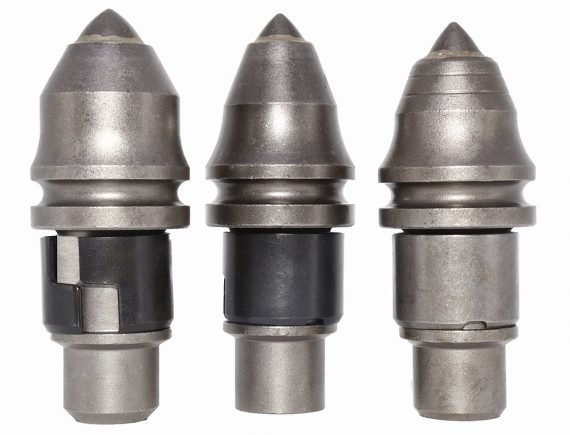
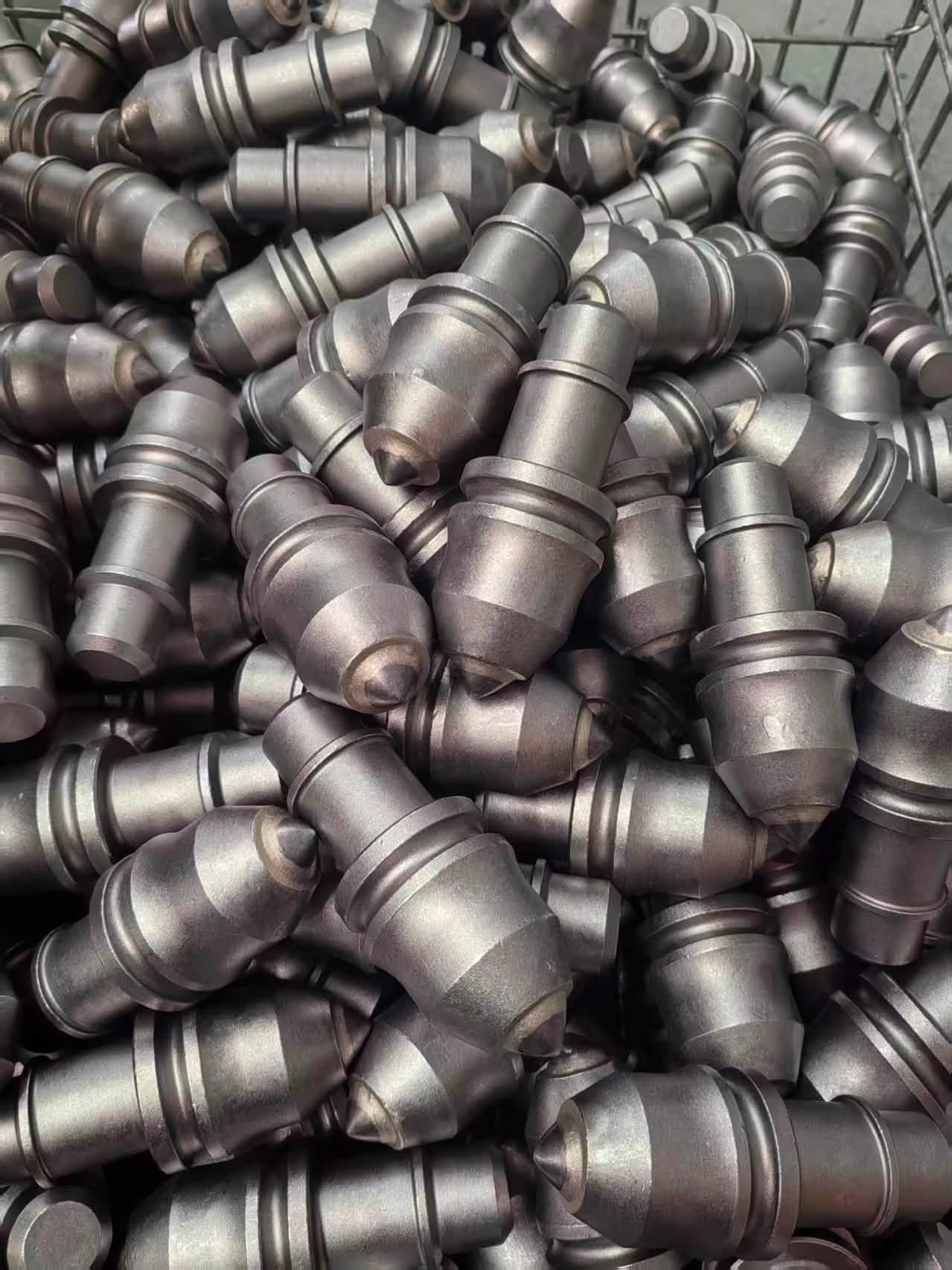
This is the most flexible version. The cutting ring uses a staggered arrangement of round-shank chisels. The chisels are held in holders that are welded to the base body, so a worn chisel can be replaced without replacing the whole ring. Bullet teeth work well in rock and in concrete. They are also the practical choice on reinforced concrete, where a strong, replaceable tooth is worth more than a longer lasting one. Our full bullet teeth range covers the C31HD for soil and gravel as well.
Core Barrel with Roller Bits
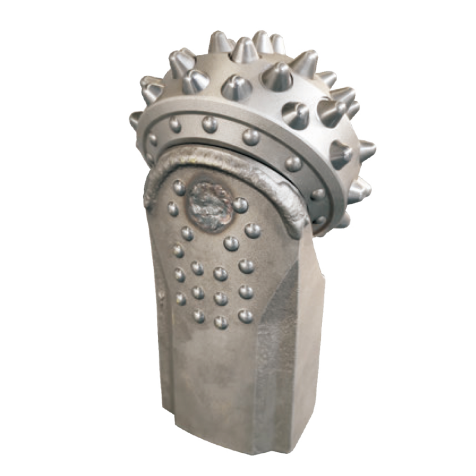
Use this version when the rock is very strong. Roller bits roll over the rock face and crush it rather than scraping it. That gives much better penetration in formations above 100 MPa. The same roller bits we build for rock reamers and hole openers are used here, so the wear behaviour is well understood. Fewer teeth are needed. You can see the tooth counts in the table below.
Cross Cutter Core Barrel
The cross cutter has a much higher tooth count than the other two versions. This is the tool for breaking a rock core that stayed in the borehole after a core drilling run. It is also the right choice in hard jointed rock below 100 MPa, where the rock breaks into blocks instead of cutting cleanly, and in layers that contain boulders.
What Specifications Should You Check Before Ordering a Core Barrel?
Buyers who check these numbers before ordering avoid most problems.
Check the borehole diameter, the shell diameter, the shell length, the shell thickness, the tooth count, and the total weight. Also confirm the Kelly box size. AAETT® core barrels are available with Kelly box sizes of 130 mm, 150 mm, and 200 mm. The barrel is fitted with spiral wear-resistant strips to reduce abrasion and extend service life. Other sizes can be customised.
Core Barrel with Bullet Teeth — Standard Dimensions
The table below lists the standard bullet teeth core barrels. Shell thickness is written as the body plate plus the wear strip. Other sizes can be customised.
| Dia. mm | Shell Dia. mm | Shell Length mm | Shell THK mm | Teeth Qty | Weight kg |
|---|---|---|---|---|---|
| 600 | 520 | 1200 | 20+40 | 6 | 500 |
| 800 | 720 | 1200 | 20+40 | 9 | 660 |
| 1000 | 920 | 1200 | 20+40 | 12 | 810 |
| 1200 | 1120 | 1200 | 20+40 | 15 | 1000 |
| 1500 | 1420 | 1200 | 20+40 | 18 | 1240 |
| 1800 | 1720 | 1000 | 20+40 | 24 | 1690 |
| 2200 | 2120 | 800 | 20+40 | 30 | 1950 |
| 2500 | 2420 | 800 | 20+40 | 33 | 2450 |
Core Barrel with Roller Bits and Cross Cutter — Standard Dimensions
The same diameters are available with roller bits and with a cross cutter. Note how the tooth count changes. A 2500 mm cross cutter carries 85 teeth and weighs 2817 kg. A 2500 mm roller bit version carries 20 teeth and weighs 2684 kg.
| Dia. mm | Roller Bits Qty | Roller Bits Weight kg | Cross Cutter Qty | Cross Cutter Weight kg |
|---|---|---|---|---|
| 600 | 4 | 550 | 11 | 615 |
| 1000 | 8 | 906 | 25 | 984 |
| 1500 | 12 | 1387 | 46 | 1487 |
| 2000 | 18 | 1991 | 67 | 2090 |
| 2500 | 20 | 2684 | 85 | 2817 |
One note on weight. A 2500 mm core barrel weighs close to 2.7 tonnes. You need to check the lifting capacity of the rig and the capacity of the Kelly bar, not only the borehole diameter. A bucket with a similar diameter is usually lighter, because it carries no core inside it.
How Do You Choose the Right Core Barrel for Your Project?
Selection is a short list. Most buyers overthink it.
Choose the configuration from the rock strength and the type of material you expect to cut. Confirm the borehole diameter from the pile design. Match the Kelly box size to the rig. Then check the weight against the machine capacity and the plan for lifting the core out. Get all of these right and the tool does the work without surprises.
Step 1 — Read the Ground Report
Start with the geotechnical data. Look at the unconfined compressive strength. Look at how the strata change with depth. Look for boulders. Look for cemented layers. Then ask what the concrete design needs. A pile that must pass through a 120 MPa quartzite layer needs roller bits. A pile in weathered rock with a clay interlayer can work with bullet teeth.
Step 2 — Confirm Diameter Against the Design
The borehole diameter is set by the structural design, not by the tool. Check it first, then order the tool. In practice, most orders I see are correct on diameter and wrong on weight or Kelly box.
Step 3 — Match the Kelly Box
Standard Kelly box sizes are 130 mm, 150 mm, and 200 mm. The box must match the square drive on the rig. A mismatch here is expensive. The tool will not transmit torque properly and the drive parts wear fast.
Step 4 — Plan the Core Handling
A full core barrel is heavy. The operator must be able to lift it, swing it clear of the hole, and empty it. Check the rig crane capacity against the loaded weight. If you drill deep in hard rock, plan the cycle time for emptying as well.
| Check Item | Why It Matters |
|---|---|
| Rock strength | Decides bullet teeth, roller bits, or cross cutter |
| Borehole diameter | Set by pile design, not by the tool |
| Kelly box size | 130 mm, 150 mm, or 200 mm must match the rig |
| Loaded weight | Must stay within the crane and Kelly bar limits |
| Core handling | Full barrel weight affects the lifting cycle |
| Wear strip supply | Spiral strips need replacing during long runs |
What Makes a Core Barrel Last Longer in the Field?
Durability comes from the details that are easy to skip.
A core barrel lasts longer when it uses high quality raw materials with high steel strength, when the cylinder is machined to good roundness, and when the wear strips are properly hardened. Good roundness matters more than most buyers expect. An out-of-round barrel creates a gap on one side, and the cutting load concentrates there. The teeth on that side wear out much faster.
Check the Cylinder Roundness
Roundness affects the wear pattern, the torque, and the straightness of the borehole. This is one of the few places where you can see a clear difference between a well-made tool and a cheap one.
Use Spiral Wear-Resistant Strips
The barrel is fitted with spiral wear-resistant strips. They guide the cut core into the barrel and reduce abrasion on the inner wall. On long runs in abrasive rock, replace them on schedule rather than waiting for the barrel wall to score.
Plan for Chisel Replacement
Because the chisel holders are welded to the base body, a worn round-shank chisel can be replaced on site. This is the main operating advantage of the bullet teeth configuration. A rock project usually needs several sets of chisels, so keep spares on site.
Simple Operation and Low Downtime
The other advantages of a well-made core barrel are simple operation, high wear resistance, high drilling efficiency, high hardness, and long using life. In practice this means fewer breakdowns and a shorter path to the full pile depth.
Conclusion
A core barrel cuts a clean ring in hard rock and keeps the core for inspection. Choose bullet teeth for rock and concrete, roller bits for rock above 100 MPa, and a cross cutter for breaking stuck cores and boulder layers. Match the diameter, the Kelly box, and the weight to your rig and your pile design.