The bucket is the biggest thing on the rig, it is the most expensive tool you will buy, and it is the one everybody assumes they already know how to specify. The result is a lot of buckets sitting on sites that were ordered for the wrong ground.
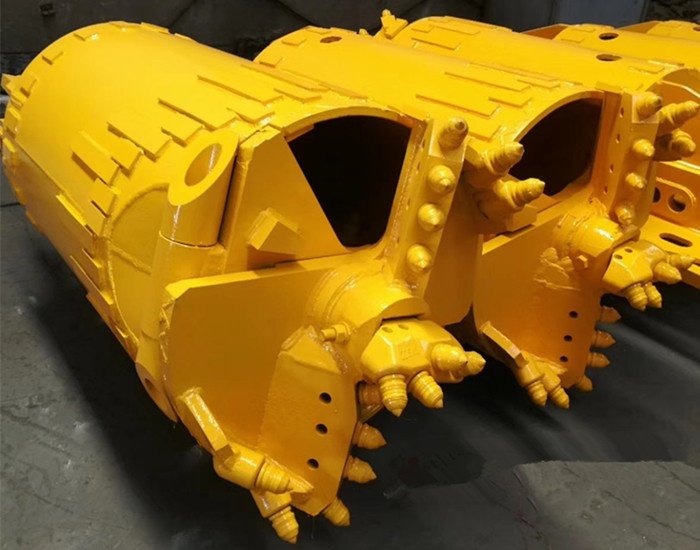
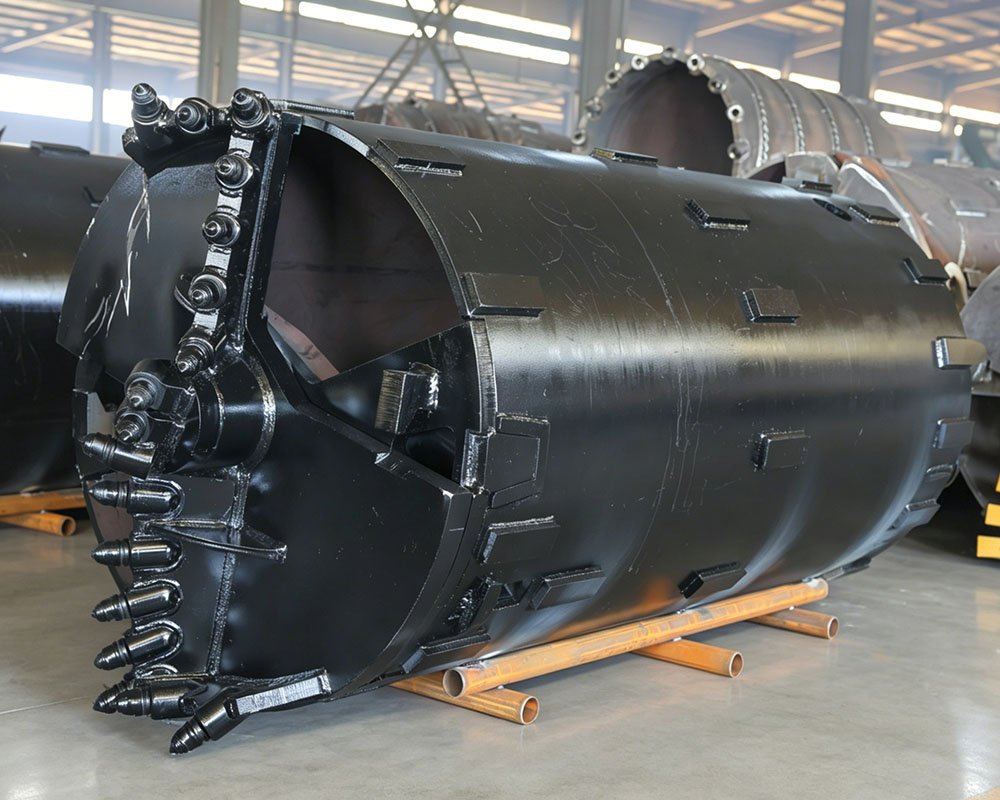
AAETT® builds drilling buckets in several versions: with rock drilling teeth for hard rock, with soil drilling teeth for clay and sand, with Bauer teeth for contractors running Bauer equipment, and in special custom forms for unusual conditions. Every one of them is a different answer to a different question. Here is how to work out which one you need.
This guide goes through the decision in the order the decisions actually have to be made. It follows the same sequence we use when a contractor calls in with a ground report and a pile design.
What Are the Decisions Behind a Drilling Bucket?
Six decisions, and they come in this order.
The diameter comes from the pile design. The teeth come from the ground. The bucket type comes from the ground layers. Then the construction details, then the consumables, and finally the logistics. Get them out of order and you end up specifying a bucket that fits the pile but not the soil.
| Order | Decision | Set By | Common Mistake |
|---|---|---|---|
| 1 | Bucket diameter | The pile design | Choosing from the drilling rig catalogue instead of the design |
| 2 | Tooth type | The ground condition | Using rock teeth in soft clay, wasting money |
| 3 | Bucket version | The ground layers | One bucket for a two-layer profile |
| 4 | Construction details | The rig and the design | Ignoring the Kelly box size |
| 5 | Consumables | The ground and wear rate | Not ordering spares with the first batch |
| 6 | Logistics | The site and the schedule | Ordering a diameter that cannot be transported |
Step 1 — Fix the Diameter From the Design
The bucket diameter is set by the structural engineer, not by the tool supplier and not by the rig. This is the first and least negotiable decision. On a project with many piles, the diameter often comes with a tolerance, and the bucket has to be made to suit.
Watch out for the two diameter numbers that appear on a bucket. The cutting diameter is the hole the bucket makes. The shell diameter is the outside of the bucket body. The shell has to fit inside the casing and inside the hole above the working section, so it is always smaller than the cutting diameter. This is why a 1500 mm bucket has a 1420 mm shell.
Step 2 — Choose the Teeth From the Ground
This is where the money is saved or wasted. The teeth are the only part that touches the ground, and the wrong teeth do not fail cleanly, they fail slowly and expensively.
| Ground Condition | Correct Teeth | Why | Wrong Choice Cost |
|---|---|---|---|
| Soft clay, silt | Soil teeth or flat teeth | Scraping cut, low resistance | Rock teeth chip and waste |
| Sand, loose gravel | Soil teeth or flat teeth | Tooth cuts and lifts material | Rock teeth wear flat fast |
| Dense sand, gravelly sand | Flat teeth, larger size | Abrasion is the wear mechanism | Soil teeth round off |
| Weathered rock | Bullet teeth | Point impact breaks the rock | Soil teeth deform and plug |
| Rock below 60 MPa | Bullet teeth | B47K series rated for this range | Flat teeth cannot take point load |
| Rock above 60 MPa | Special hard rock teeth series | Impact and abrasion resistance needed | B47K series will chip |
| Gravel and cobble | Bullet teeth | Concentrated point load breaks the stones | Soil teeth stall the bucket |
The two families we build are the soil teeth and the bullet teeth. The soil teeth, in the 18TL, 25T, V19, V20, and 22S models, are cast high carbon and alloy steel. The bullet teeth, in the B47K series, have a conical body with a tungsten carbide tip for point impact cutting. Our bucket teeth page has the full soil tooth range, and the bullet teeth page covers the rock series.
Step 3 — Choose the Bucket Version
AAETT® offers four bucket versions, and they are not interchangeable. The rock drilling bucket has high-strength rock drilling teeth and a reinforced body. The soil drilling bucket has a balanced structural design and sharp soil teeth. The Bauer tooth bucket is compatible with Bauer-type cutting systems. And the special bucket is custom engineered for unusual geological conditions and special construction requirements.
| Bucket Version | Built For | Key Feature | Best For |
|---|---|---|---|
| Rock drilling bucket | Hard rock, weathered rock, mixed strata | High-strength rock teeth, reinforced body | Rock sections and mixed profiles |
| Soil drilling bucket | Clay, sand, silt, soft soil | Balanced structure, sharp soil teeth | The upper layers of most profiles |
| Bauer teeth bucket | Contractors running Bauer equipment | Bauer-compatible cutting system | Bauer rigs, interchangeable spares |
| Special bucket | Unusual ground and special requirements | Fully custom dimensions and tooth config | Non-standard diameters and formations |
What Does a Rock Drilling Bucket Give You?
A rock drilling bucket is specially designed for hard rock formations, weathered rock, and mixed strata. Equipped with high-strength rock drilling teeth and a reinforced bucket body, it delivers excellent penetration capability and outstanding wear resistance. The optimized tooth layout gives higher drilling efficiency, and it is suitable for bored piling, foundation engineering, and heavy construction projects.
The reinforcement in the body is what makes the difference on mixed ground. A soil bucket in a gravel layer deforms at the lip, and then it no longer holds diameter. A reinforced rock bucket keeps its shape, which means the borehole stays true for the full depth.
What Does a Soil Drilling Bucket Give You?
A soil drilling bucket is ideal for clay, sand, silt, and soft soil formations. With a balanced structural design and sharp soil teeth, it ensures smooth cutting, fast soil removal, and stable drilling performance. It is designed for soft to medium soil layers, gives high drilling efficiency with lower energy consumption, and has durable teeth with reliable welding quality. It is widely used for foundation piling and civil engineering.
The energy consumption point is worth understanding. A soil bucket is lighter than a rock bucket because it does not need the reinforcement. Less mass means less rig draw, and over a project with hundreds of holes this is a measurable saving on fuel and on machine wear.
Why Choose the Bauer Teeth Bucket?
If your rig runs Bauer equipment, the tooth system is not optional. The Bauer teeth bucket is compatible with Bauer-type cutting systems and meets international piling standards. It offers good adaptability, strong cutting performance, and convenient tooth replacement, which makes it the right choice for contractors using Bauer equipment.
The practical benefit is spares. If the rest of your operation runs Bauer, your tooth inventory, your tooling, and your maintenance staff are all set up for it. Running a Bauer bucket means one tooth system across the whole fleet.
When Is a Special Custom Bucket the Right Answer?
A special bucket is custom engineered for unique geological conditions and special construction requirements. From non-standard dimensions to special tooth configurations, the design is tailored to the project. It is suitable for complex or special formations, has strong adaptability and high reliability, and comes with engineering support from design through to production.
This is the answer for a non-standard pile diameter, an unusual tooth layout, or a formation that does not match any standard bucket. The key phrase is engineering support. If the bucket is custom, the design has to come with someone who can answer questions about it when the site raises them.
What Construction Details Should You Check?
Four items that are cheap to check and expensive to get wrong.
Check the Kelly box size, which must match the rig. Check the shell diameter against the casing and the hole above the working section. Check the bucket weight against the crane capacity and the Kelly bar rating. And check the tooth count and layout against the cutting edge thickness.
| Item | What to Check | Consequence of Getting It Wrong |
|---|---|---|
| Kelly box size | 130, 150, or 200 mm must match the rig | The tool will not transmit torque properly |
| Shell diameter | Must pass inside the casing or hole above | The bucket will not go down the hole |
| Bucket weight | Against crane capacity and Kelly bar rating | Cannot lift the tool, or the bar fails |
| Tooth count and layout | Against the cutting edge thickness | Gapped edge that skips, or teeth too close |
| Bottom type | Fixed or rotating, matched to the spoil | The bucket will not discharge properly |
| Cutting edge | Thickness against the tooth size | The holder will not seat on the edge |
Why Does the Kelly Box Size Cause So Many Problems?
It is the specification that gets copied from the last order without checking, and it is the one thing that has to be exactly right. A mismatch means the tool does not drive properly, the operator is fighting the rig all shift, the drive parts wear quickly, and the bucket has to come back off site. Confirm it against the rig every time, even if the previous order was right.
What About the Bucket Bottom?
The bottom determines how the bucket empties. A fixed bottom opens by the bucket tipping, which is simple and robust. A rotating bottom lets the operator discharge the spoil sideways, which is faster and keeps the bucket aligned with the hole. On a high production job with a lot of spoil per hole, the rotating bottom pays for itself in cycle time.
What Consumables Should You Order With the Bucket?
Order the spares with the first batch, not the second.
The teeth are consumables and the holders wear too. A full set of teeth, a set of spare holders, the pins and locks, and a set of rock teeth for the lower layer. This is the part of the order that gets left out, and it is the part that stops the rig while the site waits for a delivery.
| Item | Quantity Guidance | Reason |
|---|---|---|
| Complete tooth sets | One full set per bucket | A bucket cannot work without a full edge |
| Spare holders | Two to three per bucket | A damaged holder takes the tooth with it |
| Pin and lock | 25 to 50 percent extra | The first consumable to be lost |
| Rock teeth set | One full set per machine | For the lower layer on a mixed profile |
| Cutting edge wear plate | One set per bucket | Protects the edge and the tooth seats |
How Do You Work Out the Real Wear Rate?
You cannot do it from the certificate. You do it from the ground. The abrasive ground destroys teeth quickly, the soft ground barely touches them. Track the replacement rate on the first ten piles and you will know what you are dealing with. If the site is going through a set of teeth every two shifts, the problem is the tooth selection, not the supply.
How Does a Drilling Bucket Compare With the Other Tools?
The bucket is one option among several.
The drilling bucket is the default excavation tool. The auger lifts spoil continuously and is faster in soft ground. The core barrel cuts hard rock and keeps the core. The roller bit opens a hole in very strong rock. The open-type bucket is for specific hole and lining arrangements. And the cleaning bucket is for clearing the spoil off the bottom before concrete.
| Tool | Removes Material By | Best Ground | Role in the Sequence |
|---|---|---|---|
| Drilling bucket | Scooping into the bucket body | Soil, clay, sand, gravel | Main excavation |
| Auger | Helical flight lifting the spoil | Soft to medium dense soil | Fast continuous excavation |
| Core barrel | Cutting a ring, keeping the core | Hard rock, concrete | Rock section and sampling |
| Roller bit | Rolling cones crushing the rock | Very strong rock above 100 MPa | Opening rock holes |
| Cleaning bucket | Rotating bottom sweeping the floor | Any hole needing a clean base | Before concrete |
| Pilot bit | A small pointed hole on line | Any ground, as a starter | Opens the hole first |
Does a Project Need More Than One Bucket?
Most profiles with more than one layer need more than one bucket, and the changeover depth has to be planned. A common and efficient combination is a soil bucket for the upper soft layers and a core barrel or a rock bucket for the rock below. If the profile has gravel, the soil bucket will wear out its teeth in no time, and it becomes an expensive tool to run.
The changeover costs rig time. Every crew has to break down, swap the tool, and get back to full rotation. If the profile needs two buckets, you are paying for one changeover on every pile. Sometimes a single tool that handles two layers is worth more than the best tool for each layer, and this is worth checking against the actual ground profile.
Conclusion
Choose the drilling bucket diameter from the pile design, the teeth from the ground, and the bucket version from the layers you will drill. Rock teeth for rock and gravel, soil teeth for clay and sand, Bauer teeth for Bauer rigs, and a custom bucket for non-standard work. Check the Kelly box size and the weight against the rig every time, and order the spare teeth and holders with the first batch.