A drilling project goes wrong in a predictable way. The rig is chosen. The crew is hired. The piling schedule is set. And then the tool for the ground is picked in a hurry, on the strength of a photograph.
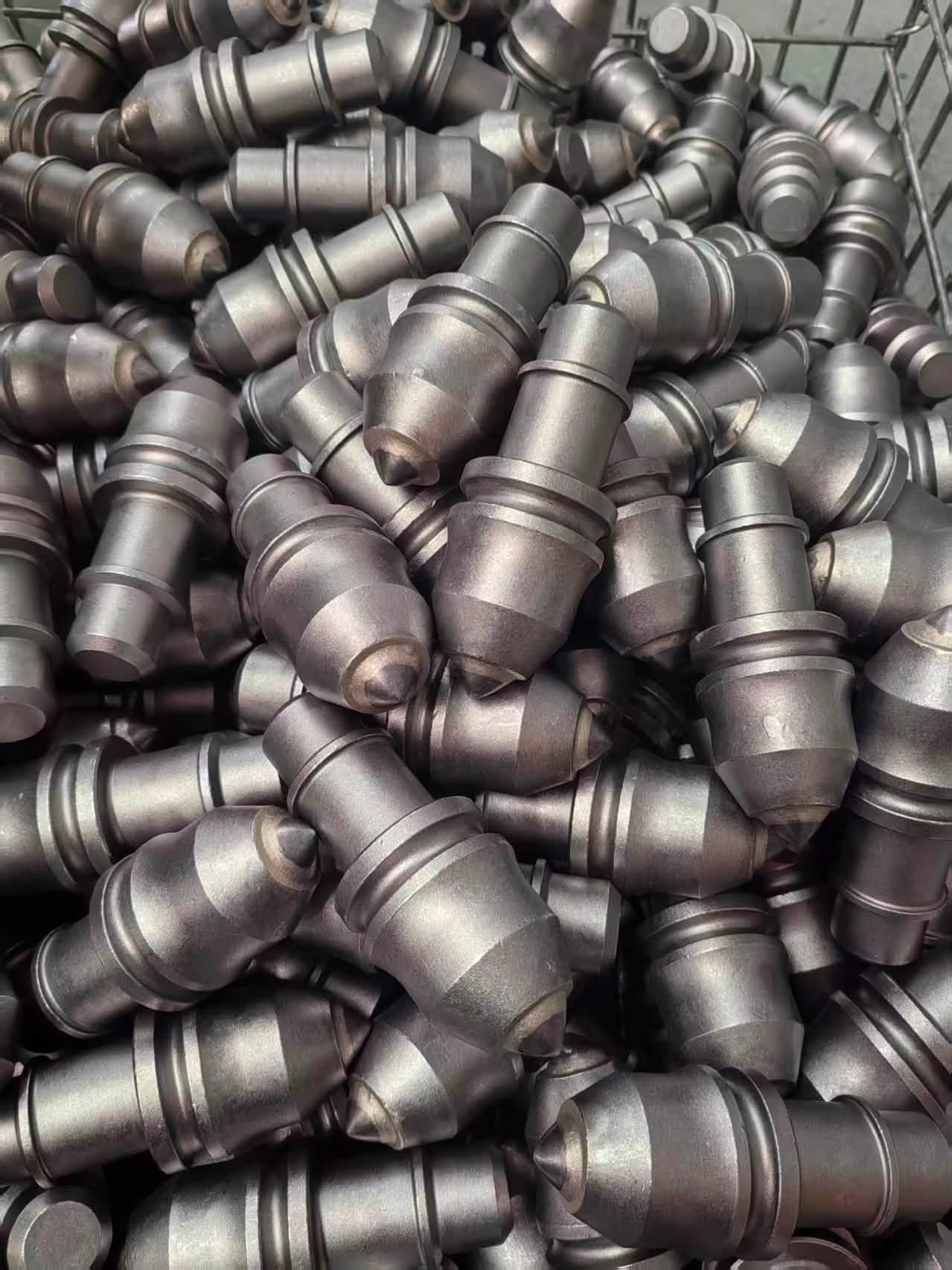
Rotary drilling tools each have a real job. The drilling bucket excavates soil and gravel. The core barrel cuts hard rock and keeps the core. The auger lifts spoil continuously in soft ground. The roller bit opens a hole in very strong rock. The bullet teeth on the bucket are what cut the ground. Choosing between them is not complicated. It is just a sequence of questions about the ground, the diameter, and the rig.
Below is the method I use, and the one I would use on any project. It takes about ten minutes per hole diameter and it saves far more than that in the field.
What Determines the Right Drilling Tool for a Project?
Four factors decide it, and only four.
The four factors are: the ground condition and its compressive strength, the borehole diameter from the pile design, the depth of the hole and the layers it passes through, and the rig specification including Kelly box size, torque, and lifting capacity. Everything else about the tool follows from these.
| Factor | What You Need To Know | What It Decides |
|---|---|---|
| Ground condition | Soil, clay, sand, gravel, rock, and the strength of each | Tool type and tooth grade |
| Borehole diameter | Pile diameter from the structural design | Shell diameter, tool size, tooth count |
| Depth and layers | Depth profile and any rock or boulder layers | Whether one tool is enough |
| Rig specification | Kelly box size, torque, crane capacity, hole depth | Tool weight and drive compatibility |
Which Tool Goes with Which Ground Condition?
This is the map. Most projects use two or three tools in sequence.
In soft soil and clay, use a soil drilling bucket with flat teeth, or a flat soil auger if you want continuous production. In sand and gravel, use a soil bucket or a flat rock auger. In weathered rock and weak rock, use a rock drilling bucket with bullet teeth, or a flat rock auger. In rock above 60 MPa, use a core barrel with bullet teeth or roller bits. Above 100 MPa, use a core barrel with roller bits.
| Ground Condition | Recommended Tool | Cutting Element |
|---|---|---|
| Soft clay, silt | Soil drilling bucket, or flat soil auger | Flat teeth, or fish-tail pilot |
| Sand, loose gravel | Soil drilling bucket, or flat soil auger | Flat teeth, or fish-tail pilot |
| Dense sand and gravel | Flat rock auger, or soil bucket | Forging steel pilot, hard-facing strips |
| Weak rock below 5 MPa | Flat rock auger | Forging steel pilot with hard-facing strips |
| Weathered rock | Rock drilling bucket, or conical rock auger | Bullet teeth, or chisels on the auger head |
| Rock, 15 to 60 MPa | Conical rock auger, or core barrel with bullet teeth | Round-shank chisels, or bullet teeth |
| Rock, 60 to 100 MPa | Core barrel with bullet teeth | Staggered round-shank chisels |
| Rock above 100 MPa | Core barrel with roller bits | Cone 1, cone 2, and cone 3 wedge cutters |
| Stuck rock core, boulder layers | Cross cutter core barrel | High tooth count, aggressive cutting |
| Reinforced concrete | Core barrel with bullet teeth | Replaceable round-shank chisels |
What Is the Step-by-Step Method for Selecting a Drilling Tool?
Six steps, in this order. Do not skip step one.
Read the geotechnical report and write down the ground profile layer by layer. Fix the borehole diameter from the pile design. Check the rig against the tool for Kelly box size, torque, and crane capacity. Then match each layer of the profile to a tool. Count the tools and plan the changeover between them. Finally, price the wear parts for the whole profile and add the spares.
Step 1 — Build the Ground Profile
Write down the depth of every layer and the compressive strength of the rock layers. Do not read the report as one average number. A profile of 20 m of soft clay over 10 m of 80 MPa sandstone needs two different tools and one changeover at 20 m. If the report gives the strength of the rock layers, use it. If it does not, ask for the borehole log. This one document decides the entire tool plan.
Step 2 — Fix the Diameter From the Design
The diameter comes from the structural engineer, not from the tool catalogue. For a core barrel, the shell diameter is the borehole diameter minus 80 mm. For a roller bit in a core barrel at 2500 mm, you are working with 20 roller bits and a barrel weight of 2684 kg. Fix the number first, then design around it.
Step 3 — Check the Rig
Standard Kelly box sizes are 130 mm, 150 mm, and 200 mm. The tool must match the square drive on the rig. Check the torque. A conical rock auger at 1800 mm single cut weighs 1081 kg, and the double cut version weighs 1766 kg. Add the Kelly bar and the swivel, then check the crane. A selection that cannot be lifted is not a selection.
Step 4 — Match Each Layer to a Tool
Walk down the profile and assign a tool to each layer. Most profiles need two tools. A common and efficient combination is a soil bucket for the upper soft layers and a core barrel with bullet teeth for the rock below. On a profile with mixed gravel and rock, a bucket alone will do the lot.
Step 5 — Plan the Changeover
A changeover costs rig time. The crew has to break down, swap the tool, and get back to full rotation. If the profile needs three tools, you are paying for two changeovers on every pile. Sometimes a single tool that handles two layers is worth more than the best tool for each layer.
Step 6 — Budget the Wear Parts
Teeth and chisels are consumables. Calculate the wear rate from the formation and the tooth selection, then add spares. This is the step that decides whether the next shift starts on time. A rig waiting for a tooth delivery is the most expensive thing on any piling site.
How Do the Main Rotary Drilling Tools Compare?
Here is the full comparison, tool by tool.
The drilling bucket removes all the material it cuts and works best in soft to stiff ground. The core barrel cuts an annular ring, keeps the core, and works in hard rock. The auger lifts spoil out continuously with a helical flight and works best in soil and weak rock. The roller bit crushes and cuts with rotating cones and works in very strong rock. Bullet teeth are the cutting element on the bucket and on the core barrel.
| Tool | Removes Material By | Best Ground | Diameter Range | Main Advantage |
|---|---|---|---|---|
| Drilling bucket | Bucket body carries the spoil | Soil, clay, sand, gravel | Project-defined | Simple, robust, all-round |
| Core barrel | Keeps the core inside the barrel | Hard rock, concrete | 600 to 2500 mm | Rock drilling plus core samples |
| Auger | Helical flight lifts the spoil | Soil, dense sand, weak rock | 600 to 1800 mm | No lifting cycle, continuous production |
| Roller bit | Rotating cones crush and cut | Rock above 100 MPa | 8½ to 17½ inch standard | Fast penetration in strong rock |
| Bullet teeth | Impact cutting at the tooth tip | Rock below 60 MPa, and soil | Set by the holder | Replaceable, cheap to swap |
Drilling Bucket
The drilling bucket is the default tool. It is simple, it is strong, and it handles a wide range of ground. AAETT® builds it in several versions: with rock drilling teeth for hard rock, with soil drilling teeth for clay and sand, with Bauer teeth for contractors running Bauer equipment, and in special custom forms for unusual conditions. It carries a strong cutting head and the borehole stays full of spoil that has to be cleaned out before concrete. For the spoil removal stage itself, we also build cleaning buckets and belling buckets.
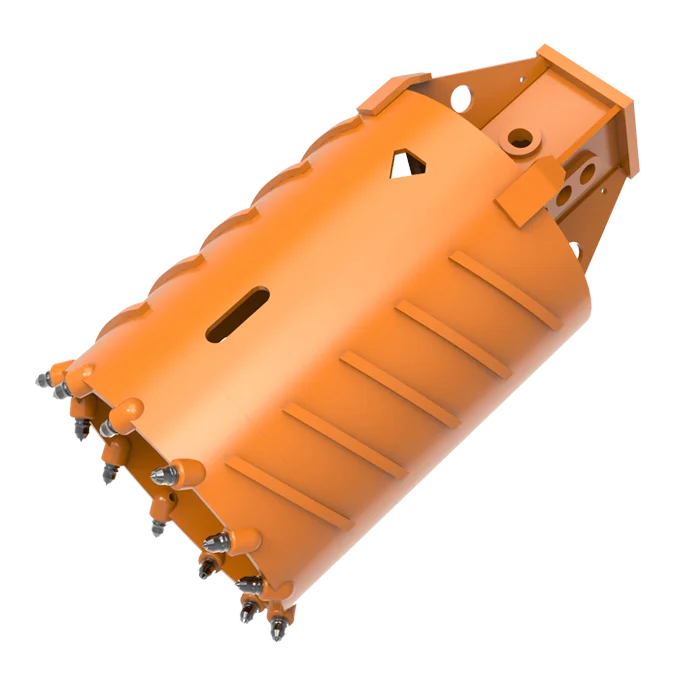
Core Barrel
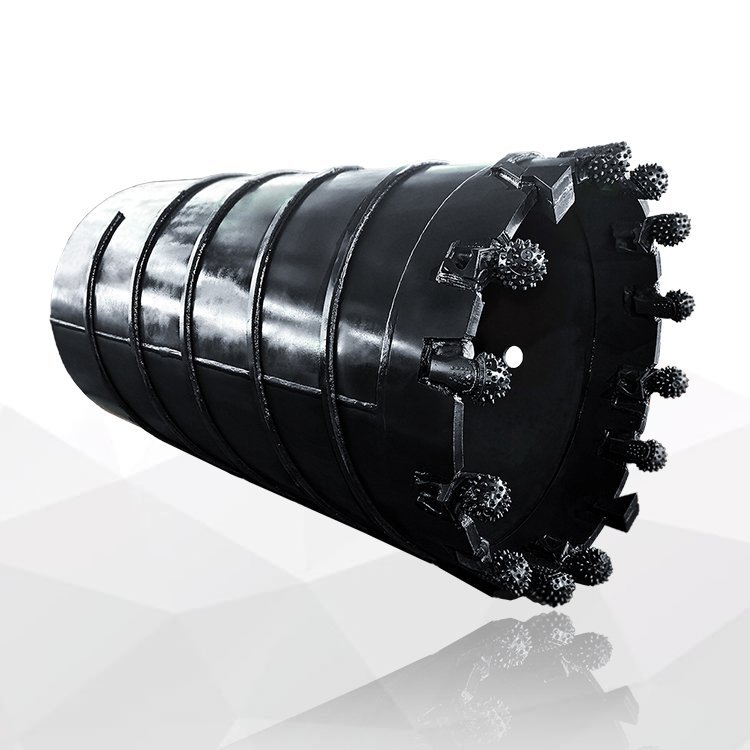
The core barrel is the tool for rock. It cuts a ring, keeps the core, and leaves a much cleaner borehole. It comes with bullet teeth, with roller bits for rock above 100 MPa, and with a cross cutter for breaking stuck cores and boulder layers. The barrel is fitted with spiral wear-resistant strips. Its downside is weight. A 2500 mm barrel weighs over 2.4 tonnes before the core is in it.
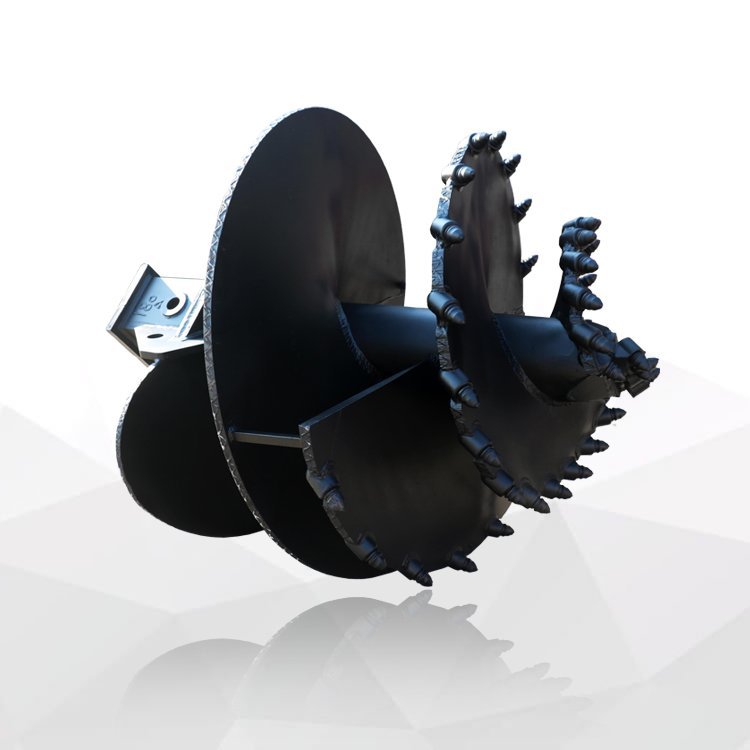
Auger
The auger is the production tool. There is no lifting cycle, because the flight carries the spoil out as the tool turns. The three types are the conical rock auger for 15 to 60 MPa, the flat rock auger for dense sand, gravel, and weak rock below 5 MPa, and the flat soil auger for soft to stiff silt and clay. Double cut versions are recommended for uncased bores, larger diameters, and secant pile walls.
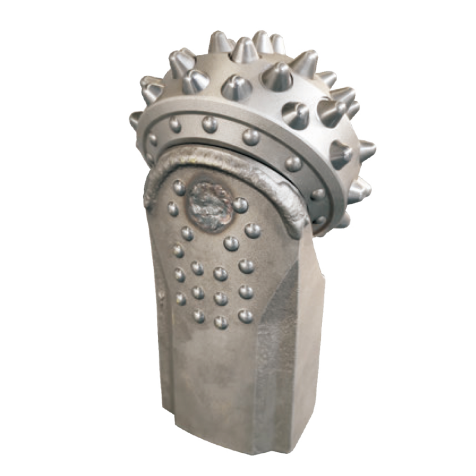
Roller Bit
The roller bit is the hardest tool in the range. The 120 degree U-shaped design places the rotating cones close to the bit centre line. It is used for rock reamers and hole openers in HDD and trenchless work, for core barrels in rock above 100 MPa, and as a pilot bit. The nitrile rubber bearing and the G-gauge protection are what make the bit last.
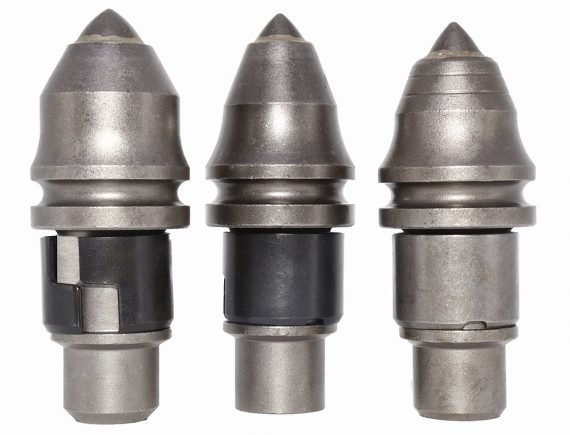
Bullet Teeth and Holders
Bullet teeth are the cutting element on the bucket and on the core barrel. The B47K series covers rock below 60 MPa in three sizes, B47K17.5H, B47K19H, and B47K22H. The C31HD covers soil, gravel, shale, and permafrost. Holders come as round types such as B85/2 and square types such as B43H, and the Bauer BFZ72 and BFZ70 teeth match the Bauer holder system. For the soil bucket side, see our bucket teeth and flat teeth ranges.
How Do You Control the Total Cost of a Drilling Tool Programme?
The purchase price is the least interesting number.
The cost that matters is cost per drilled meter. This includes the tool price, the consumable wear parts, the replacement time, the machine downtime, and the labour to change the teeth. A cheaper tooth that fails twice per shift costs more than an expensive one that survives the shift. The same logic applies to the tool itself.
| Cost Driver | How to Reduce It |
|---|---|
| Wrong tool for the layer | Match the profile layer by layer before ordering |
| Tooth breakage | Use the right series and grade for the compressive strength |
| Changeover time | Reduce the number of tools in the profile |
| Downtime for spares | Order wear parts and holders with the first batch |
| Borehole cleaning | Use a core barrel in rock, it leaves a cleaner hole |
| Unplanned wear | Check teeth and hard-facing strips at every tool change |
A Simple Checklist Before You Order
This is the list I check before I approve any drilling tool order for a project.
- Borehole diameter confirmed against the pile design
- Ground profile with compressive strength for every rock layer
- Tool assigned to each layer, with the changeover depth noted
- Kelly box size confirmed at 130 mm, 150 mm, or 200 mm
- Tool weight checked against the crane and the Kelly bar limit
- Tooth series chosen from the compressive strength, not from habit
- Holder type confirmed against the bucket lip and the rig system
- Wear parts and spare holders included in the first order
- Delivery time confirmed against the piling schedule
Nine checks. If they are all done, the tool selection is right, and the remaining cost comes down to how well the site runs it.
Conclusion
Choose the drilling bucket for soil and gravel, the auger for continuous production in soft ground, the core barrel for hard rock and for core recovery, and the roller bit for rock above 100 MPa. Decide from the ground profile, the pile design, and the rig specification, then order your wear parts with the first batch.