Rock drilling punishes small mistakes. A wrong tooth, a poor bearing, a loose cone. The rig spends more time. The pile costs more. And the problem is usually not visible until the bit is already in the hole.
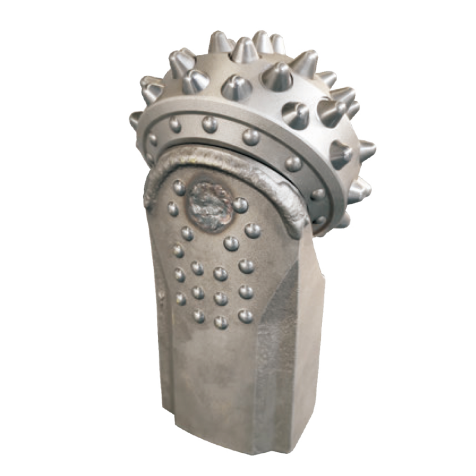
A roller bit is a drilling bit with rotating cones that crush and cut the rock as the bit turns. AAETT® builds the 120 degree U-shaped type with cone 1, cone 2, and cone 3 wedge cutters, based on tricone bit legs. It is one of the strongest tools we make, and it is used in core barrels, rock reamers, and hole openers.
Here is what actually separates a good roller bit from a cheap one. It is not the carbide. It is the bearing, the gauge protection, and the machining tolerance.
What Is a Roller Bit and How Does It Work?
A roller bit is a drill bit with rotating cones on the body.
A roller bit has a body with two or three roller cones mounted on it. As the bit turns, the cones rotate on their own bearings. The cutters on each cone cut into the rock while the cone rolls over the face. This combination of cutting and crushing breaks rock far faster than a fixed cutter. The 120 degree U-shaped design places the cones so that the body carries less of the impact load.
How Is a Roller Bit Built?
| Component | Function | Why It Matters |
|---|---|---|
| Bit body | Holds the cones and the bearing seat | Must resist the full torque load |
| Roller cones | Rotate on bearings while the bit turns | Rolling action reduces impact on the cutters |
| Cone cutters | Cut the rock face | Carve the wedge grooves in the rock |
| Bearings | Allow the cone to rotate freely | A rough bearing causes heat and early failure |
| Gage section | Holds the borehole diameter | Protects the bit and keeps the hole in gauge |
What Is the 120 Degree U-Shaped Design?
The U-shaped arrangement sets the cones close to the bit centre line. This keeps the cone in continuous contact with the rock face. It also leaves more material in the body between the cones, so the body does not wear out before the cones do. In our version, the roller cone follows the traditional tricone bit leg, and the carbide quantity on the dorsal metacarpal is increased so the leg back is protected from damage by debris.
What Are the Main Advantages of a 120 Degree U-Shaped Roller Bit?
Three design details carry most of the benefit.
A high saturated nitrile rubber bearing reduces sealing pressure and improves sealing reliability. G-gauge protection improves the gauge ability and prolongs the service life of the bit. A row of teeth is added between the back taper and the outer row to dress the wellbore and protect the body of the cone.
Bearing Quality Decides Bit Life
The bearing is the part buyers ignore and the part that kills the bit. A cone that does not roll freely generates heat. Heat damages the seal. Then the lubricant escapes. Then the cone locks. Once a cone locks, the bit is finished. A good nitrile rubber bearing with correct sealing pressure keeps the cone rolling smoothly under load. That is what extends the service life.
G-Gauge Protection Keeps the Hole in Gauge
The gauge section of the bit is the outermost row of cutters. It sets the hole diameter. The G-gauge protection extends the life of this section, so the bit keeps cutting a true diameter instead of drilling a bell hole. A bell hole slows the whole operation and can cause casing problems later.
The Extra Tooth Row Protects the Cone Body
The extra row of teeth between the back taper and the outer row dresses the wellbore as the bit turns. This keeps the cone body clean and protects it from direct contact with the rock wall. The cone body survives longer, and so does the whole bit.
| Feature | Effect | Result for the Contractor |
|---|---|---|
| Nitrile rubber bearing | Lower sealing pressure, better sealing | Less heat, longer bit life |
| G-gauge protection | Better gauge ability | True borehole diameter, no bell hole |
| Extra tooth row | Dresses the wellbore, protects the cone body | Cone body lasts longer |
| Increased carbide on the dorsal metacarpal | Protects the leg back from debris | Fewer cone failures |
| CNC turning to ±0.01 mm | Consistent cone geometry | Even wear, stable rotation |
How Does Manufacturing Quality Affect Roller Bit Performance?
The difference between two bits is often invisible on the outside.
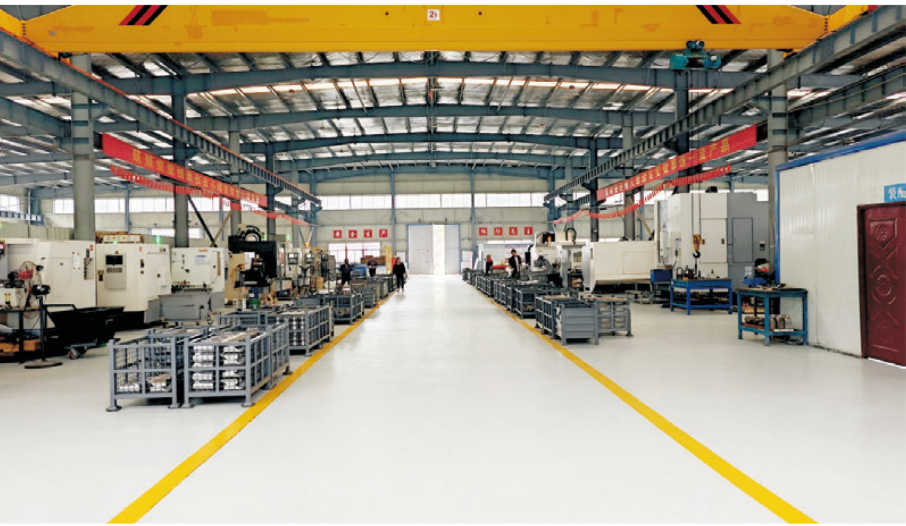
We strictly control the quality of our roller bits. The precision of our CNC lathes is ±0.01 mm, which meets all the turning requirements. After turning a certain number of pieces, we change the lathe tooling to protect machine precision. According to the manufacturing standard, the quality department tests every process strictly and carefully. This is what keeps a batch of 50 bits behaving like the first one.
Why Tolerance Matters on a Roller Bit
A roller bit has moving parts inside a hard rock environment. A cone that sits slightly out of true loads unevenly on its bearing. The bearing wears unevenly. The cone starts to tilt. The cutters on one side take more load and wear faster. The failure looks sudden, but it started with a tolerance on the lathe.
Cone Cutter Selection
The cone 1, cone 2, and cone 3 wedge cutter designs give high drilling efficiency in the recommended formations. Cone 1 and cone 2 usually handle the harder outer ring of the hole, where the rock is under the most stress. Cone 3 works the centre, where the material is already broken up. Choosing the right cutter for each cone position is part of getting the penetration rate you paid for.
Where Are Roller Bits Used in Foundation and Drilling Work?
The same roller bit design serves three main jobs.
The roller bit is mainly used for the rock reamer and hole opener in HDD and trenchless work. It is also used for the core barrel with roller bit in piling foundation projects, where the rock compressive strength is above 100 MPa. And it is used as a pilot bit to start larger holes. Our popular sizes are 8 1/2 inch, 9 7/8 inch, 12 1/4 inch, and 17 1/2 inch roller bits.
| Application | Key Requirement | Bit Feature That Matters |
|---|---|---|
| Rock reamer / hole opener | Cut casing to full depth in rock | G-gauge protection, strong cone cutters |
| Core barrel with roller bits | Rock above 100 MPa | High penetration rate from rolling action |
| Pilot bit | Start the hole accurately | Conical shape and stable rotation |
| HDD and trenchless | Long run in mixed ground | Bearing reliability and wear resistance |
Roller Bits in a Core Barrel
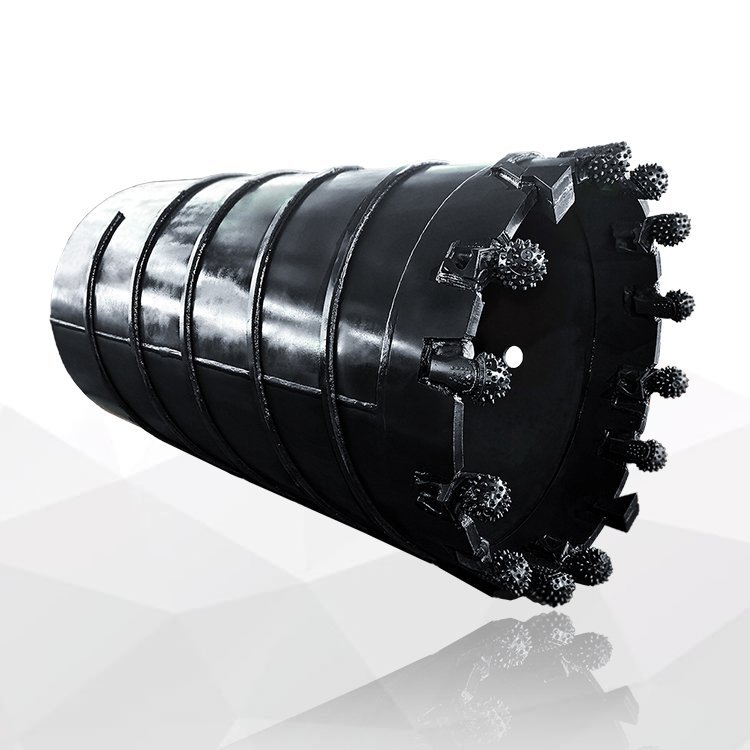
A core barrel with roller bits is built for very strong rock formations. Compressive strength above 100 MPa is the usual threshold for this configuration. The roller bits cut the annular ring, and the core stays in the barrel for inspection. If your project has a deep hard rock layer and you need the core, this is the combination that works.
Roller Bits for Rock Reamers and Hole Openers
The roller bit is the main tool for rock reamers and hole openers in HDD and trenchless work. The bit has to open a hole large enough to pull the casing through, at full depth, often in mixed ground. The gauge section does the work of holding diameter, and the gauge protection on a quality bit is the reason it survives that job.
What Does a Worn Roller Bit Look Like?
A worn roller bit tells you what went wrong, and the signs are easy to read once you know what to look for. If the outer row of cutters is worn flat while the inner cutters still look new, the bit was running in gauge and the ground was abrasive. This is a normal wear pattern. Replace the cutters and keep running.
If the cone body is polished smooth on one face while the opposite face still shows fresh carbide, the cone was not rotating. This is a bearing failure, and it is usually visible before the bit actually stalls. A cone that has been dragging will show heat colouring on the bearing race.
If the bit comes back with cracked or missing cutters and the fractures start at the shoulder of the tooth, the problem is the drop energy or the formation. Fractured and jointed rock puts sharp shock loads into the cone. In that case, changing the bit grade is not the answer. Lowering the drop height, or changing to a tooth with a higher impact grade, is.
If the gage section is worn below the other rows and the hole is coming out bell shaped, the bit spent too long in the hole without drilling. That happens when the operator is feeding the bit instead of drilling it, or when the cuttings are not being cleaned out. The bit was working at the bottom while the top was rubbing. This one is an operating problem, and it shows up as a slow loss of gauge.
How Do You Get the Most Life From a Roller Bit?
Three habits make the biggest difference. First, start with the right cutter grade for the rock, and do not run a soft grade in hard rock. Second, watch the gauge row and change the bit or re-orient it before it loses the diameter. Third, keep the cone clean. Debris in the cone is what damages the leg back, and the increased carbide on the dorsal metacarpal can only protect the leg for as long as the space around it is clear.
How Do You Choose the Right Roller Bit?
Four checks, done in this order.
First check the diameter against the hole you need to open, including any casing. Second check the rock strength and pick the cutter grade to match. Third check the connection and the pilot configuration for your rig and your run. Fourth check the manufacturing tolerance and the bearing quality, because this is where the cost of failure is highest.
Check 1 — Diameter and Gauge
For a hole opener, the diameter must match the casing outside diameter plus the overcut. Popular sizes are 8 1/2 inch, 9 7/8 inch, 12 1/4 inch, and 17 1/2 inch. For a core barrel, the diameter is set by the pile design and the shell diameter is fixed at the borehole diameter minus 80 mm.
Check 2 — Rock Strength and Cutter Grade
The carbide grade has to match the rock. A soft grade in hard rock will wear out fast. A hard grade in soft ground costs more and gains nothing. Give your supplier the unconfined compressive strength and the formation description, and let them recommend the cone cutters.
Check 3 — Rig Compatibility
The bit has to connect to the rig through the pilot, the Kelly bar, or the reamer housing. Check the pilot diameter and length. For core barrels, the Kelly box sizes are 130 mm, 150 mm, and 200 mm. Check the torque the rig can deliver against the torque the bit needs. If you are running a tricone bit for comparison, the penetration difference in strong rock is worth measuring on your own ground.
Check 4 — Build Quality
Ask about the CNC tolerance, the bearing type, the seal, and the carbide grade. Ask whether there is a quality inspection record for the batch. A supplier that answers these questions clearly is a supplier that has done the work.
| Check Item | What to Ask | Red Flag |
|---|---|---|
| Diameter | Does it match the hole and the casing? | Only a size range, no specific advice |
| Cutter grade | Which carbide suits my rock strength? | One grade offered for all rock |
| Bearing and seal | What bearing and seal type is used? | No detail given |
| Machining tolerance | What is the turning tolerance? | Tolerance not stated |
| Inspection | Is each process inspected? | No records offered |
| Spare cones | Are spare cones available? | No spare parts support |
Conclusion
A 120 degree U-shaped roller bit crushes and cuts rock with rotating cones, so it penetrates faster than a fixed cutter. The nitrile rubber bearing, the G-gauge protection, and the extra tooth row are what extend its life. Use it for rock reamers and hole openers in HDD, for core barrels in rock above 100 MPa, and for pilot drilling.